
Checking what competitors launched, what customers are saying about them, and who they are hiring every day
Important market updates, customer complaints, and hiring signals get buried across multiple websites, review sites, and job boards, making it easy to miss key competitor moves.
- Before
- 60 min
- After
- 20 min
- Saved
- 40 min
How this used to go
- Open a spreadsheet to track competitor names and URLs
- Visit each competitor's website to check for product updates, blog posts, or pricing changes
- Check major review sites like G2, Capterra, or Trustpilot for recent customer reviews of competitors
- Scan job boards like LinkedIn or Glassdoor to see what roles competitors are currently hiring for
- Copy and paste relevant findings into a team chat or internal email update
Checking the same websites and job boards every single day just to find that nothing has changed.
The workflow, step by step
- You
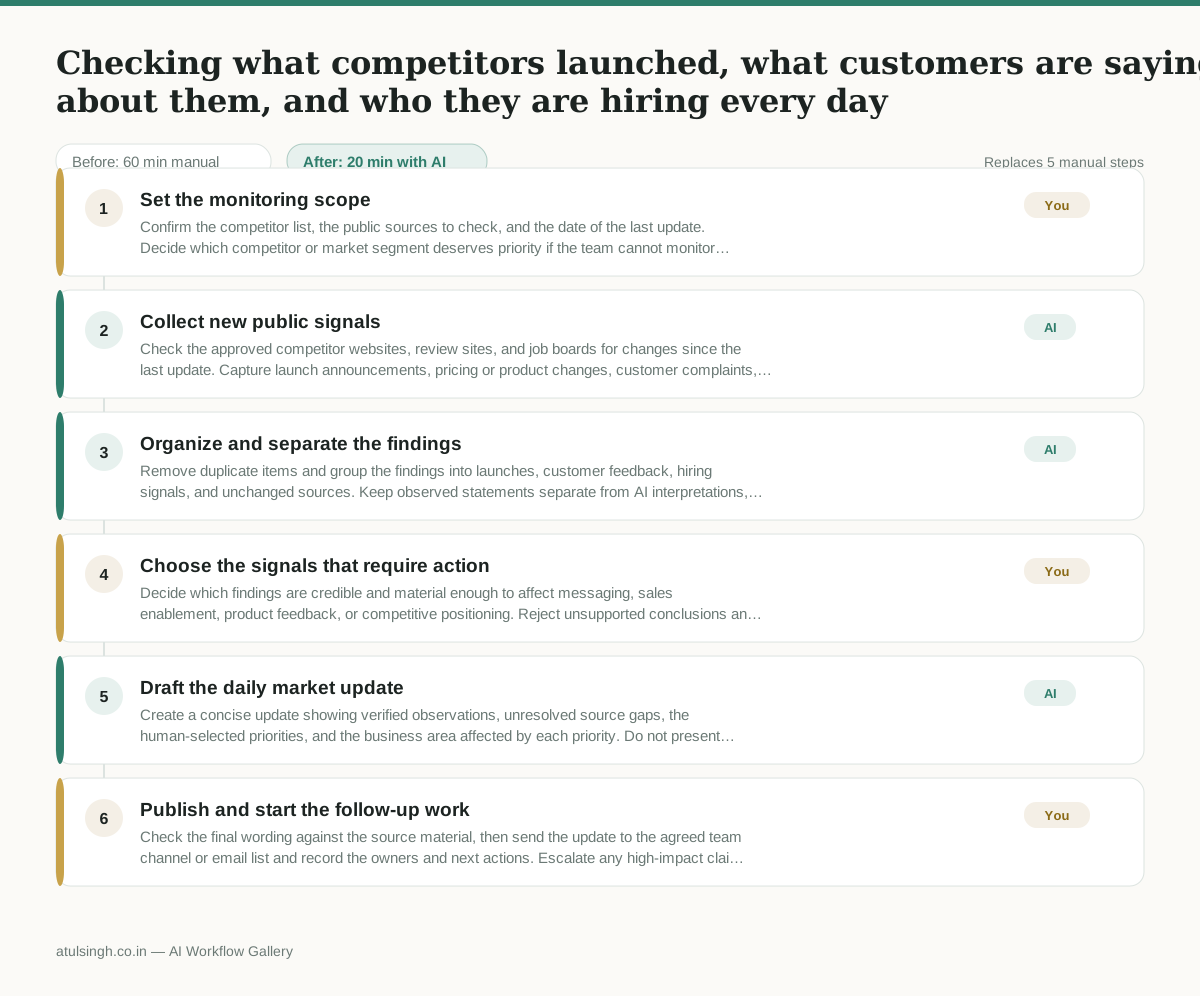
1. Set the monitoring scope
Confirm the competitor list, the public sources to check, and the date of the last update. Decide which competitor or market segment deserves priority if the team cannot monitor everything.
- AI
2. Collect new public signals
Check the approved competitor websites, review sites, and job boards for changes since the last update. Capture launch announcements, pricing or product changes, customer complaints, recurring review themes, and new or changed job postings, while marking blocked, missing, or inaccessible sources.
- AI
3. Organize and separate the findings
Remove duplicate items and group the findings into launches, customer feedback, hiring signals, and unchanged sources. Keep observed statements separate from AI interpretations, and retain the source name, date, and available reference for each item.
- You
4. Choose the signals that require action
Decide which findings are credible and material enough to affect messaging, sales enablement, product feedback, or competitive positioning. Reject unsupported conclusions and assign a priority and owner to the signals the team will act on.
- AI
5. Draft the daily market update
Create a concise update showing verified observations, unresolved source gaps, the human-selected priorities, and the business area affected by each priority. Do not present inferred sentiment, intent, or competitive strategy as fact.
- You
6. Publish and start the follow-up work
Check the final wording against the source material, then send the update to the agreed team channel or email list and record the owners and next actions. Escalate any high-impact claim that needs direct validation before external use.
What you end up with
Where this falls apart
- Competitors implement anti-scraping blocks or CAPTCHAs, which causes the AI to miss critical launch and pricing updates entirely.
- Review sites or job boards change their underlying page structure, which causes the extraction step to parse incorrect data or fail silently.
More for Marketing Manager
- Write a campaign brief that the agency and the internal design team can both use without contradictory instructions
- Check every lead capture form on the website to make sure submissions reach the right sales reps before launching a new advertising campaign.
- Checking multiple promotional calendars across email, social, and paid ads to make sure campaigns do not overlap or contradict each other before the holiday sales push.
- Reviewing external market research reports and flagging unverified claims before presenting findings to the board.
Also in marketing
- Turn a recorded customer interview into a draft blog post
- Sorting incoming customer leads from web forms and assigning them to the right sales reps based on company size and location
- Turn a technical whitepaper into a three-part email nurture sequence before it launches
- Analyze competitor viral posts to draft three trend hooks, discarding off-brand angles