
Write a campaign brief that the agency and the internal design team can both use without contradictory instructions
Campaign briefs often end up vague or split across separate documents, leading to mismatched creative assets, misaligned messaging between channels, and wasted revision cycles with outside agencies.
- Before
- 120 min
- After
- 75 min
- Saved
- 45 min
How this used to go
- Review past campaign performance reports and target audience notes from recent sales calls
- Draft the core campaign message, value proposition, and required deliverables in a blank document
- Copy and paste sections of the draft into a separate slide deck for the design team
- Write a separate email summarizing deliverables and timelines for the external agency
- Schedule separate alignment meetings with design and the agency to answer clarifying questions
- Consolidate conflicting feedback from different stakeholders into a final revision request
Reconciling conflicting feedback from internal stakeholders and rewriting the brief into different formats for the agency versus the design team.
The workflow, step by step
- AI
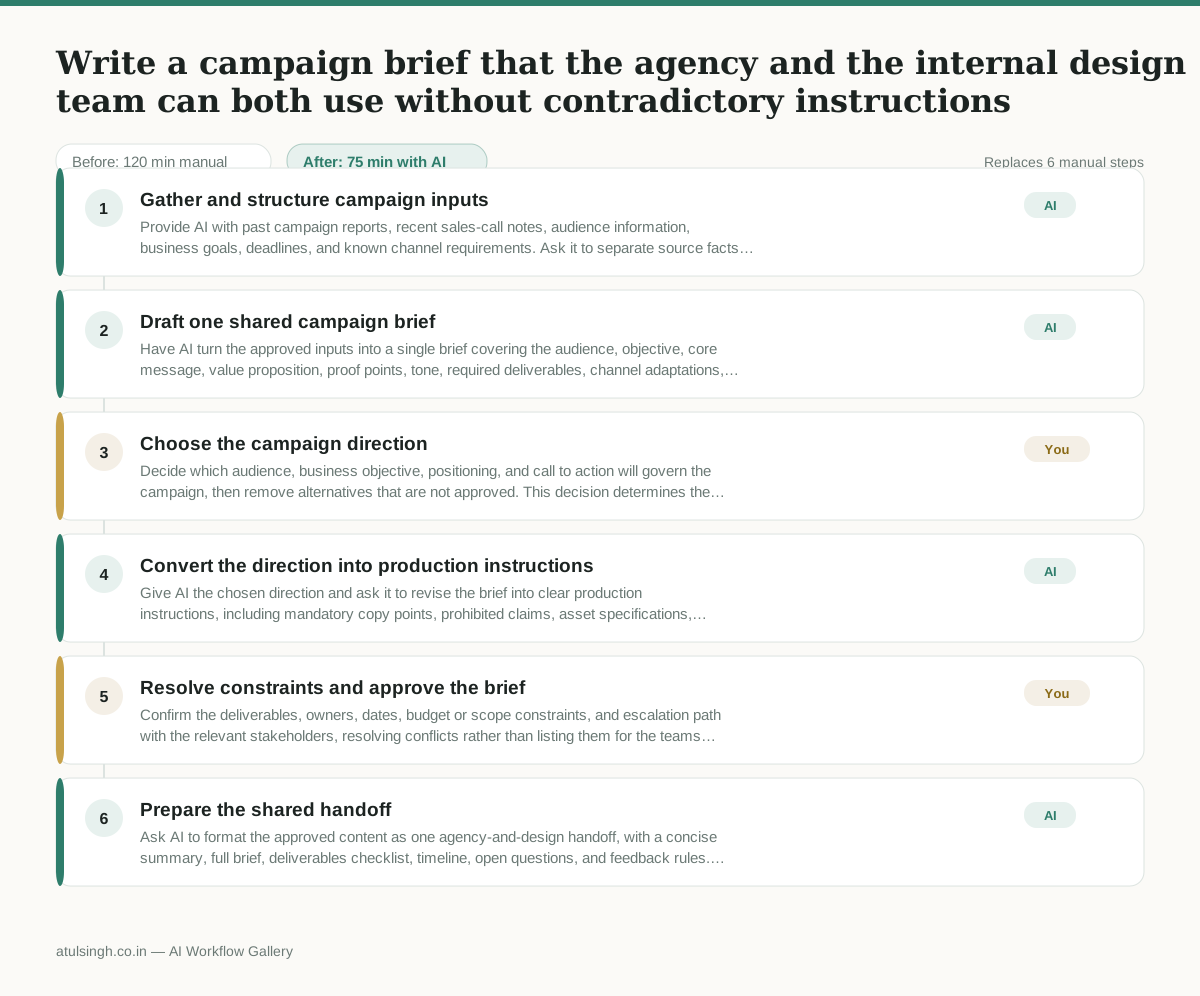
1. Gather and structure campaign inputs
Provide AI with past campaign reports, recent sales-call notes, audience information, business goals, deadlines, and known channel requirements. Ask it to separate source facts from gaps or assumptions; AI cannot reliably determine which audience or business priority should win when the inputs conflict.
- AI
2. Draft one shared campaign brief
Have AI turn the approved inputs into a single brief covering the audience, objective, core message, value proposition, proof points, tone, required deliverables, channel adaptations, owners, deadlines, and approval process. Tell it to flag unsupported claims instead of inventing evidence.
- You
3. Choose the campaign direction
Decide which audience, business objective, positioning, and call to action will govern the campaign, then remove alternatives that are not approved. This decision determines the message and creative direction the agency and design team must follow.
- AI
4. Convert the direction into production instructions
Give AI the chosen direction and ask it to revise the brief into clear production instructions, including mandatory copy points, prohibited claims, asset specifications, channel variations, dependencies, review stages, and a single feedback process. AI can organize requirements, but it cannot validate brand, legal, or factual compliance without human input.
- You
5. Resolve constraints and approve the brief
Confirm the deliverables, owners, dates, budget or scope constraints, and escalation path with the relevant stakeholders, resolving conflicts rather than listing them for the teams to interpret. Approve the final brief only when the agency and internal design team can act from the same instructions.
- AI
6. Prepare the shared handoff
Ask AI to format the approved content as one agency-and-design handoff, with a concise summary, full brief, deliverables checklist, timeline, open questions, and feedback rules. Distribute that same approved version instead of creating separate summaries or slide content.
What you end up with
Where this falls apart
- Input notes from sales calls and past reports contain contradictory strategic goals, resulting in an unresolvable brief that requires manual human restructuring before use.
- The source materials lack concrete channel requirements or technical asset specifications, causing the AI to hallucinate standard deliverables that do not match the organization's actual production capabilities.
More for Marketing Manager
- Check every lead capture form on the website to make sure submissions reach the right sales reps before launching a new advertising campaign.
- Checking multiple promotional calendars across email, social, and paid ads to make sure campaigns do not overlap or contradict each other before the holiday sales push.
- Reviewing external market research reports and flagging unverified claims before presenting findings to the board.
- turning a detailed product spec sheet into a clear campaign brief for the design team without keeping all the technical jargon
Also in marketing
- Turn a recorded customer interview into a draft blog post
- Sorting incoming customer leads from web forms and assigning them to the right sales reps based on company size and location
- Turn a technical whitepaper into a three-part email nurture sequence before it launches
- Analyze competitor viral posts to draft three trend hooks, discarding off-brand angles