
Turn a technical whitepaper into a three-part email nurture sequence before it launches
Translating dense technical concepts into concise, engaging marketing emails takes hours of reading, rewriting, and formatting, often delaying campaign launches.
- Before
- 180 min
- After
- 75 min
- Saved
- 105 min
How this used to go
- Read through the technical whitepaper to identify key sections and arguments.
- Outline a three-part email sequence mapping to the beginning, middle, and end of the whitepaper.
- Draft the first email focusing on the initial problem and introduction.
- Draft the second email focusing on the core findings or methodology.
- Draft the third email focusing on the conclusion and call to action to download.
- Edit all three emails to remove technical jargon and fit standard email length.
- Review the drafts against the original whitepaper to ensure no technical inaccuracies were introduced.
Distilling long, highly technical sections into short, reader-friendly paragraphs without losing the original meaning.
The workflow, step by step
- You
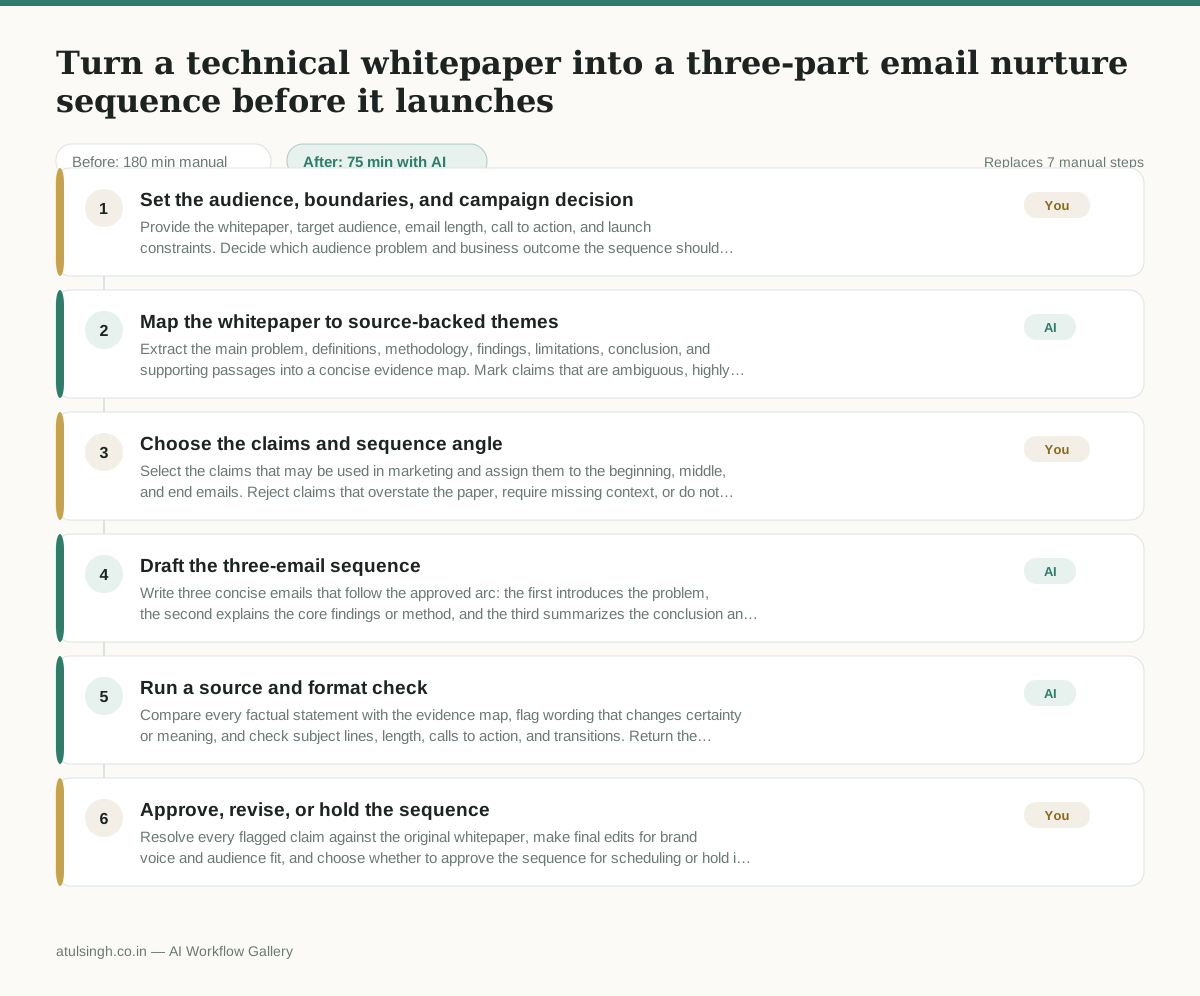
1. Set the audience, boundaries, and campaign decision
Provide the whitepaper, target audience, email length, call to action, and launch constraints. Decide which audience problem and business outcome the sequence should emphasize; this choice determines the angle AI uses and which sections it prioritizes.
- AI
2. Map the whitepaper to source-backed themes
Extract the main problem, definitions, methodology, findings, limitations, conclusion, and supporting passages into a concise evidence map. Mark claims that are ambiguous, highly technical, or unsupported by the provided text instead of filling gaps.
- You
3. Choose the claims and sequence angle
Select the claims that may be used in marketing and assign them to the beginning, middle, and end emails. Reject claims that overstate the paper, require missing context, or do not fit the audience; rejected claims are excluded from the drafts.
- AI
4. Draft the three-email sequence
Write three concise emails that follow the approved arc: the first introduces the problem, the second explains the core findings or method, and the third summarizes the conclusion and invites the reader to download the whitepaper. Replace jargon with plain language while preserving qualified wording and source meaning.
- AI
5. Run a source and format check
Compare every factual statement with the evidence map, flag wording that changes certainty or meaning, and check subject lines, length, calls to action, and transitions. Return the drafts with unresolved fact or interpretation flags clearly labeled for the human.
- You
6. Approve, revise, or hold the sequence
Resolve every flagged claim against the original whitepaper, make final edits for brand voice and audience fit, and choose whether to approve the sequence for scheduling or hold it for subject-matter review. AI cannot reliably judge whether a simplified explanation is commercially appropriate or technically defensible.
What you end up with
Where this falls apart
- The whitepaper relies heavily on implicit domain knowledge rather than explicit text, causing the AI to hallucinate context or generate unsupported claims.
- The source document contains dense architectural diagrams or data tables without text descriptions, causing the AI to miss core findings and produce incomplete email drafts.
More for Content Marketer
- Turn a recorded customer interview into a draft blog post
- Sorting incoming customer leads from web forms and assigning them to the right sales reps based on company size and location
- Reviewing an existing ranking article, checking every claim and figure against current source data, and identifying outdated statements before republication
- Plan out the next month of content based on what people are actually asking for and our sales goals
Also in marketing
- Analyze competitor viral posts to draft three trend hooks, discarding off-brand angles
- pitching influencers and checking their engagement before sending messages
- Write and test five ad variants for one campaign from a single landing page
- Pulling the weekly paid channel report and explaining what actually drove the performance changes