
Finding companies that are starting to hire for roles relevant to what you sell so you can reach out before anyone else does.
By the time a job posting appears on major job boards, half a dozen competitors have already seen it and emailed the hiring manager, making your cold outreach arrive too late.
- Before
- 45 min
- After
- 20 min
- Saved
- 25 min
How this used to go
- Open job boards and professional networks daily to search for specific titles matching your ideal customer profile.
- Scan company career pages manually for newly opened positions.
- Cross-reference the hiring company against your CRM to see if you already have an existing contact.
- Search LinkedIn to find the likely hiring manager or department head for that specific role.
- Draft a cold email from scratch referencing the open position and why your product is relevant.
Checking the same company career pages and job boards every single day only to find that you missed the window by a week.
The workflow, step by step
- You
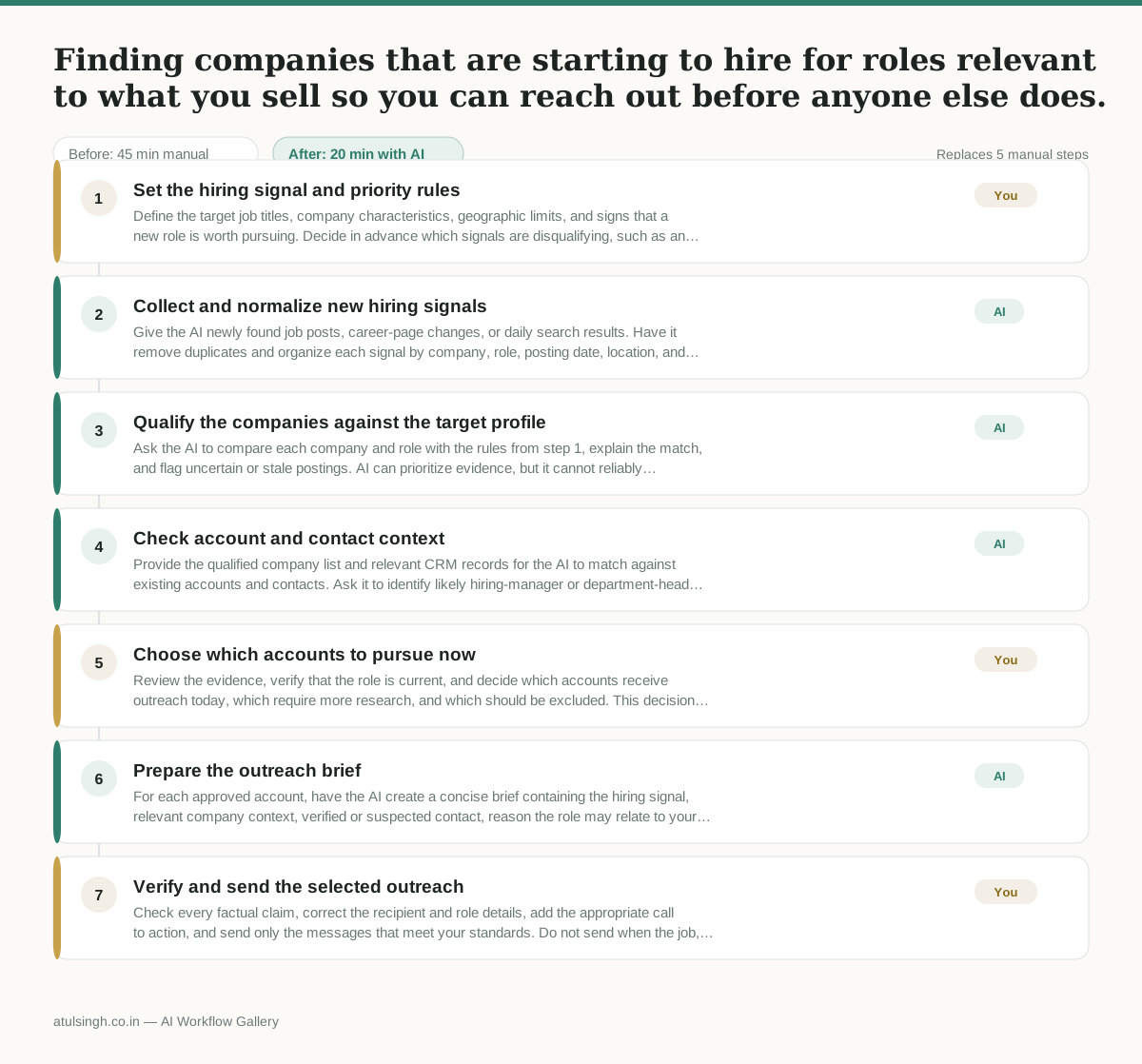
1. Set the hiring signal and priority rules
Define the target job titles, company characteristics, geographic limits, and signs that a new role is worth pursuing. Decide in advance which signals are disqualifying, such as an existing opportunity or a role outside your product's use case.
- AI
2. Collect and normalize new hiring signals
Give the AI newly found job posts, career-page changes, or daily search results. Have it remove duplicates and organize each signal by company, role, posting date, location, and source text.
- AI
3. Qualify the companies against the target profile
Ask the AI to compare each company and role with the rules from step 1, explain the match, and flag uncertain or stale postings. AI can prioritize evidence, but it cannot reliably confirm that a posting is still active or that the role has budget.
- AI
4. Check account and contact context
Provide the qualified company list and relevant CRM records for the AI to match against existing accounts and contacts. Ask it to identify likely hiring-manager or department-head titles and clearly label any contact inference that still needs verification.
- You
5. Choose which accounts to pursue now
Review the evidence, verify that the role is current, and decide which accounts receive outreach today, which require more research, and which should be excluded. This decision controls where sales time is spent and prevents an inferred contact or weak hiring signal from triggering outreach.
- AI
6. Prepare the outreach brief
For each approved account, have the AI create a concise brief containing the hiring signal, relevant company context, verified or suspected contact, reason the role may relate to your offer, and a draft email that references the specific opening without claiming facts not in the source material.
- You
7. Verify and send the selected outreach
Check every factual claim, correct the recipient and role details, add the appropriate call to action, and send only the messages that meet your standards. Do not send when the job, contact, or product relevance cannot be verified.
What you end up with
Where this falls apart
- Job boards publish stale or ghost listings that appear new because the failure results in sales reps wasting time on positions that were filled weeks ago.
- Company career pages use non-standard layouts or JavaScript rendering that the ingestion step misses because the failure results in completely missing early-stage hiring signals.
More for Founder-led Sales
- reaching out to former colleagues and personal contacts to announce a new company or product launch without sounding like a spammy marketer
- Turn raw discovery call notes into a structured pilot proposal for a new client
- Reply to inbound beta signups to figure out if they are a real fit before getting on a call
- following up on proposals that went quiet without annoying the prospect
Also in sales
- Research an incoming company and its decision makers before a first sales meeting
- Prep for a B2B demo call by checking recent company news, job postings, and tech stack changes to build relevant questions.
- Reviewing a new sales rep's practice pitch against the team's call criteria before letting them talk to real prospects
- Reviving deals that went quiet after sending a proposal by finding matching case studies and writing a follow-up message.