
Reviewing a new sales rep's practice pitch against the team's call criteria before letting them talk to real prospects
Sales managers are too busy to sit through and grade every single practice pitch live, meaning new hires often practice in isolation or get rushed feedback that misses key objection-handling criteria.
- Before
- 45 min
- After
- 15 min
- Saved
- 30 min
How this used to go
- Schedule a 30-minute one-on-one session with the new hire for a live practice pitch.
- Listen to the rep deliver the pitch while taking handwritten notes on a scorecard.
- Pause the rep to correct major mistakes or missed talking points.
- Compare the notes against the team's standard objection-handling and discovery criteria.
- Summarize the feedback verbally and assign a pass/fail or revision requirement.
Finding time on the calendar for a live 1-on-1 session delays the new hire's ramp time and pulls the manager away from active deal support.
The workflow, step by step
- You
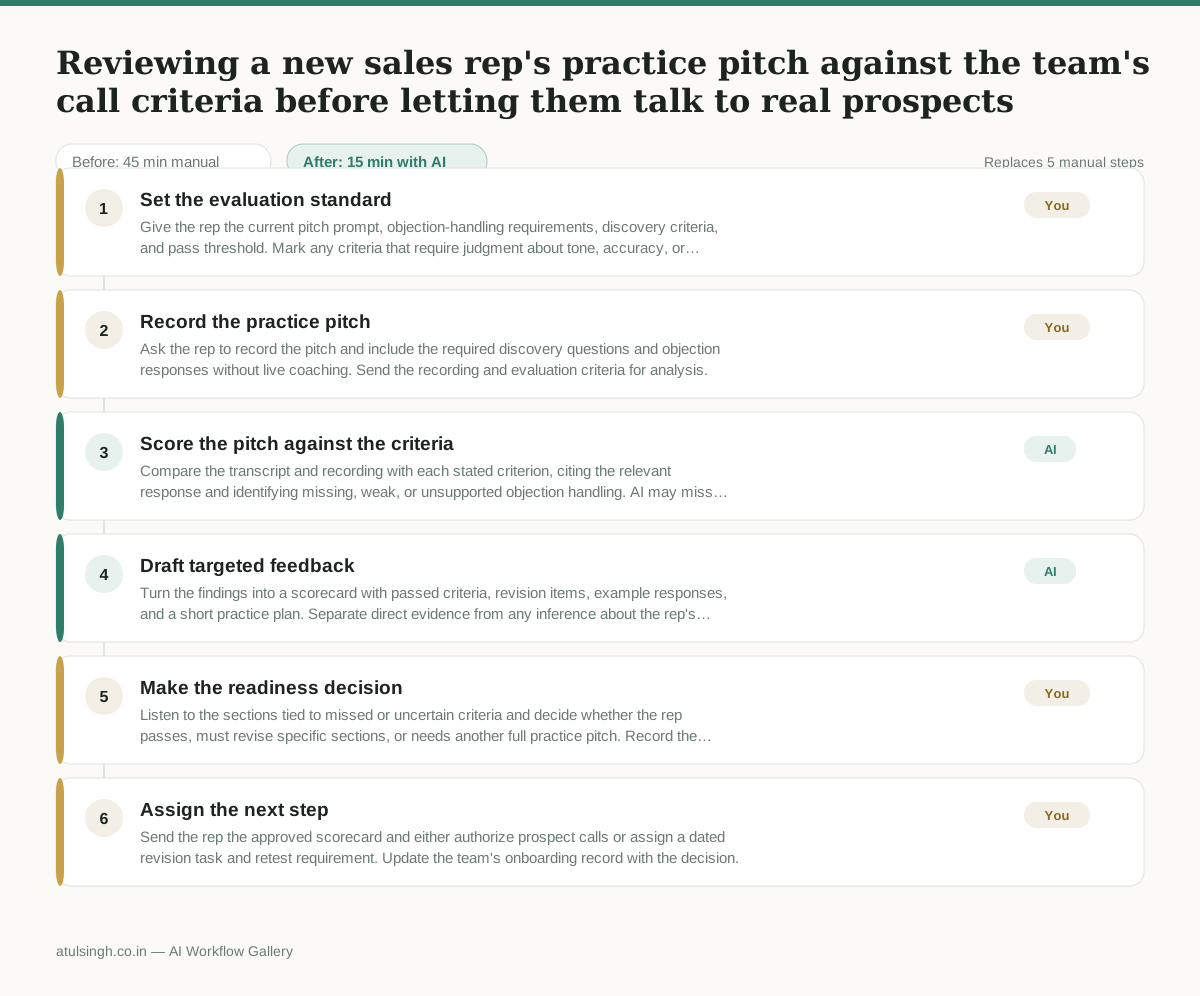
1. Set the evaluation standard
Give the rep the current pitch prompt, objection-handling requirements, discovery criteria, and pass threshold. Mark any criteria that require judgment about tone, accuracy, or company-specific policy.
- You
2. Record the practice pitch
Ask the rep to record the pitch and include the required discovery questions and objection responses without live coaching. Send the recording and evaluation criteria for analysis.
- AI
3. Score the pitch against the criteria
Compare the transcript and recording with each stated criterion, citing the relevant response and identifying missing, weak, or unsupported objection handling. AI may miss delivery nuance or context that is not captured clearly, so do not treat its score as final.
- AI
4. Draft targeted feedback
Turn the findings into a scorecard with passed criteria, revision items, example responses, and a short practice plan. Separate direct evidence from any inference about the rep's intent or confidence.
- You
5. Make the readiness decision
Listen to the sections tied to missed or uncertain criteria and decide whether the rep passes, must revise specific sections, or needs another full practice pitch. Record the decision and the criteria that triggered it.
- You
6. Assign the next step
Send the rep the approved scorecard and either authorize prospect calls or assign a dated revision task and retest requirement. Update the team's onboarding record with the decision.
What you end up with
Where this falls apart
- The rep handles an objection using company-specific context or nuance that was not included in the written evaluation criteria, causing the model to incorrectly mark valid answers as missing or incorrect.
- The speech-to-text transcription fails to capture technical product names or industry acronyms used in the pitch, causing the model to score the rep down for omitting required terms they actually spoke.
More for Sales Manager
- Research an incoming company and its decision makers before a first sales meeting
- Review the sales pipeline before the weekly team meeting to find deals that haven't moved stages and figure out why.
- Reviewing stagnant deals in the pipeline before the weekly forecast meeting to figure out what is actually blocking them and decide who to call or email.
- Reviewing sales call recordings to see how reps handle customer objections and figuring out what coaching they need
Also in sales
- Prep for a B2B demo call by checking recent company news, job postings, and tech stack changes to build relevant questions.
- reaching out to former colleagues and personal contacts to announce a new company or product launch without sounding like a spammy marketer
- Reviving deals that went quiet after sending a proposal by finding matching case studies and writing a follow-up message.
- Turn raw discovery call notes into a structured pilot proposal for a new client