
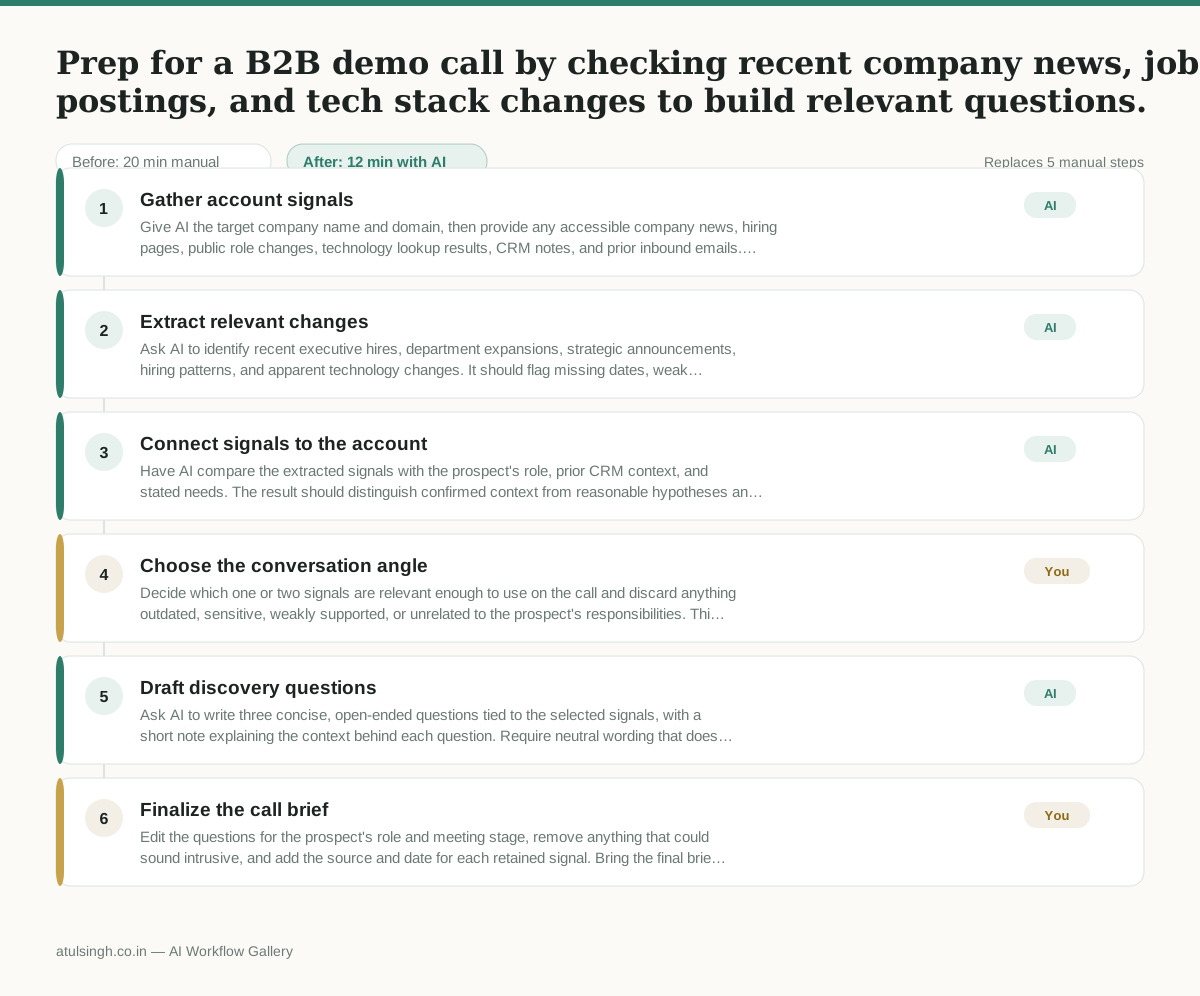
Prep for a B2B demo call by checking recent company news, job postings, and tech stack changes to build relevant questions.
Account Executives spend valuable minutes right before a sales call scrambling across multiple tabs to find relevant context, often missing key signals like recent executive hires or department expansions that could shape the conversation.
- Before
- 20 min
- After
- 12 min
- Saved
- 8 min
How this used to go
- Open the target company's website and scan the 'About' or 'News' section for recent updates.
- Check LinkedIn to see if the company is hiring in relevant departments or if key contacts have recently changed roles.
- Run the domain through a technology lookup tool to check for recent software stack additions or removals.
- Review previous CRM notes and emails from inbound forms to check for prior context.
- Draft three discovery questions in a scratchpad based on the findings.
Jumping between five different tabs and browser extensions right before a call while trying to synthesize disparate information into useful talking points.
The workflow, step by step
- AI
1. Gather account signals
Give AI the target company name and domain, then provide any accessible company news, hiring pages, public role changes, technology lookup results, CRM notes, and prior inbound emails. AI should organize the material by source and date rather than treating every item as verified fact.
- AI
2. Extract relevant changes
Ask AI to identify recent executive hires, department expansions, strategic announcements, hiring patterns, and apparent technology changes. It should flag missing dates, weak evidence, conflicting information, and signals it cannot verify.
- AI
3. Connect signals to the account
Have AI compare the extracted signals with the prospect's role, prior CRM context, and stated needs. The result should distinguish confirmed context from reasonable hypotheses and avoid inferring business priorities solely from a job posting or technology listing.
- You
4. Choose the conversation angle
Decide which one or two signals are relevant enough to use on the call and discard anything outdated, sensitive, weakly supported, or unrelated to the prospect's responsibilities. This choice determines which topics enter the conversation and prevents unverified research from shaping the meeting.
- AI
5. Draft discovery questions
Ask AI to write three concise, open-ended questions tied to the selected signals, with a short note explaining the context behind each question. Require neutral wording that does not reveal private research or present an inference as a fact.
- You
6. Finalize the call brief
Edit the questions for the prospect's role and meeting stage, remove anything that could sound intrusive, and add the source and date for each retained signal. Bring the final brief into the call and use it to guide discovery rather than reading it as a script.
What you end up with
Where this falls apart
- The target company shares a common name with other entities, causing the AI to mix up news, executive hires, and technology stacks from unrelated organizations.
- The input data consists almost entirely of unverified rumors, stale news articles, or false job postings, leading the AI to construct irrelevant or misleading discovery questions.
More for Account Executive
- Reviving deals that went quiet after sending a proposal by finding matching case studies and writing a follow-up message.
- Reviewing discovery call notes before booking a software demo to check if the prospect has a real budget, a hard timeline, and actual authority to buy.
- Tailor the demo pitch to different stakeholders based on company research and discovery notes
- Write an account handoff brief for customer success after a closed-won deal
Also in sales
- Research an incoming company and its decision makers before a first sales meeting
- Reviewing a new sales rep's practice pitch against the team's call criteria before letting them talk to real prospects
- reaching out to former colleagues and personal contacts to announce a new company or product launch without sounding like a spammy marketer
- Turn raw discovery call notes into a structured pilot proposal for a new client