
Research an incoming company and its decision makers before a first sales meeting
when done manually, account research is slow and inconsistent. important context is often missed because there is rarely enough time to dig through annual reports, recent news, and social profiles for every single scheduled call.
- Before
- 30 min
- After
- 12 min
- Saved
- 18 min
How this used to go
- Open the company website and read the 'About Us' and 'Products' pages to understand what the business does.
- Search Google for recent news, press releases, or funding announcements regarding the company.
- Look up the specific attendees on LinkedIn to review their past employment history, tenure, and recent posts.
- Check the company profile on review sites or industry directories to see current customer sentiment.
- Review internal CRM records to see if any other team member has previously communicated with anyone at the company.
- Synthesize the findings into a brief pre-call notes document or CRM update.
switching between multiple browser tabs and data sources to piece together a coherent picture of the account, only to find that half the information is outdated or irrelevant.
The workflow, step by step
- AI
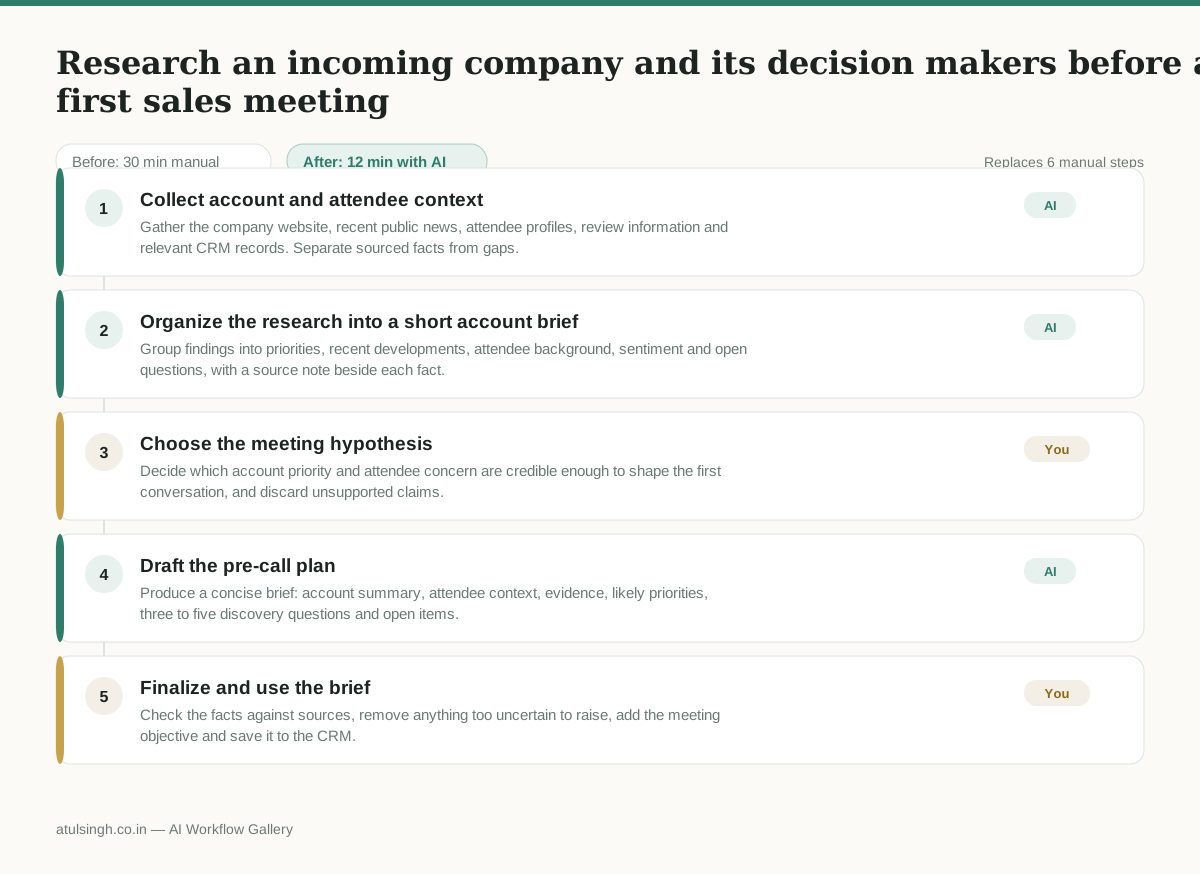
1. Collect account and attendee context
Gather the company website, recent public news and announcements, available attendee profiles, review or directory information, and relevant CRM records. Separate sourced facts from gaps, and flag information that may be outdated, inaccessible, or based only on an inference.
- AI
2. Organize the research into a short account brief
Group the findings into company priorities, products or markets, recent developments, attendee roles and background, customer sentiment, prior internal interactions, and open questions. Keep a source note beside each material fact rather than presenting assumptions as confirmed information.
- You
3. Choose the meeting hypothesis
Decide which account priority and attendee concern are credible enough to shape the first conversation, and discard unsupported or irrelevant claims. This choice determines the opening questions and prevents the meeting from being built around stale or speculative research.
- AI
4. Draft the pre-call plan
Turn the approved direction into a concise brief with an account summary, attendee context, evidence and source notes, likely priorities, three to five discovery questions, relevant CRM history, and claims that still need confirmation. Do not treat restricted profiles, missing records, or inferred intent as verified.
- You
5. Finalize and use the brief
Check the selected facts against the available sources, remove anything too uncertain to raise, and add the final meeting objective and next-step decision criteria. Save the approved brief to the CRM or meeting record and use it to prepare the opening and discovery questions.
What you end up with
Where this falls apart
- The target company has a common name shared by multiple distinct businesses, causing the AI to mix news, financial reports, and product details from unrelated entities into the research brief.
- Key decision makers have private social profiles or limited public work histories, leading the AI to hallucinate employment tenure or misidentify current roles based on outdated web mentions.
More for Sales Manager
- Reviewing a new sales rep's practice pitch against the team's call criteria before letting them talk to real prospects
- Review the sales pipeline before the weekly team meeting to find deals that haven't moved stages and figure out why.
- Reviewing stagnant deals in the pipeline before the weekly forecast meeting to figure out what is actually blocking them and decide who to call or email.
- Reviewing sales call recordings to see how reps handle customer objections and figuring out what coaching they need
Also in sales
- Prep for a B2B demo call by checking recent company news, job postings, and tech stack changes to build relevant questions.
- reaching out to former colleagues and personal contacts to announce a new company or product launch without sounding like a spammy marketer
- Reviving deals that went quiet after sending a proposal by finding matching case studies and writing a follow-up message.
- Turn raw discovery call notes into a structured pilot proposal for a new client