
Turn a long podcast episode into five short-form video scripts for social media before the next recording session.
Listening back to a 45-minute audio file to find five distinct, standalone clips, transcribing them, and formatting them into readable hook-and-body scripts takes hours that are usually needed for campaign planning and community management.
- Before
- 120 min
- After
- 45 min
- Saved
- 75 min
How this used to go
- Listen to the entire podcast episode or read the raw transcript to identify strong standalone moments.
- Mark the timestamps for five potential short clips.
- Copy and paste each selected section into a separate document.
- Edit the raw spoken transcript down to remove filler words, repetition, and tangents while keeping the core point.
- Add a visual hook or opening text line to each script for the first three seconds.
Rewatching or re-reading the entire transcript just to find five punchy segments that make sense out of context.
The workflow, step by step
- You
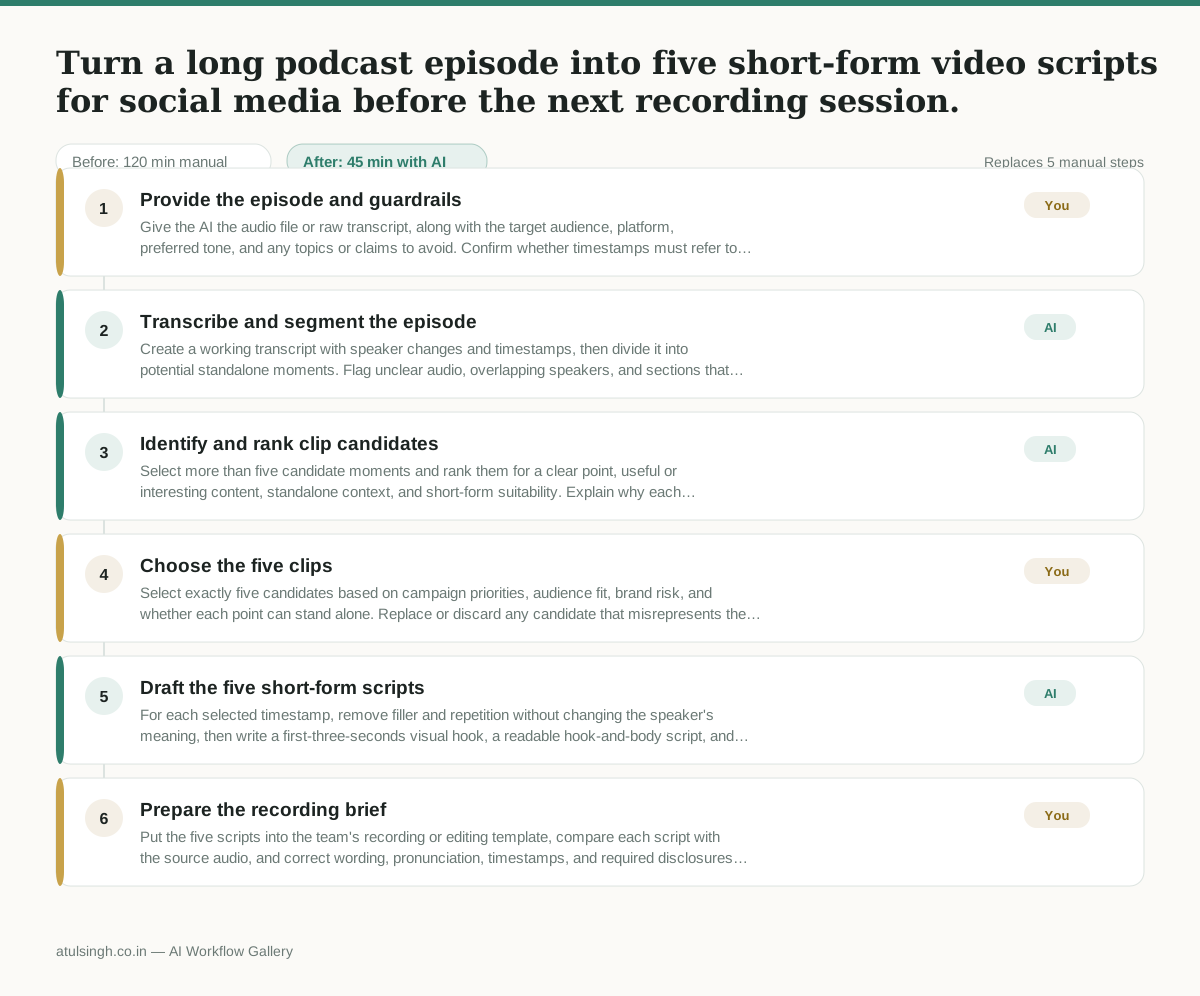
1. Provide the episode and guardrails
Give the AI the audio file or raw transcript, along with the target audience, platform, preferred tone, and any topics or claims to avoid. Confirm whether timestamps must refer to the original recording.
- AI
2. Transcribe and segment the episode
Create a working transcript with speaker changes and timestamps, then divide it into potential standalone moments. Flag unclear audio, overlapping speakers, and sections that depend on missing context.
- AI
3. Identify and rank clip candidates
Select more than five candidate moments and rank them for a clear point, useful or interesting content, standalone context, and short-form suitability. Explain why each candidate may work and note any context it still needs.
- You
4. Choose the five clips
Select exactly five candidates based on campaign priorities, audience fit, brand risk, and whether each point can stand alone. Replace or discard any candidate that misrepresents the speaker, repeats another clip, depends on visual context, or includes a claim that needs verification; this choice determines which messages reach the audience.
- AI
5. Draft the five short-form scripts
For each selected timestamp, remove filler and repetition without changing the speaker's meaning, then write a first-three-seconds visual hook, a readable hook-and-body script, and the source timestamp. Preserve uncertainty rather than inventing missing words or facts.
- You
6. Prepare the recording brief
Put the five scripts into the team's recording or editing template, compare each script with the source audio, and correct wording, pronunciation, timestamps, and required disclosures before the next recording session.
What you end up with
Where this falls apart
- The podcast relies heavily on visual demonstrations or physical props, because the AI cannot interpret visual actions and will produce scripts that leave out critical context.
- Speakers talk over each other or mumble in low-quality audio recordings, because the transcription step misinterprets the dialogue and ruins the resulting script candidates.
More for Social Media Manager
- Analyze competitor viral posts to draft three trend hooks, discarding off-brand angles
- pitching influencers and checking their engagement before sending messages
- Plan next month's organic social media posts and cut the weak ideas before anyone approves the schedule.
- building next month's social calendar from the content roadmap
Also in marketing
- Turn a recorded customer interview into a draft blog post
- Sorting incoming customer leads from web forms and assigning them to the right sales reps based on company size and location
- Turn a technical whitepaper into a three-part email nurture sequence before it launches
- Reviewing an existing ranking article, checking every claim and figure against current source data, and identifying outdated statements before republication