
Plan next month's organic social media posts and cut the weak ideas before anyone approves the schedule.
Every month starts with a blank spreadsheet and too many repetitive post ideas. Sorting through dozens of drafts to figure out what performed well historically and what is just noise takes days, and weak posts still slip through because there is no objective way to weed them out quickly.
- Before
- 240 min
- After
- 90 min
- Saved
- 150 min
How this used to go
- Pull last month's analytics reports from each platform to see which posts got engagement and which were ignored.
- Review the content backlog, brand guidelines, and product launch notes for the upcoming month.
- Draft a month's worth of post copy and image concepts in a shared spreadsheet.
- Cross-reference the new drafts against past performance data to manually flag repetitive or low-value angles.
- Rewrite or cut the flagged posts and adjust the posting frequency.
- Export the final list into a presentation or calendar format and send it to stakeholders for review.
Spending hours cross-checking old performance data against new drafts just to prove which ideas aren't worth posting.
The workflow, step by step
- You
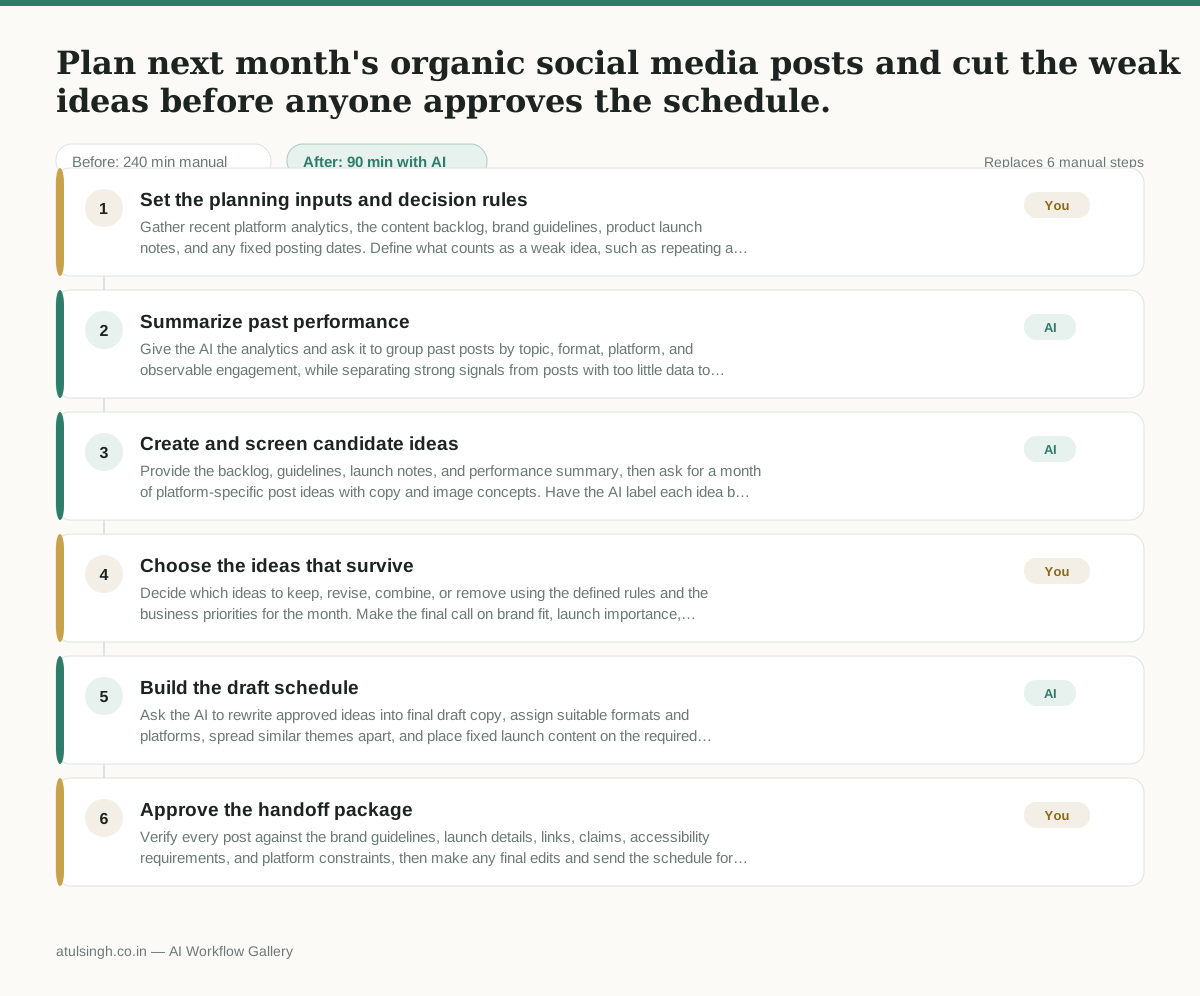
1. Set the planning inputs and decision rules
Gather recent platform analytics, the content backlog, brand guidelines, product launch notes, and any fixed posting dates. Define what counts as a weak idea, such as repeating a recent angle, lacking a clear audience benefit, or conflicting with the brand or launch plan.
- AI
2. Summarize past performance
Give the AI the analytics and ask it to group past posts by topic, format, platform, and observable engagement, while separating strong signals from posts with too little data to judge. AI can identify patterns in the supplied data, but it cannot establish causation or reliably compare metrics that differ across platforms.
- AI
3. Create and screen candidate ideas
Provide the backlog, guidelines, launch notes, and performance summary, then ask for a month of platform-specific post ideas with copy and image concepts. Have the AI label each idea by theme, audience need, format, similarity to past posts, and possible reason to cut it; treat these labels as screening aids rather than objective predictions.
- You
4. Choose the ideas that survive
Decide which ideas to keep, revise, combine, or remove using the defined rules and the business priorities for the month. Make the final call on brand fit, launch importance, risk, and whether a past performance pattern is strong enough to influence the schedule.
- AI
5. Build the draft schedule
Ask the AI to rewrite approved ideas into final draft copy, assign suitable formats and platforms, spread similar themes apart, and place fixed launch content on the required dates. Check the resulting schedule for missing fields and obvious duplication, but do not treat the AI as a substitute for factual, legal, or accessibility checks.
- You
6. Approve the handoff package
Verify every post against the brand guidelines, launch details, links, claims, accessibility requirements, and platform constraints, then make any final edits and send the schedule for stakeholder approval. Remove or hold any post whose facts, permissions, or intended audience cannot be confirmed.
What you end up with
Where this falls apart
- The historical analytics data supplied to the model is inconsistent or mixes incompatible metrics across different platforms, which causes the AI to generate unreliable performance summaries and flawed screening labels.
- The brand guidelines and product launch notes contain ambiguous rules or conflicting priorities, causing the AI to recommend weak or non-compliant post concepts that require extensive manual rewriting.
More for Social Media Manager
- Analyze competitor viral posts to draft three trend hooks, discarding off-brand angles
- pitching influencers and checking their engagement before sending messages
- building next month's social calendar from the content roadmap
- Reviewing weekly social media numbers to figure out which post types missed the mark so we can plan next week's content.
Also in marketing
- Turn a recorded customer interview into a draft blog post
- Sorting incoming customer leads from web forms and assigning them to the right sales reps based on company size and location
- Turn a technical whitepaper into a three-part email nurture sequence before it launches
- Reviewing an existing ranking article, checking every claim and figure against current source data, and identifying outdated statements before republication