
Reviewing an existing ranking article, checking every claim and figure against current source data, and identifying outdated statements before republication
When updating a content piece manually, writers often miss subtle shifts in underlying data or fail to flag claims that no longer have verifiable support, leading to outdated or inaccurate articles being republished.
- Before
- 120 min
- After
- 60 min
- Saved
- 60 min
How this used to go
- Read through the existing published article line by line to locate claims, statistics, and tool references.
- Cross-reference each factual claim, figure, and date against the original research notes or current source material.
- Identify statements that lack proper support or contain outdated data.
- Draft notes or comments on where changes, removals, or updates are needed.
- Verify that no external links or referenced studies have broken or changed their findings.
Digging through old source files and research notes to determine whether a specific claim or figure is still accurate.
The workflow, step by step
- You
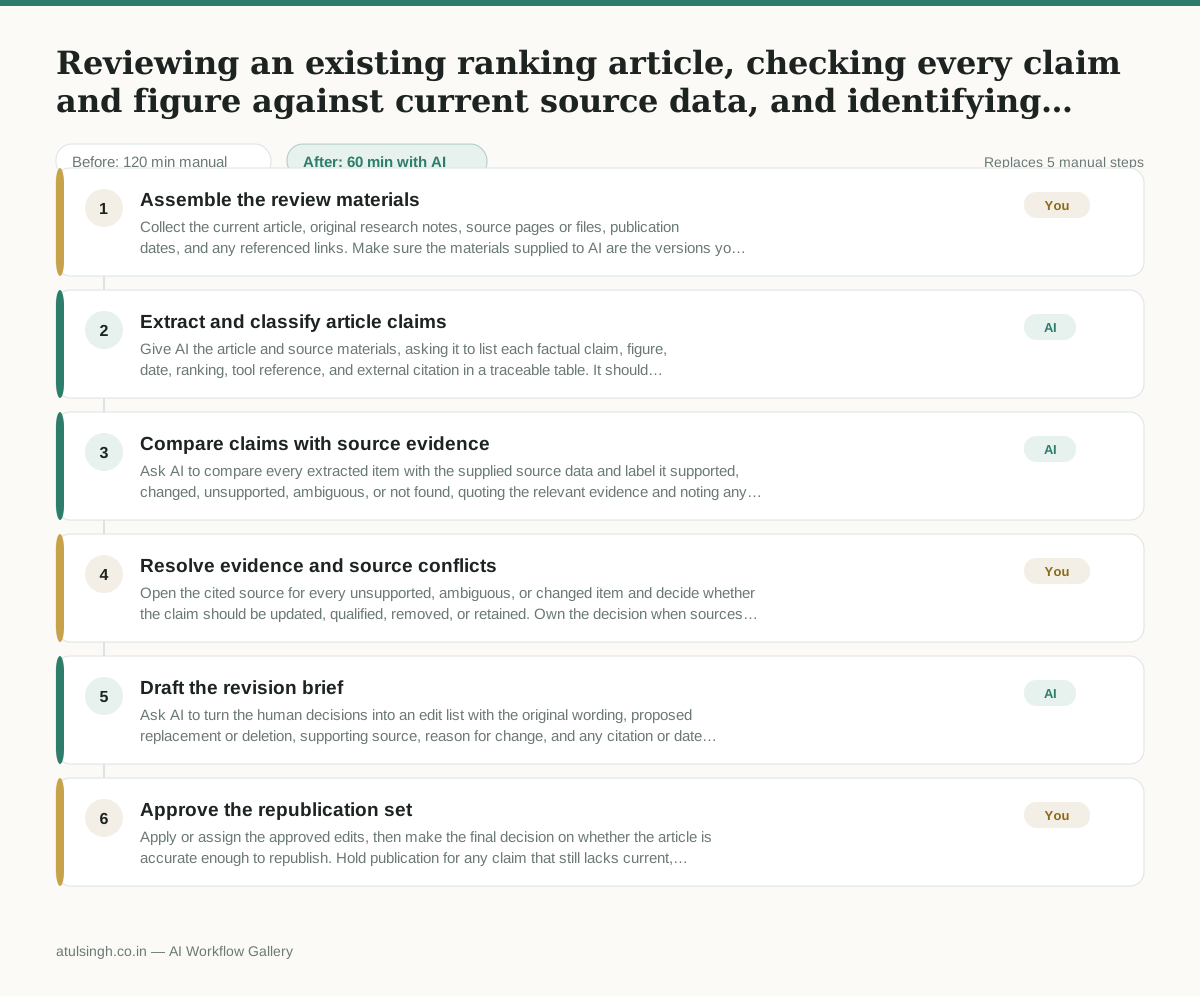
1. Assemble the review materials
Collect the current article, original research notes, source pages or files, publication dates, and any referenced links. Make sure the materials supplied to AI are the versions you intend to use for the review.
- AI
2. Extract and classify article claims
Give AI the article and source materials, asking it to list each factual claim, figure, date, ranking, tool reference, and external citation in a traceable table. It should separate direct claims from opinions, descriptions, and recommendations.
- AI
3. Compare claims with source evidence
Ask AI to compare every extracted item with the supplied source data and label it supported, changed, unsupported, ambiguous, or not found, quoting the relevant evidence and noting any mismatch in dates, definitions, or scope. AI cannot reliably confirm that a link still works or that a live page has not changed unless current page contents or a verified link-checking result are provided.
- You
4. Resolve evidence and source conflicts
Open the cited source for every unsupported, ambiguous, or changed item and decide whether the claim should be updated, qualified, removed, or retained. Own the decision when sources disagree, definitions have shifted, or the evidence is too weak to publish.
- AI
5. Draft the revision brief
Ask AI to turn the human decisions into an edit list with the original wording, proposed replacement or deletion, supporting source, reason for change, and any citation or date updates. Instruct it not to invent missing figures or fill evidence gaps with assumptions.
- You
6. Approve the republication set
Apply or assign the approved edits, then make the final decision on whether the article is accurate enough to republish. Hold publication for any claim that still lacks current, verifiable support, and retain the evidence table with the editorial record.
What you end up with
Where this falls apart
- The source materials provided to the model are outdated or incomplete, which causes the model to incorrectly flag accurate claims as unsupported or miss genuine discrepancies.
- The article contains implicit comparisons or industry jargon that lack explicit definitions in the source text, which causes the model to misclassify claims as ambiguous or mismatched.
More for Content Marketer
- Turn a recorded customer interview into a draft blog post
- Sorting incoming customer leads from web forms and assigning them to the right sales reps based on company size and location
- Turn a technical whitepaper into a three-part email nurture sequence before it launches
- Plan out the next month of content based on what people are actually asking for and our sales goals
Also in marketing
- Analyze competitor viral posts to draft three trend hooks, discarding off-brand angles
- pitching influencers and checking their engagement before sending messages
- Write and test five ad variants for one campaign from a single landing page
- Pulling the weekly paid channel report and explaining what actually drove the performance changes