
Writing a re-engagement email to a lead who went dark or closed lost last quarter
SDRs spend significant time digging through CRM history to figure out why a deal was lost, checking if the contact's situation has changed, and trying to draft a relevant, personalized follow-up message instead of writing it off completely.
- Before
- 15 min
- After
- 8 min
- Saved
- 7 min
How this used to go
- Filter the CRM for accounts marked closed-lost in the previous quarter
- Open an individual account and review past email threads and call notes to recall why the deal stalled
- Check LinkedIn or company news to see if the main contact is still at the company or if their role changed
- Draft a new email referencing the previous conversation without sounding repetitive or desperate
- Review and edit the draft to match current messaging or pricing updates
- Schedule the email or add the contact to a new outreach sequence
Manually digging through old call notes and CRM history for every single closed-lost account just to write one email.
The workflow, step by step
- AI
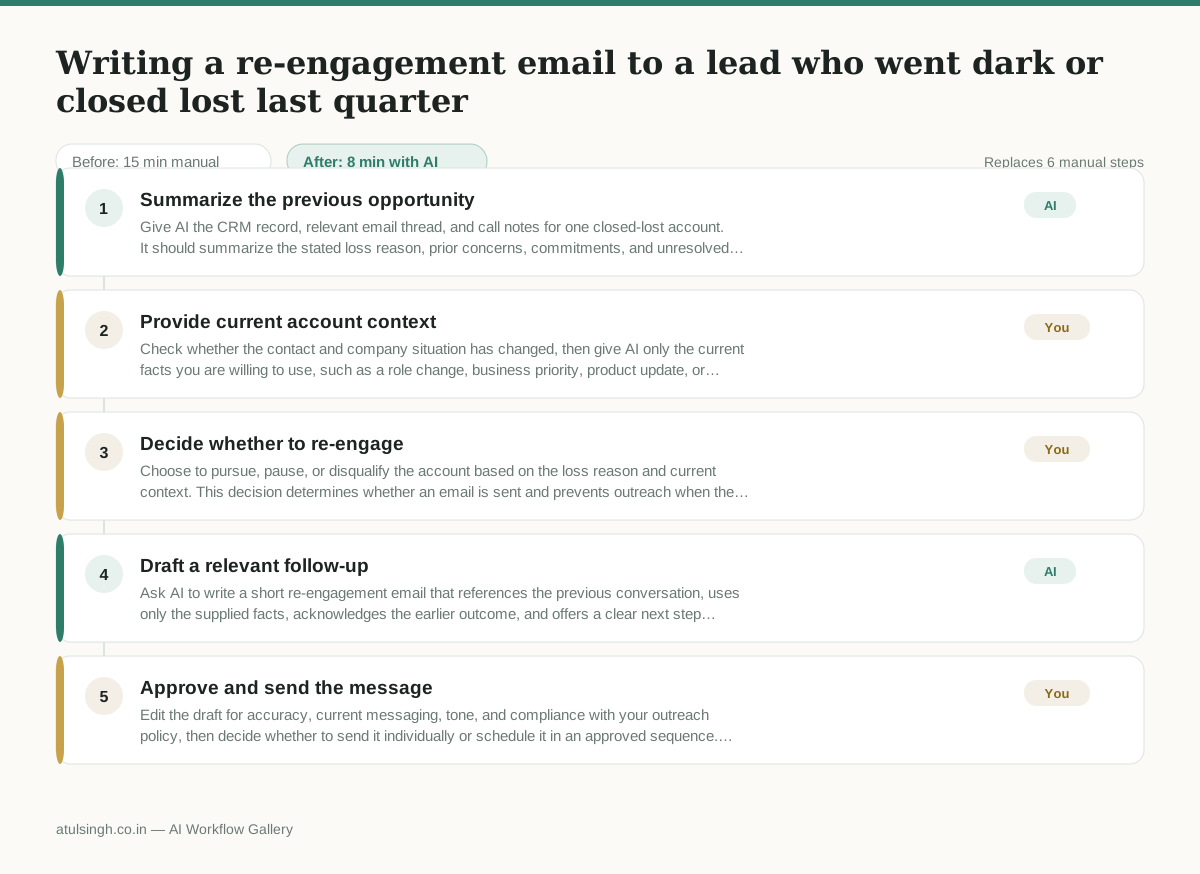
1. Summarize the previous opportunity
Give AI the CRM record, relevant email thread, and call notes for one closed-lost account. It should summarize the stated loss reason, prior concerns, commitments, and unresolved questions, marking anything unclear instead of filling gaps.
- You
2. Provide current account context
Check whether the contact and company situation has changed, then give AI only the current facts you are willing to use, such as a role change, business priority, product update, or approved pricing change. Do not treat AI as a reliable source for independently verifying employment or company news.
- You
3. Decide whether to re-engage
Choose to pursue, pause, or disqualify the account based on the loss reason and current context. This decision determines whether an email is sent and prevents outreach when the original problem is still clearly unresolved or the contact is no longer appropriate.
- AI
4. Draft a relevant follow-up
Ask AI to write a short re-engagement email that references the previous conversation, uses only the supplied facts, acknowledges the earlier outcome, and offers a clear next step without pressure. Require it to flag unsupported claims and avoid pretending to know why circumstances changed.
- You
5. Approve and send the message
Edit the draft for accuracy, current messaging, tone, and compliance with your outreach policy, then decide whether to send it individually or schedule it in an approved sequence. Remove the email if the contact, timing, or proposed next step is no longer appropriate.
What you end up with
Where this falls apart
- The CRM record contains incomplete or inaccurate historical notes, causing the AI to generate a summary that misrepresents why the deal was lost.
- The user fails to verify current employment status independently, causing the AI to draft an email to a contact who has left the company.
More for SDR / BDR
- Researching target accounts for cold outreach by checking recent news and job postings to write a personalized first email
- Find specific triggers in a company annual report for a personalized pitch
- Mapping the buying committee for a target enterprise account before initial outreach
- Write a first-touch outbound email to a target account based on recent public signals like news, job postings, or social media activity
Also in sales
- Research an incoming company and its decision makers before a first sales meeting
- Prep for a B2B demo call by checking recent company news, job postings, and tech stack changes to build relevant questions.
- Reviewing a new sales rep's practice pitch against the team's call criteria before letting them talk to real prospects
- reaching out to former colleagues and personal contacts to announce a new company or product launch without sounding like a spammy marketer