
Researching target accounts for cold outreach by checking recent news and job postings to write a personalized first email
Doing manual account research takes significant time per lead, and the process breaks down entirely when a target company lacks public news or hiring updates, or when the prospect is brand new to their role.
- Before
- 20 min
- After
- 10 min
- Saved
- 10 min
How this used to go
- Search LinkedIn for the target prospect and check their tenure in their current role.
- Navigate to the target company's website to review their press releases, blog, or news section.
- Search job boards or the company careers page to identify recent open roles and hiring patterns.
- Cross-reference company news and job postings with the prospect's likely department priorities.
- Draft a cold outreach email referencing the specific company update or job opening.
Spending fifteen minutes researching an account only to find zero public news or realizing the prospect started their job last week, making the gathered context useless for outreach.
The workflow, step by step
- AI
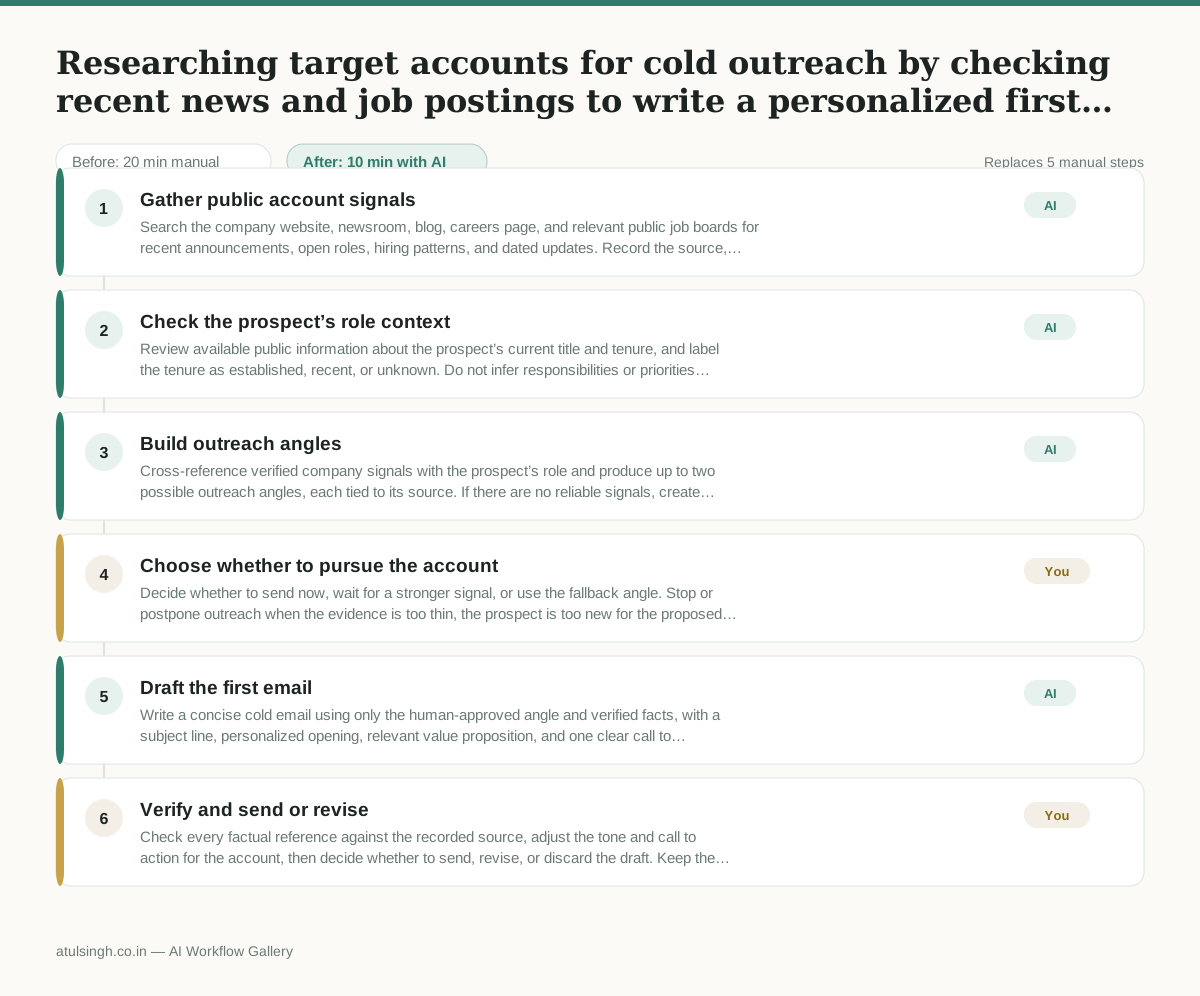
1. Gather public account signals
Search the company website, newsroom, blog, careers page, and relevant public job boards for recent announcements, open roles, hiring patterns, and dated updates. Record the source, date, and exact claim for each useful signal; if nothing relevant appears, mark the category as not found.
- AI
2. Check the prospect’s role context
Review available public information about the prospect’s current title and tenure, and label the tenure as established, recent, or unknown. Do not infer responsibilities or priorities that are not supported by the available information.
- AI
3. Build outreach angles
Cross-reference verified company signals with the prospect’s role and produce up to two possible outreach angles, each tied to its source. If there are no reliable signals, create a clearly labeled role-based fallback or state that there is not enough public context for personalization.
- You
4. Choose whether to pursue the account
Decide whether to send now, wait for a stronger signal, or use the fallback angle. Stop or postpone outreach when the evidence is too thin, the prospect is too new for the proposed context, or the angle would require an unsupported claim.
- AI
5. Draft the first email
Write a concise cold email using only the human-approved angle and verified facts, with a subject line, personalized opening, relevant value proposition, and one clear call to action. Avoid presenting the absence of public information as a company fact.
- You
6. Verify and send or revise
Check every factual reference against the recorded source, adjust the tone and call to action for the account, then decide whether to send, revise, or discard the draft. Keep the email generic or postpone it when the available context does not support credible personalization.
What you end up with
Where this falls apart
- The target company has a minimal web presence, outdated newsrooms, and unindexed job boards, causing the workflow to generate low-value generic angles or incorrect assumptions about current hiring priorities.
- The prospect recently changed roles or companies, but public records lag behind reality, causing the model to misjudge tenure and apply irrelevant context to the outreach.
More for SDR / BDR
- Find specific triggers in a company annual report for a personalized pitch
- Mapping the buying committee for a target enterprise account before initial outreach
- Write a first-touch outbound email to a target account based on recent public signals like news, job postings, or social media activity
- Writing personalized LinkedIn connection requests based on a prospect's recent posts
Also in sales
- Research an incoming company and its decision makers before a first sales meeting
- Prep for a B2B demo call by checking recent company news, job postings, and tech stack changes to build relevant questions.
- Reviewing a new sales rep's practice pitch against the team's call criteria before letting them talk to real prospects
- reaching out to former colleagues and personal contacts to announce a new company or product launch without sounding like a spammy marketer