
Write up an account handoff brief for an Account Executive when a prospect agrees to a meeting
SDRs often rush the handoff notes or leave out critical context captured during the call because they need to move immediately to the next dial, leading to AEs walking into discovery calls unprepared.
- Before
- 15 min
- After
- 6 min
- Saved
- 9 min
How this used to go
- Review call recording and raw notes from the qualification conversation
- Open the CRM and navigate to the relevant contact and account pages
- Summarize the prospect's stated pain points, current tech stack, and timeline
- Draft a structured handoff note covering budget, authority, need, and timeline
- Paste the summary into an internal messaging channel or calendar invite for the AE
- Brief the AE verbally if time permits before the discovery call
Manually re-reading messy call notes and transcripts right after a call ends, just when it is time to start making the next batch of outbound calls.
The workflow, step by step
- You
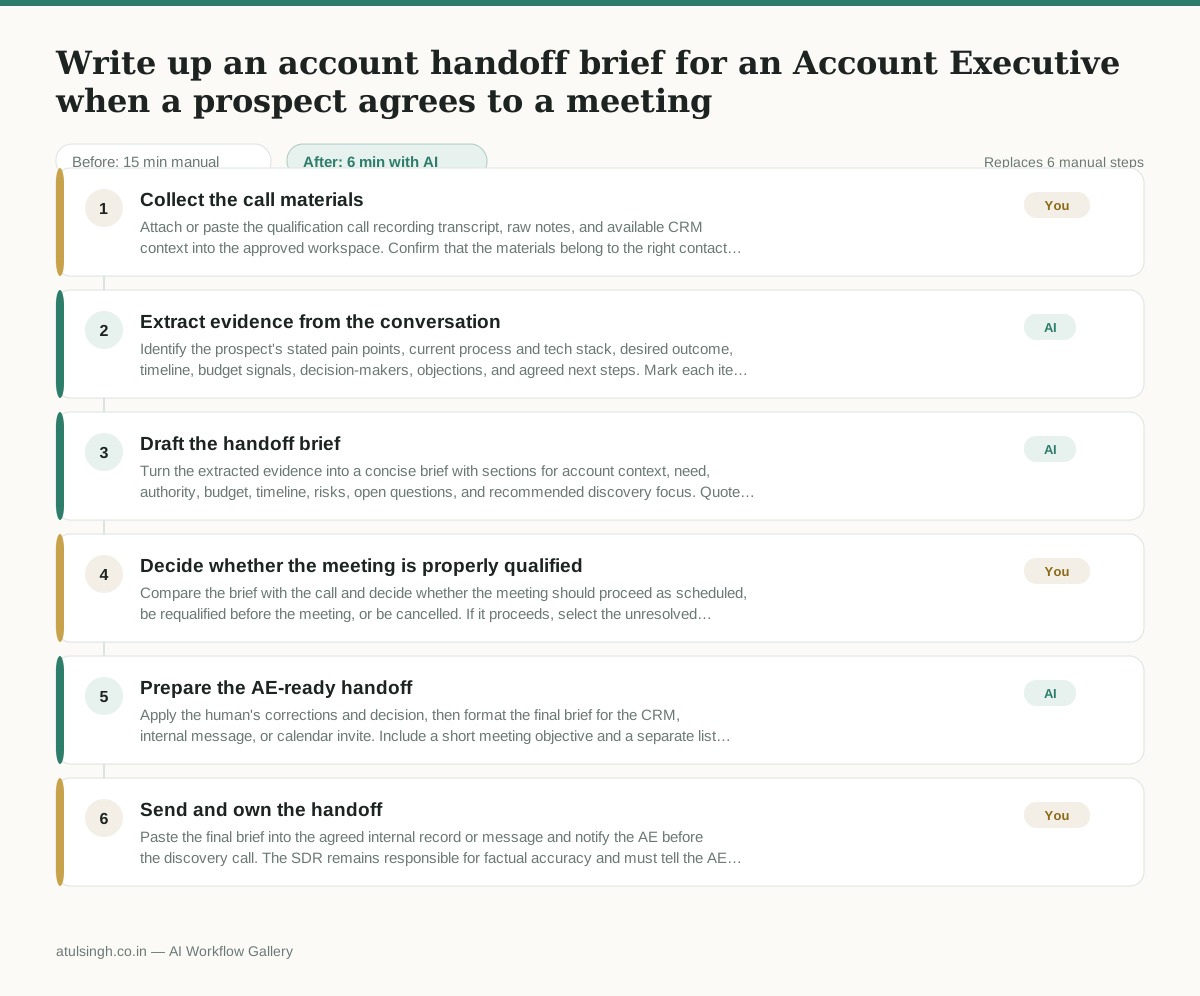
1. Collect the call materials
Attach or paste the qualification call recording transcript, raw notes, and available CRM context into the approved workspace. Confirm that the materials belong to the right contact and account before processing them.
- AI
2. Extract evidence from the conversation
Identify the prospect's stated pain points, current process and tech stack, desired outcome, timeline, budget signals, decision-makers, objections, and agreed next steps. Mark each item as stated, unclear, or absent rather than filling gaps with assumptions.
- AI
3. Draft the handoff brief
Turn the extracted evidence into a concise brief with sections for account context, need, authority, budget, timeline, risks, open questions, and recommended discovery focus. Quote or clearly attribute important claims so the AE can distinguish prospect statements from interpretation.
- You
4. Decide whether the meeting is properly qualified
Compare the brief with the call and decide whether the meeting should proceed as scheduled, be requalified before the meeting, or be cancelled. If it proceeds, select the unresolved qualification issue that the AE must address first; correct or remove any unsupported claim.
- AI
5. Prepare the AE-ready handoff
Apply the human's corrections and decision, then format the final brief for the CRM, internal message, or calendar invite. Include a short meeting objective and a separate list of questions for missing budget, authority, need, or timeline information.
- You
6. Send and own the handoff
Paste the final brief into the agreed internal record or message and notify the AE before the discovery call. The SDR remains responsible for factual accuracy and must tell the AE when the transcript or notes do not support a conclusion.
What you end up with
Where this falls apart
- The qualification call transcript contains incorrect product names or technical terms that the AI misinterprets, which results in the AE walking into the discovery call with false technical context.
- The SDR provides incomplete or truncated raw call notes alongside a messy transcript, which causes the AI to hallucinate budget or authority details that were never discussed.
More for SDR / BDR
- Researching target accounts for cold outreach by checking recent news and job postings to write a personalized first email
- Find specific triggers in a company annual report for a personalized pitch
- Mapping the buying committee for a target enterprise account before initial outreach
- Write a first-touch outbound email to a target account based on recent public signals like news, job postings, or social media activity
Also in sales
- Research an incoming company and its decision makers before a first sales meeting
- Prep for a B2B demo call by checking recent company news, job postings, and tech stack changes to build relevant questions.
- Reviewing a new sales rep's practice pitch against the team's call criteria before letting them talk to real prospects
- reaching out to former colleagues and personal contacts to announce a new company or product launch without sounding like a spammy marketer