
Reviewing past prospect calls and emails to find conversations that ended without a clear next step or booked meeting
Prospects often go dark or conversations trail off politely without a firm date on the calendar, and sales reps lose track of these open loops because they move immediately on to active pipeline and new outreach.
- Before
- 45 min
- After
- 20 min
- Saved
- 25 min
How this used to go
- Open the CRM or sales engagement platform list of recent completed calls and sent emails
- Click into individual prospect conversation records or transcripts one by one
- Read through call transcripts or email thread history to find where the conversation stalled
- Check the calendar or CRM to confirm whether a follow-up task or meeting was actually scheduled
- Manually copy the contact details and a summary of the stalled conversation into a spreadsheet or task list for follow-up
Manually opening dozens of completed call records and reading through lengthy transcripts just to find the few conversations that lack a booked next step.
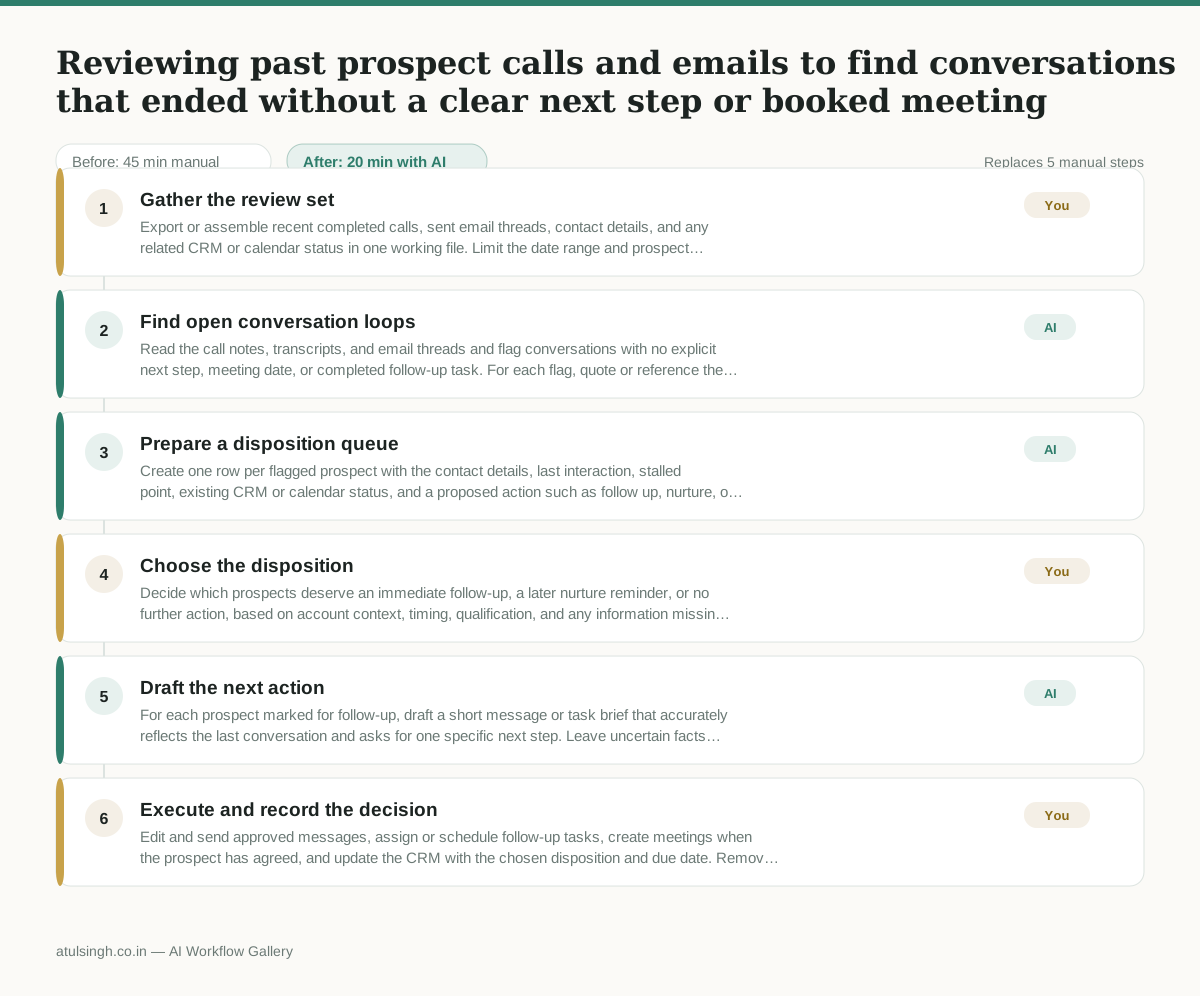
The workflow, step by step
- You
1. Gather the review set
Export or assemble recent completed calls, sent email threads, contact details, and any related CRM or calendar status in one working file. Limit the date range and prospect segment so the review covers a defined group.
- AI
2. Find open conversation loops
Read the call notes, transcripts, and email threads and flag conversations with no explicit next step, meeting date, or completed follow-up task. For each flag, quote or reference the evidence and note uncertainty; AI may miss implied agreements or scheduling activity that is absent from the supplied records.
- AI
3. Prepare a disposition queue
Create one row per flagged prospect with the contact details, last interaction, stalled point, existing CRM or calendar status, and a proposed action such as follow up, nurture, or close. Do not treat a polite reply or an unanswered message as proof of buying interest.
- You
4. Choose the disposition
Decide which prospects deserve an immediate follow-up, a later nurture reminder, or no further action, based on account context, timing, qualification, and any information missing from the records. This decision determines who receives outreach and who is removed from the active follow-up queue.
- AI
5. Draft the next action
For each prospect marked for follow-up, draft a short message or task brief that accurately reflects the last conversation and asks for one specific next step. Leave uncertain facts clearly marked instead of filling gaps with assumptions.
- You
6. Execute and record the decision
Edit and send approved messages, assign or schedule follow-up tasks, create meetings when the prospect has agreed, and update the CRM with the chosen disposition and due date. Remove prospects from the queue only after the action or no-action decision is recorded.
What you end up with
Where this falls apart
- Prospects negotiate next steps or calendar invites across external channels that are missing from the CRM records, causing the AI to incorrectly flag active deals as stalled open loops.
- Call transcripts contain informal verbal agreements or sarcasm that the AI misinterprets, resulting in inappropriate follow-up drafts being generated for prospects who explicitly requested no contact.
More for SDR / BDR
- Researching target accounts for cold outreach by checking recent news and job postings to write a personalized first email
- Find specific triggers in a company annual report for a personalized pitch
- Mapping the buying committee for a target enterprise account before initial outreach
- Write a first-touch outbound email to a target account based on recent public signals like news, job postings, or social media activity
Also in sales
- Research an incoming company and its decision makers before a first sales meeting
- Prep for a B2B demo call by checking recent company news, job postings, and tech stack changes to build relevant questions.
- Reviewing a new sales rep's practice pitch against the team's call criteria before letting them talk to real prospects
- reaching out to former colleagues and personal contacts to announce a new company or product launch without sounding like a spammy marketer