
Reviewing last week's cold call and email objections to figure out what prospects are pushing back on the most.
Objections are scattered across call recordings, notes, and CRM fields, making it time-consuming to spot actual trends versus isolated complaints.
- Before
- 60 min
- After
- 25 min
- Saved
- 35 min
How this used to go
- Export call logs and CRM notes from the past week
- Read through transcripts or notes for each lost or stalled deal
- Copy and paste recurring pushbacks into a spreadsheet
- Categorize the objections manually into themes like pricing, timing, or feature gaps
- Count the frequency of each category to see which objection came up the most
Reading through dozens of rambling call transcripts just to find the actual root cause of the prospect's hesitation.
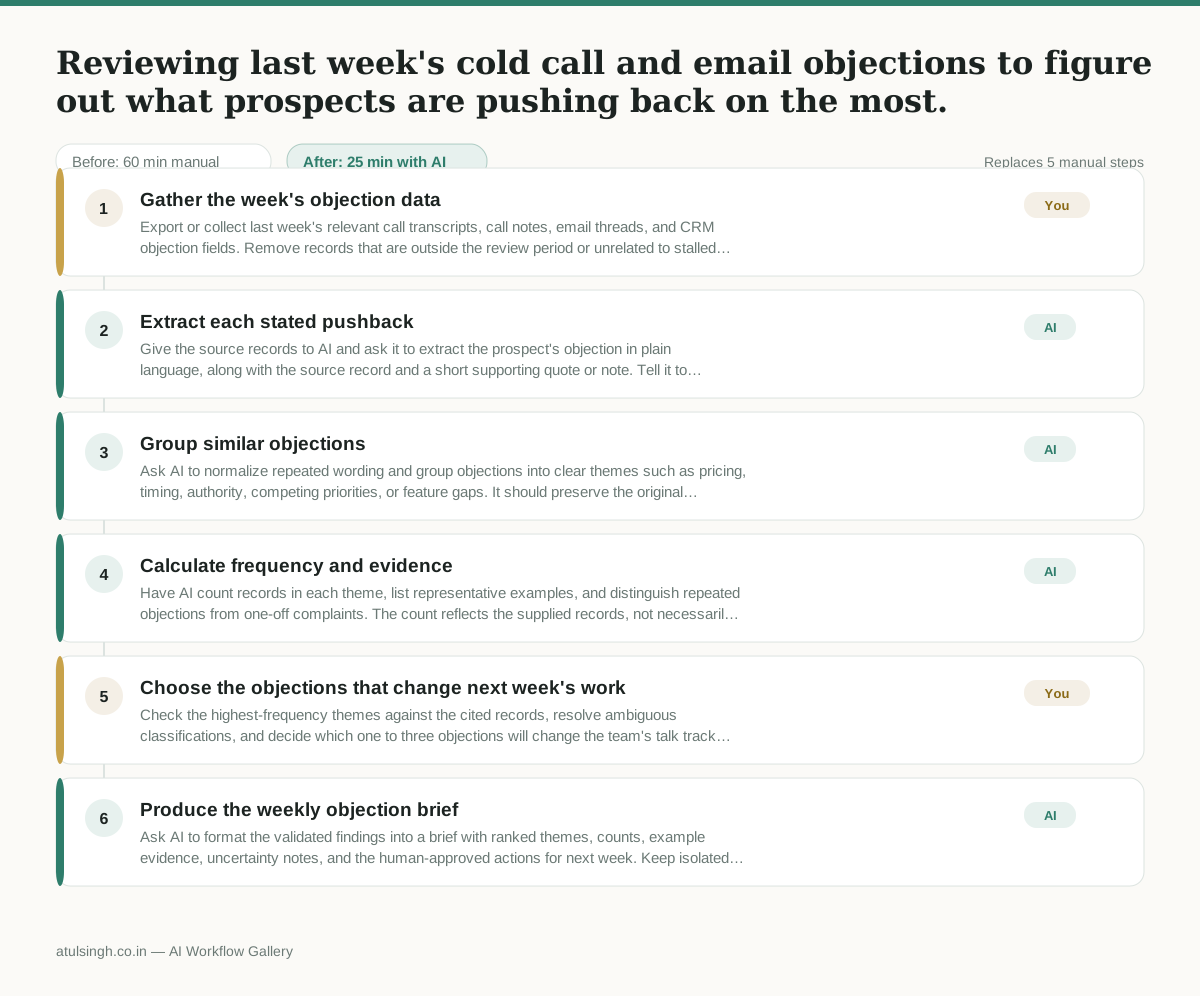
The workflow, step by step
- You
1. Gather the week's objection data
Export or collect last week's relevant call transcripts, call notes, email threads, and CRM objection fields. Remove records that are outside the review period or unrelated to stalled, lost, or active opportunities.
- AI
2. Extract each stated pushback
Give the source records to AI and ask it to extract the prospect's objection in plain language, along with the source record and a short supporting quote or note. Tell it to separate prospect objections from the SDR's interpretation.
- AI
3. Group similar objections
Ask AI to normalize repeated wording and group objections into clear themes such as pricing, timing, authority, competing priorities, or feature gaps. It should preserve the original wording and flag statements that are too vague or ambiguous to classify reliably.
- AI
4. Calculate frequency and evidence
Have AI count records in each theme, list representative examples, and distinguish repeated objections from one-off complaints. The count reflects the supplied records, not necessarily the full prospect population, so AI should identify missing or thin evidence.
- You
5. Choose the objections that change next week's work
Check the highest-frequency themes against the cited records, resolve ambiguous classifications, and decide which one to three objections will change the team's talk track, follow-up messaging, qualification questions, or product-feedback escalation. Do not act on a theme that lacks enough context or is based on a single unusual complaint.
- AI
6. Produce the weekly objection brief
Ask AI to format the validated findings into a brief with ranked themes, counts, example evidence, uncertainty notes, and the human-approved actions for next week. Keep isolated complaints in a separate section instead of presenting them as trends.
What you end up with
Where this falls apart
- Call transcripts are incomplete, muffled, or missing key context, causing the model to misinterpret vague statements as definitive pricing objections.
- SDRs record subjective interpretations instead of actual prospect words in CRM fields, causing the model to aggregate biased summaries instead of raw pushback data.
More for SDR / BDR
- Researching target accounts for cold outreach by checking recent news and job postings to write a personalized first email
- Find specific triggers in a company annual report for a personalized pitch
- Mapping the buying committee for a target enterprise account before initial outreach
- Write a first-touch outbound email to a target account based on recent public signals like news, job postings, or social media activity
Also in sales
- Research an incoming company and its decision makers before a first sales meeting
- Prep for a B2B demo call by checking recent company news, job postings, and tech stack changes to build relevant questions.
- Reviewing a new sales rep's practice pitch against the team's call criteria before letting them talk to real prospects
- reaching out to former colleagues and personal contacts to announce a new company or product launch without sounding like a spammy marketer