
Reviewing active prospecting sequences to decide which contacts need a different follow-up approach
It takes too much time to manually read through dozens of active email threads, replies, and out-of-office notices to figure out who needs a personalized pivot and who should just get the standard next step.
- Before
- 45 min
- After
- 15 min
- Saved
- 30 min
How this used to go
- Open the sales engagement platform and filter for active sequences with ongoing replies or stalled threads.
- Click into individual contact profiles to read the latest email replies or check for missing engagement data.
- Cross-reference company news, website changes, or job updates for unresponsive leads to see if the current angle is irrelevant.
- Decide whether to pause the sequence, switch to a different message template, or schedule a manual call.
- Apply the new sequence or tag in the CRM and queue up the alternative follow-up message.
Reading through dozens of dead-end replies and uniform out-of-office messages just to find the few contacts who actually warrant a customized follow-up.
The workflow, step by step
- You
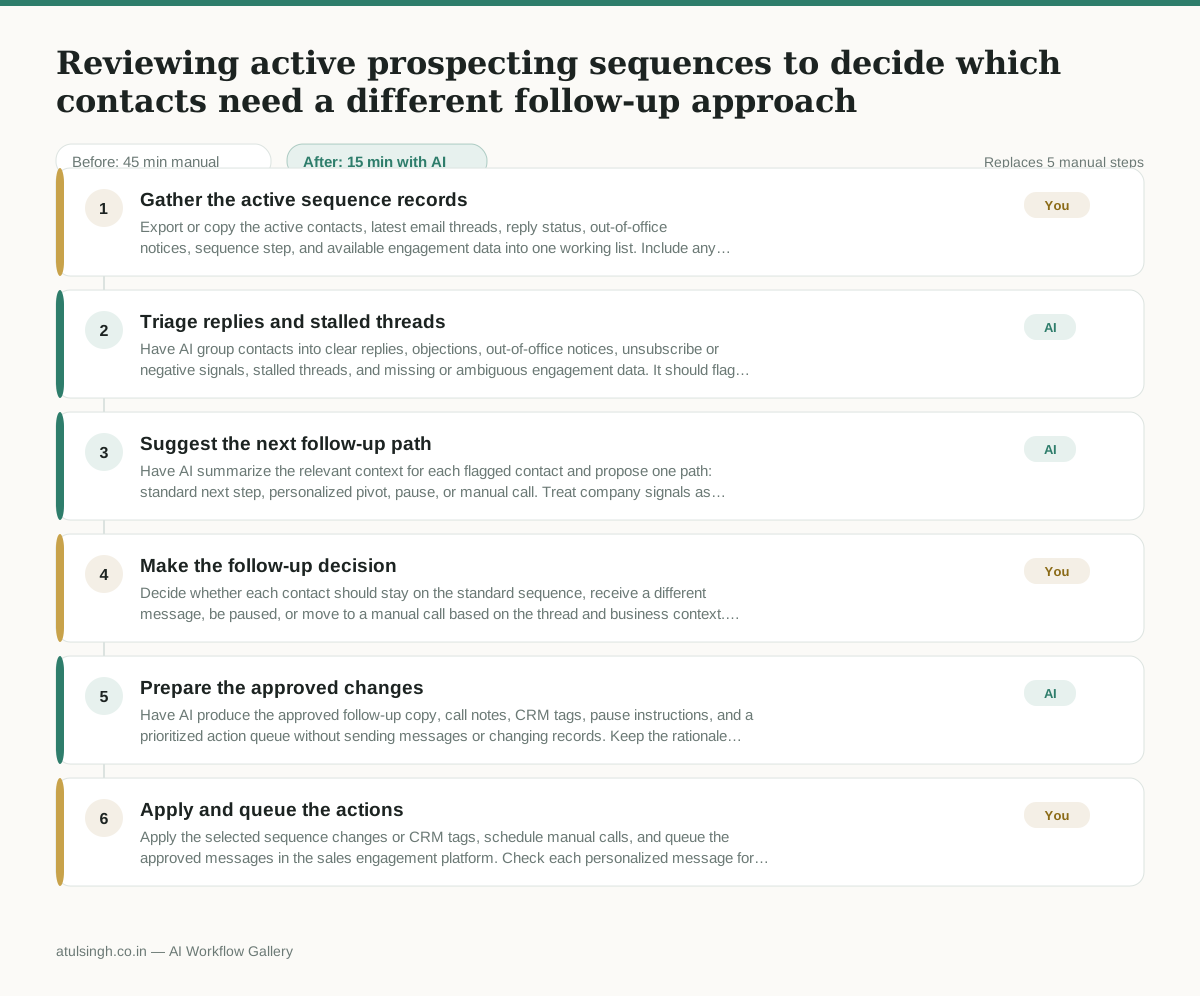
1. Gather the active sequence records
Export or copy the active contacts, latest email threads, reply status, out-of-office notices, sequence step, and available engagement data into one working list. Include any company news, website changes, or job updates you already want considered.
- AI
2. Triage replies and stalled threads
Have AI group contacts into clear replies, objections, out-of-office notices, unsubscribe or negative signals, stalled threads, and missing or ambiguous engagement data. It should flag messages that need human interpretation rather than treating silence as buying intent.
- AI
3. Suggest the next follow-up path
Have AI summarize the relevant context for each flagged contact and propose one path: standard next step, personalized pivot, pause, or manual call. Treat company signals as supporting context only; AI cannot reliably infer intent from silence, generic out-of-office messages, or limited public updates.
- You
4. Make the follow-up decision
Decide whether each contact should stay on the standard sequence, receive a different message, be paused, or move to a manual call based on the thread and business context. Reject or revise AI suggestions when the evidence is weak, sensitive, outdated, or inconsistent with the account.
- AI
5. Prepare the approved changes
Have AI produce the approved follow-up copy, call notes, CRM tags, pause instructions, and a prioritized action queue without sending messages or changing records. Keep the rationale and source signals beside each proposed action so the decision remains auditable.
- You
6. Apply and queue the actions
Apply the selected sequence changes or CRM tags, schedule manual calls, and queue the approved messages in the sales engagement platform. Check each personalized message for accuracy and compliance before it is sent.
What you end up with
Where this falls apart
- Prospect replies contain complex negotiations or multi-layered legal objections, causing the model to misclassify a negative response as a buying signal and queue an inappropriate follow-up.
- Out-of-office automated replies include ambiguous dates or forwarding instructions, causing the model to misinterpret return timelines and schedule outreach while the contact is still away.
More for SDR / BDR
- Researching target accounts for cold outreach by checking recent news and job postings to write a personalized first email
- Find specific triggers in a company annual report for a personalized pitch
- Mapping the buying committee for a target enterprise account before initial outreach
- Write a first-touch outbound email to a target account based on recent public signals like news, job postings, or social media activity
Also in sales
- Research an incoming company and its decision makers before a first sales meeting
- Prep for a B2B demo call by checking recent company news, job postings, and tech stack changes to build relevant questions.
- Reviewing a new sales rep's practice pitch against the team's call criteria before letting them talk to real prospects
- reaching out to former colleagues and personal contacts to announce a new company or product launch without sounding like a spammy marketer