
Researching an inbound lead and drafting tailored qualification questions before a discovery call
Ramping up for a first call takes too much time between bouncing across tabs to check company websites, LinkedIn profiles, and CRM history, often leading to generic questions that do not match the lead's specific situation.
- Before
- 15 min
- After
- 8 min
- Saved
- 7 min
How this used to go
- Open the inbound form submission or notification in the CRM to review company name, contact title, and initial message.
- Search for the company website and read the homepage and 'About Us' page to understand their primary business model and products.
- Look up the contact on LinkedIn to check their tenure, past experience, and recent activity or posts.
- Check the CRM for any previous touchpoints, historical account notes, or matching parent-company records.
- Cross-reference the company size and industry against current qualification criteria.
- Draft three to five specific questions in a notepad or calendar invite description to guide the discovery call.
Switching contexts repeatedly across the CRM, company website, and social networks just to pull together basic context for a single conversation.
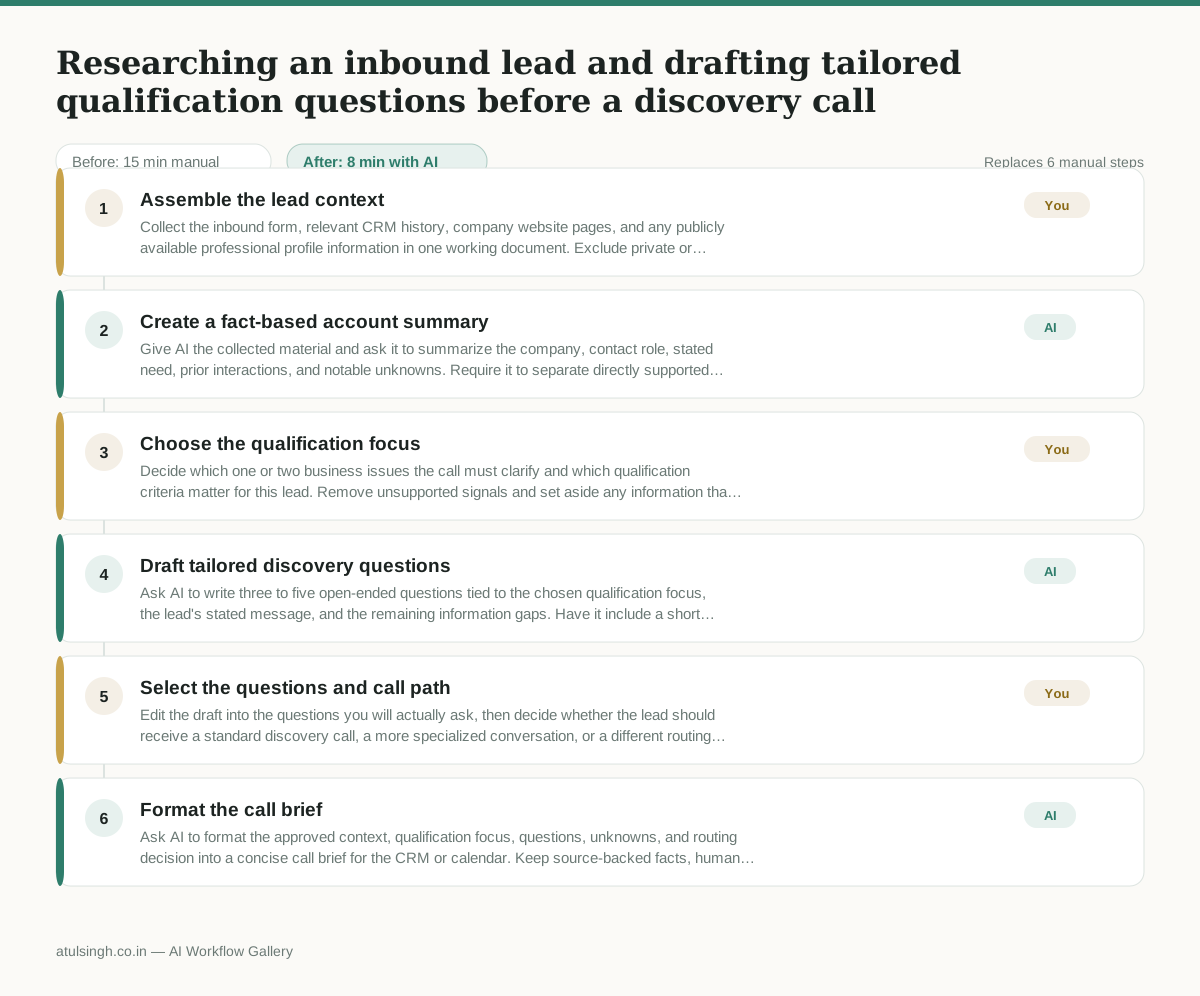
The workflow, step by step
- You
1. Assemble the lead context
Collect the inbound form, relevant CRM history, company website pages, and any publicly available professional profile information in one working document. Exclude private or restricted information that you are not permitted to use.
- AI
2. Create a fact-based account summary
Give AI the collected material and ask it to summarize the company, contact role, stated need, prior interactions, and notable unknowns. Require it to separate directly supported facts from assumptions; AI cannot reliably confirm a person's intent, current role, or the accuracy of outdated public information.
- You
3. Choose the qualification focus
Decide which one or two business issues the call must clarify and which qualification criteria matter for this lead. Remove unsupported signals and set aside any information that could bias the conversation or is too uncertain to use.
- AI
4. Draft tailored discovery questions
Ask AI to write three to five open-ended questions tied to the chosen qualification focus, the lead's stated message, and the remaining information gaps. Have it include a short reason for each question and avoid presenting inferred details as facts.
- You
5. Select the questions and call path
Edit the draft into the questions you will actually ask, then decide whether the lead should receive a standard discovery call, a more specialized conversation, or a different routing path. This decision determines the meeting agenda and who needs to participate.
- AI
6. Format the call brief
Ask AI to format the approved context, qualification focus, questions, unknowns, and routing decision into a concise call brief for the CRM or calendar. Keep source-backed facts, human decisions, and items to verify visibly distinct.
What you end up with
Where this falls apart
- The input materials contain outdated company information or defunct product lines, which causes the AI to generate irrelevant discovery questions based on false premises.
- The lead's name or company name is common and the initial research step pulls data from a different person or entity, which results in a factually incorrect account summary and call brief.
More for SDR / BDR
- Researching target accounts for cold outreach by checking recent news and job postings to write a personalized first email
- Find specific triggers in a company annual report for a personalized pitch
- Mapping the buying committee for a target enterprise account before initial outreach
- Write a first-touch outbound email to a target account based on recent public signals like news, job postings, or social media activity
Also in sales
- Research an incoming company and its decision makers before a first sales meeting
- Prep for a B2B demo call by checking recent company news, job postings, and tech stack changes to build relevant questions.
- Reviewing a new sales rep's practice pitch against the team's call criteria before letting them talk to real prospects
- reaching out to former colleagues and personal contacts to announce a new company or product launch without sounding like a spammy marketer