
Replying to a vague inbound lead to get more details for qualification
Leads often reply to outreach with minimal answers, requiring manual digging through their company background and crafting a tailored follow-up to get the missing information needed to decide if they are worth a sales call.
- Before
- 10 min
- After
- 6 min
- Saved
- 4 min
How this used to go
- Read the vague reply from the inbound lead in the inbox
- Open the CRM record to check previous touchpoints and company details
- Search LinkedIn for the lead's profile and recent company updates
- Review the company website to understand their current product or service offerings
- Draft a follow-up email asking specific questions to fill the qualification gaps
- Send the reply and update the CRM task status
Switching between multiple tabs and browser windows to piece together context before writing a relevant reply.
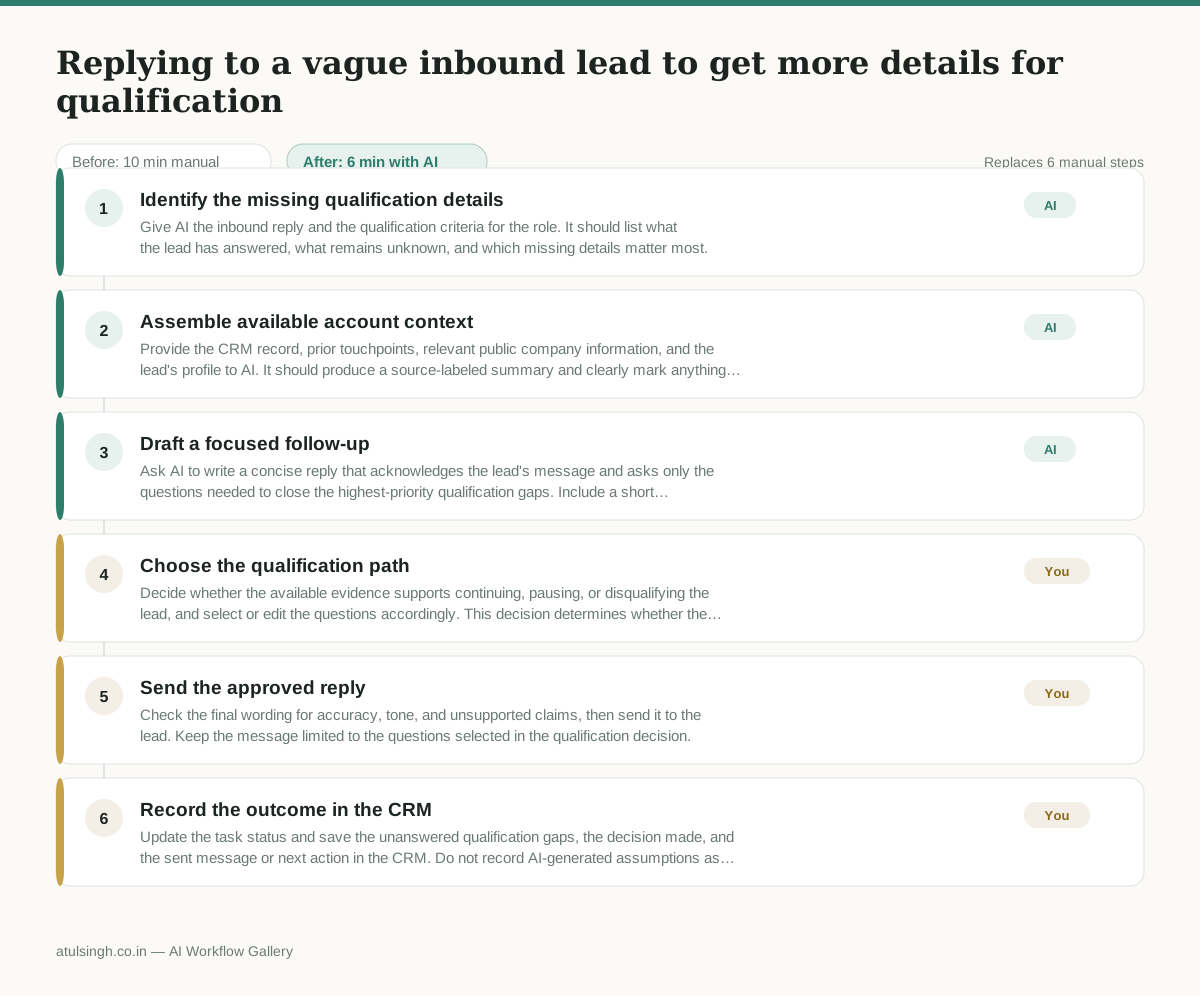
The workflow, step by step
- AI
1. Identify the missing qualification details
Give AI the inbound reply and the qualification criteria for the role. It should list what the lead has answered, what remains unknown, and which missing details matter most.
- AI
2. Assemble available account context
Provide the CRM record, prior touchpoints, relevant public company information, and the lead's profile to AI. It should produce a source-labeled summary and clearly mark anything it could not verify rather than inferring it.
- AI
3. Draft a focused follow-up
Ask AI to write a concise reply that acknowledges the lead's message and asks only the questions needed to close the highest-priority qualification gaps. Include a short explanation of why the questions are relevant when appropriate.
- You
4. Choose the qualification path
Decide whether the available evidence supports continuing, pausing, or disqualifying the lead, and select or edit the questions accordingly. This decision determines whether the lead receives a follow-up, is routed to another owner, or is removed from active sales work; AI cannot reliably make it from public information alone.
- You
5. Send the approved reply
Check the final wording for accuracy, tone, and unsupported claims, then send it to the lead. Keep the message limited to the questions selected in the qualification decision.
- You
6. Record the outcome in the CRM
Update the task status and save the unanswered qualification gaps, the decision made, and the sent message or next action in the CRM. Do not record AI-generated assumptions as confirmed lead information.
What you end up with
Where this falls apart
- The inbound lead uses a generic or shared corporate email domain that lacks public records, causing the context-gathering step to pull incorrect company data or return nothing useful.
- The lead's reply contains sarcasm, nuanced industry jargon, or subtle objections that the AI interprets as agreement, leading to inappropriate follow-up questions.
More for SDR / BDR
- Researching target accounts for cold outreach by checking recent news and job postings to write a personalized first email
- Find specific triggers in a company annual report for a personalized pitch
- Mapping the buying committee for a target enterprise account before initial outreach
- Write a first-touch outbound email to a target account based on recent public signals like news, job postings, or social media activity
Also in sales
- Research an incoming company and its decision makers before a first sales meeting
- Prep for a B2B demo call by checking recent company news, job postings, and tech stack changes to build relevant questions.
- Reviewing a new sales rep's practice pitch against the team's call criteria before letting them talk to real prospects
- reaching out to former colleagues and personal contacts to announce a new company or product launch without sounding like a spammy marketer