
Following up with a prospect who is interested in what you sell but says they are not ready to buy right now
When leads say they are interested but not ready, reps often either forget to follow up at the right time or send generic check-in emails that get ignored, causing warm leads to go cold.
- Before
- 15 min
- After
- 8 min
- Saved
- 7 min
How this used to go
- Review the prospect's initial notes and reason for delaying purchase
- Open the CRM and create a task to follow up on a specific future date
- Draft a manual reminder email or note on what was discussed
- Search past email threads to refresh memory before the follow-up date arrives
- Write and send a new message asking if their timeline has changed
Remembering to check the task list on the exact right day and having to dig through old notes to figure out what the prospect actually cared about.
The workflow, step by step
- AI
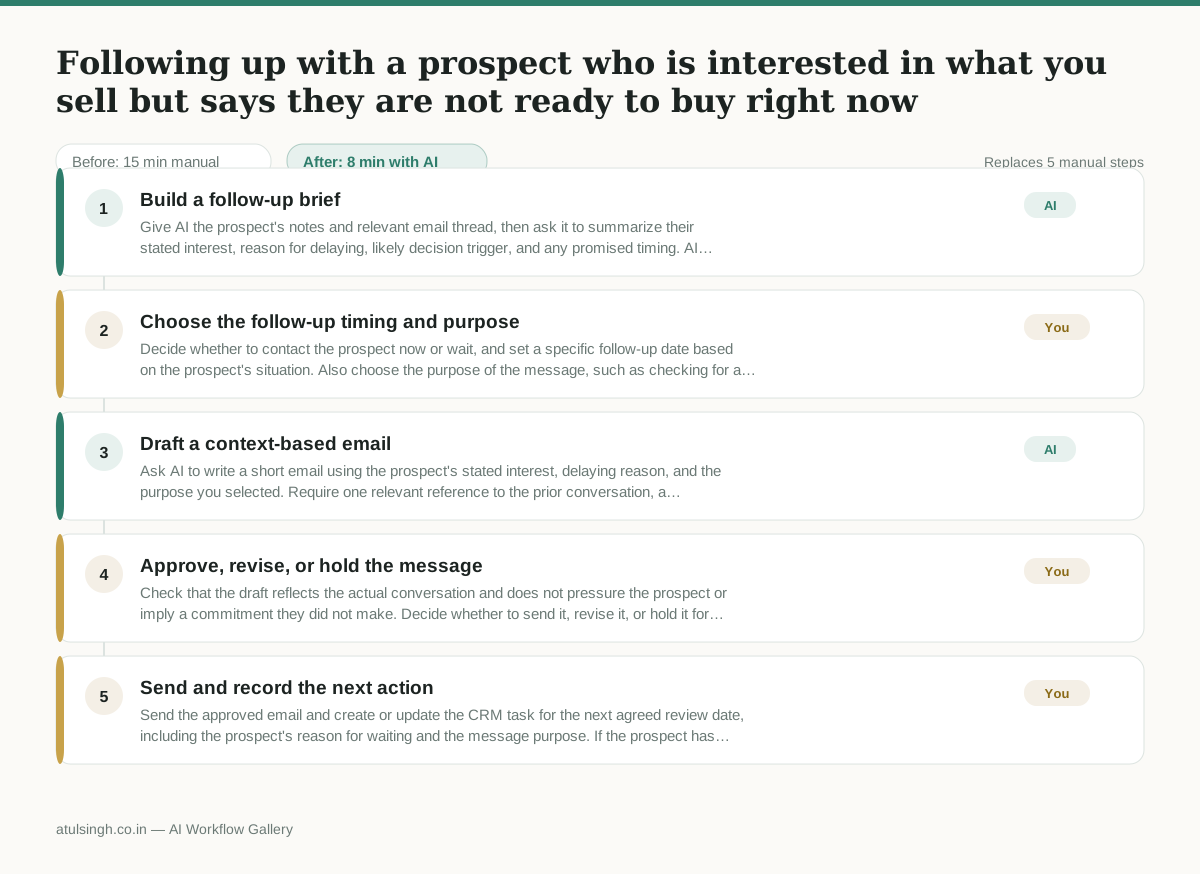
1. Build a follow-up brief
Give AI the prospect's notes and relevant email thread, then ask it to summarize their stated interest, reason for delaying, likely decision trigger, and any promised timing. AI can organize the record, but it cannot reliably determine whether the prospect is now ready to buy.
- You
2. Choose the follow-up timing and purpose
Decide whether to contact the prospect now or wait, and set a specific follow-up date based on the prospect's situation. Also choose the purpose of the message, such as checking for a changed priority, sharing a relevant answer, or confirming a future planning window.
- AI
3. Draft a context-based email
Ask AI to write a short email using the prospect's stated interest, delaying reason, and the purpose you selected. Require one relevant reference to the prior conversation, a low-pressure question, and no unsupported assumptions about the prospect's timeline.
- You
4. Approve, revise, or hold the message
Check that the draft reflects the actual conversation and does not pressure the prospect or imply a commitment they did not make. Decide whether to send it, revise it, or hold it for the selected date; this decision determines whether the lead receives outreach and what expectation is set.
- You
5. Send and record the next action
Send the approved email and create or update the CRM task for the next agreed review date, including the prospect's reason for waiting and the message purpose. If the prospect has replied with a concrete next step, record that instead of applying a generic follow-up date.
What you end up with
Where this falls apart
- The initial CRM notes contain incorrect or outdated reasons for the delay, causing the AI to draft an email based on false assumptions.
- The prospect's stated delay reason is vague or uninformative, resulting in a generic draft that offers no meaningful context for the follow-up.
More for SDR / BDR
- Researching target accounts for cold outreach by checking recent news and job postings to write a personalized first email
- Find specific triggers in a company annual report for a personalized pitch
- Mapping the buying committee for a target enterprise account before initial outreach
- Write a first-touch outbound email to a target account based on recent public signals like news, job postings, or social media activity
Also in sales
- Research an incoming company and its decision makers before a first sales meeting
- Prep for a B2B demo call by checking recent company news, job postings, and tech stack changes to build relevant questions.
- Reviewing a new sales rep's practice pitch against the team's call criteria before letting them talk to real prospects
- reaching out to former colleagues and personal contacts to announce a new company or product launch without sounding like a spammy marketer