
finding a warm introduction path into a target account before sending cold emails
when you search for mutual connections or shared past experiences across dozens of accounts by hand, you spend hours digging through LinkedIn profiles and CRM notes without finding a clear path, leading to delayed outreach and generic messaging.
- Before
- 45 min
- After
- 20 min
- Saved
- 25 min
How this used to go
- Open LinkedIn and search for a target account.
- Review the employee list to identify decision-makers.
- Click on each decision-maker's profile to check for shared connections, previous employers, or alumni networks.
- Cross-reference those names against the CRM to see if any current or past customers have an existing relationship.
- Check personal notes or past email threads for any historical contact at the target company.
- Compile the potential warm paths into a spreadsheet before drafting any outreach.
checking profiles one by one and cross-referencing them against the CRM takes a lot of time with very few actual warm paths found.
The workflow, step by step
- You
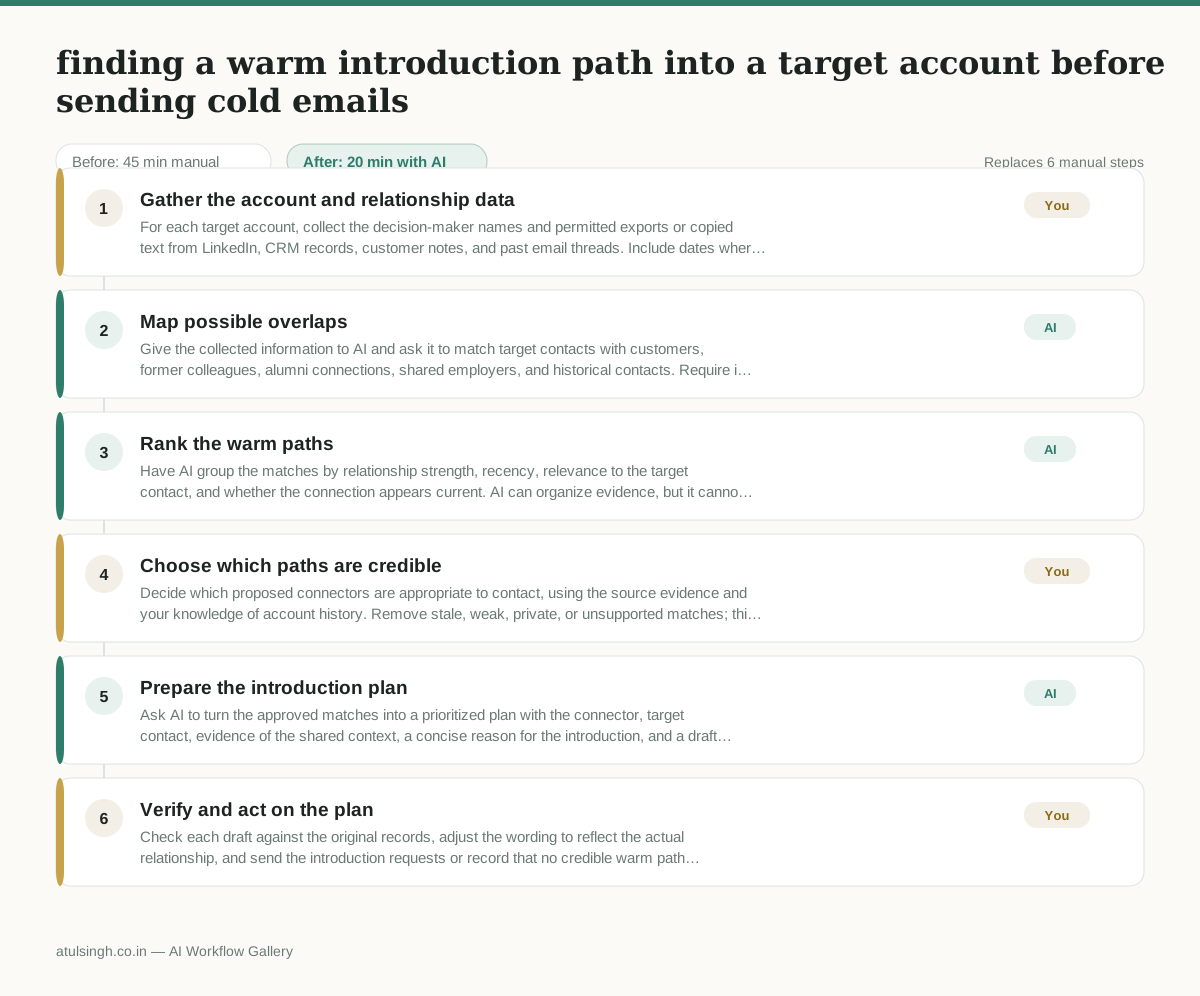
1. Gather the account and relationship data
For each target account, collect the decision-maker names and permitted exports or copied text from LinkedIn, CRM records, customer notes, and past email threads. Include dates where available so relationship recency can be assessed.
- AI
2. Map possible overlaps
Give the collected information to AI and ask it to match target contacts with customers, former colleagues, alumni connections, shared employers, and historical contacts. Require it to cite the source text for every proposed connection and mark missing evidence.
- AI
3. Rank the warm paths
Have AI group the matches by relationship strength, recency, relevance to the target contact, and whether the connection appears current. AI can organize evidence, but it cannot reliably verify that a relationship is active or that someone is willing to make an introduction.
- You
4. Choose which paths are credible
Decide which proposed connectors are appropriate to contact, using the source evidence and your knowledge of account history. Remove stale, weak, private, or unsupported matches; this determines who receives an introduction request and which accounts proceed directly to cold outreach.
- AI
5. Prepare the introduction plan
Ask AI to turn the approved matches into a prioritized plan with the connector, target contact, evidence of the shared context, a concise reason for the introduction, and a draft request to the connector. Keep uncertain claims explicitly labeled.
- You
6. Verify and act on the plan
Check each draft against the original records, adjust the wording to reflect the actual relationship, and send the introduction requests or record that no credible warm path exists. Only after this decision should you draft a cold email for accounts without a usable path.
What you end up with
Where this falls apart
- The input data contains outdated CRM records or stale email threads, which causes the AI to hallucinate active relationships that no longer exist.
- The source text lacks explicit employment dates or context, causing the AI to group individuals who worked at the same company during entirely different decades as shared alumni.
More for SDR / BDR
- Researching target accounts for cold outreach by checking recent news and job postings to write a personalized first email
- Find specific triggers in a company annual report for a personalized pitch
- Mapping the buying committee for a target enterprise account before initial outreach
- Write a first-touch outbound email to a target account based on recent public signals like news, job postings, or social media activity
Also in sales
- Research an incoming company and its decision makers before a first sales meeting
- Prep for a B2B demo call by checking recent company news, job postings, and tech stack changes to build relevant questions.
- Reviewing a new sales rep's practice pitch against the team's call criteria before letting them talk to real prospects
- reaching out to former colleagues and personal contacts to announce a new company or product launch without sounding like a spammy marketer