
Draft a personalized reply to a pricing objection after an initial pitch
When a prospect pushes back on price, an SDR has to stop what they are doing, review the initial notes and context from the call or email, check pricing tiers or discount guidelines, and write a custom response that addresses the specific objection without sounding defensive or cutting margin unnecessarily. Doing this manually often leads to delayed replies because reps prioritize active prospecting, or it results in rushed, generic copy that fails to re-anchor the value.
- Before
- 20 min
- After
- 10 min
- Saved
- 10 min
How this used to go
- Read through the prospect's pricing objection email or call transcript notes.
- Check the CRM history to review company size, use case, and what specific features they cared about.
- Open the internal pricing sheet or discount matrix to see what flexibility is permitted.
- Draft a response balancing empathy, the original value proposition, and a proposed path forward or alternative package.
- Proofread the draft to ensure the tone is collaborative rather than pushy before sending.
Balancing the need to respond quickly with the time required to pull context and check pricing rules, often resulting in either a delayed reply or a boilerplate response that kills the deal momentum.
The workflow, step by step
- You
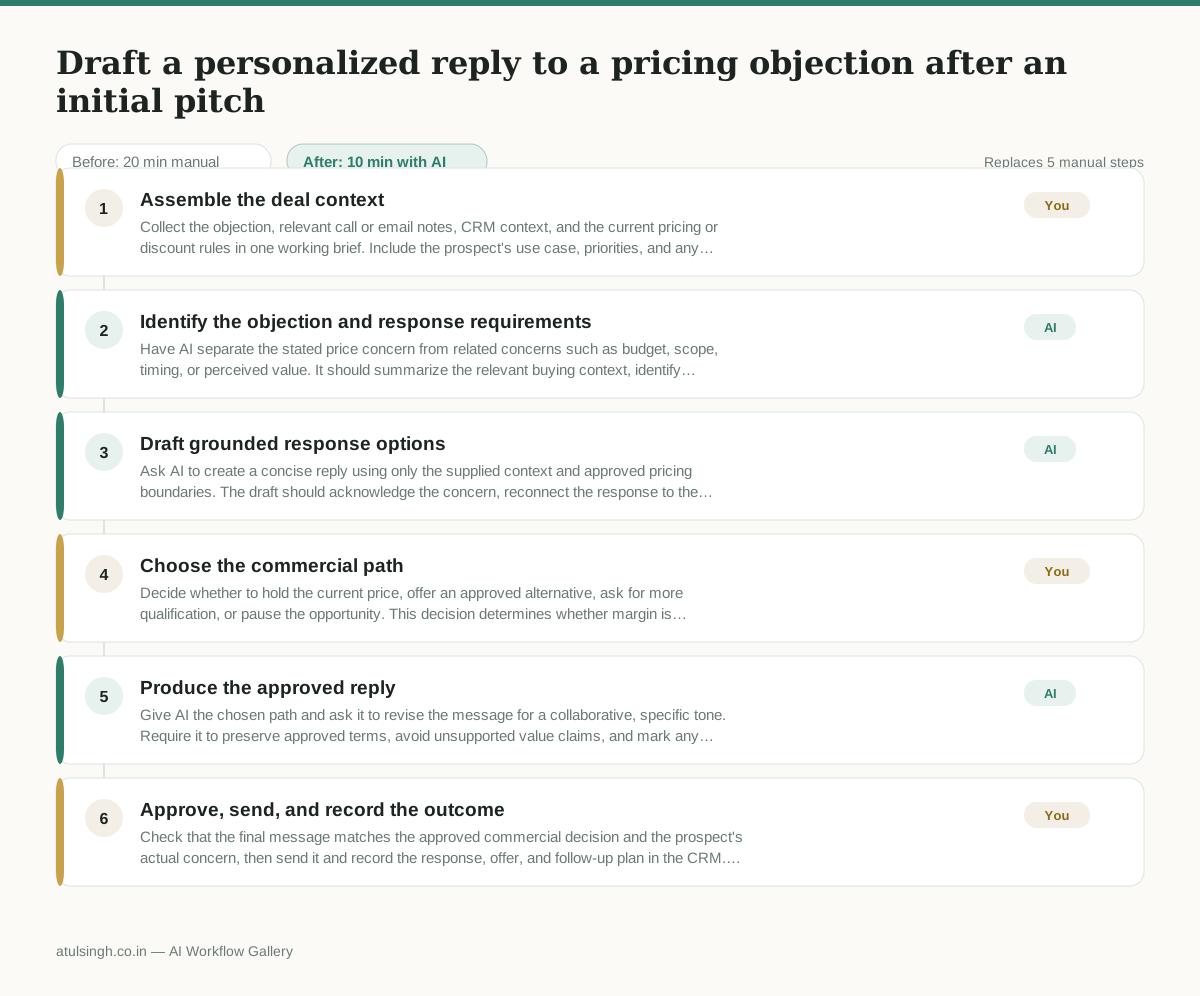
1. Assemble the deal context
Collect the objection, relevant call or email notes, CRM context, and the current pricing or discount rules in one working brief. Include the prospect's use case, priorities, and any concessions that are explicitly permitted.
- AI
2. Identify the objection and response requirements
Have AI separate the stated price concern from related concerns such as budget, scope, timing, or perceived value. It should summarize the relevant buying context, identify missing information, and flag anything it cannot verify rather than filling gaps with assumptions.
- AI
3. Draft grounded response options
Ask AI to create a concise reply using only the supplied context and approved pricing boundaries. The draft should acknowledge the concern, reconnect the response to the prospect's stated priorities, and offer only documented next steps such as an approved package, permitted commercial option, or clarification question.
- You
4. Choose the commercial path
Decide whether to hold the current price, offer an approved alternative, ask for more qualification, or pause the opportunity. This decision determines whether margin is protected, a permitted concession is made, or the conversation continues without changing commercial terms.
- AI
5. Produce the approved reply
Give AI the chosen path and ask it to revise the message for a collaborative, specific tone. Require it to preserve approved terms, avoid unsupported value claims, and mark any unresolved uncertainty for the human instead of presenting it as fact.
- You
6. Approve, send, and record the outcome
Check that the final message matches the approved commercial decision and the prospect's actual concern, then send it and record the response, offer, and follow-up plan in the CRM. Do not send an AI draft when pricing authority, prospect intent, or required context remains unclear.
What you end up with
Where this falls apart
- The CRM notes omit key decision-making criteria, causing the model to invent plausible business justifications that misrepresent the company's actual requirements.
- Internal pricing guidelines are outdated or ambiguously documented, causing the model to suggest unapproved discounts or commercial terms that violate company policy.
More for SDR / BDR
- Researching target accounts for cold outreach by checking recent news and job postings to write a personalized first email
- Find specific triggers in a company annual report for a personalized pitch
- Mapping the buying committee for a target enterprise account before initial outreach
- Write a first-touch outbound email to a target account based on recent public signals like news, job postings, or social media activity
Also in sales
- Research an incoming company and its decision makers before a first sales meeting
- Prep for a B2B demo call by checking recent company news, job postings, and tech stack changes to build relevant questions.
- Reviewing a new sales rep's practice pitch against the team's call criteria before letting them talk to real prospects
- reaching out to former colleagues and personal contacts to announce a new company or product launch without sounding like a spammy marketer