
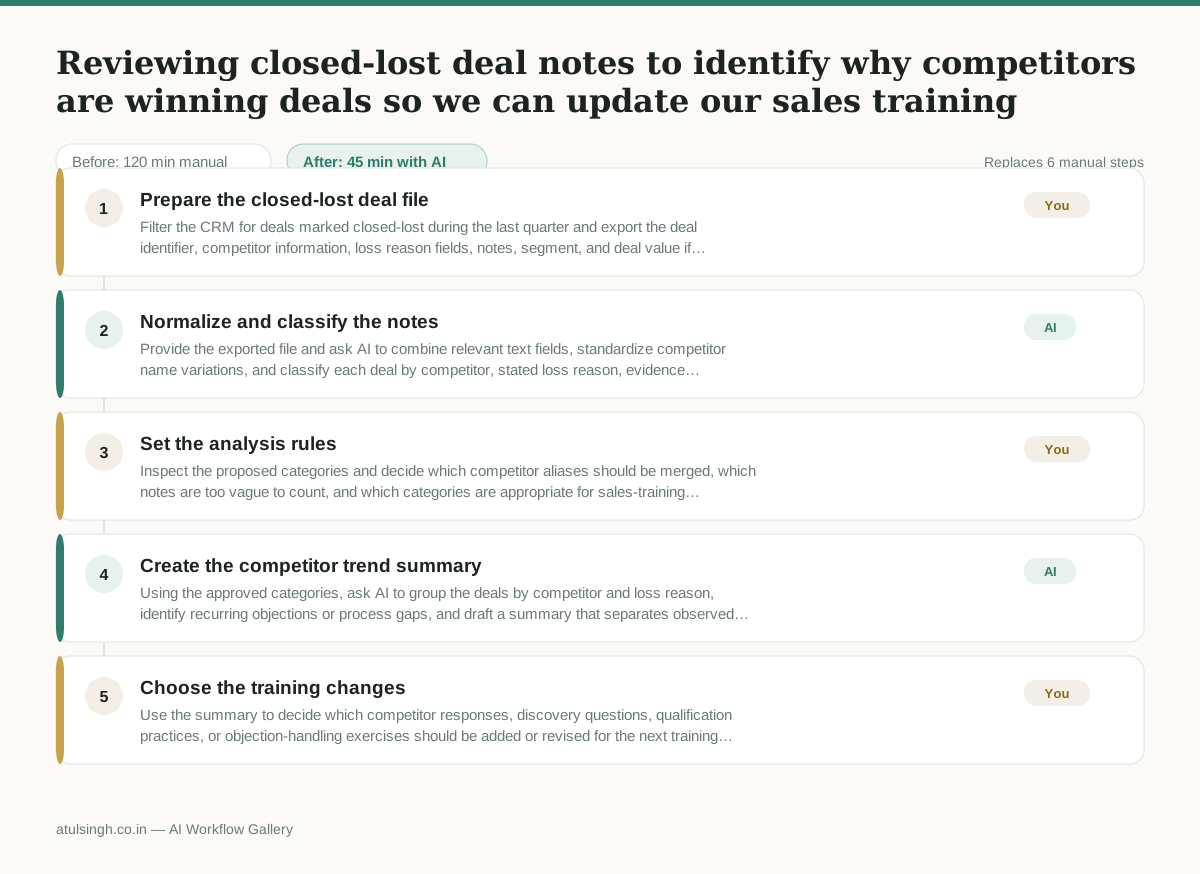
Reviewing closed-lost deal notes to identify why competitors are winning deals so we can update our sales training
Lost deal notes live in different CRM fields and reps write them in completely different ways, making it hard to spot patterns without spending hours reading through dozens of records.
- Before
- 120 min
- After
- 45 min
- Saved
- 75 min
How this used to go
- Filter the CRM for deals marked closed-lost during the last quarter
- Export the deal records and loss reason notes into a spreadsheet
- Read through individual notes to find mentions of specific competitors
- Group the mentions by competitor and loss reason manually
- Write a summary document outlining the main competitor trends
- Present the findings to the team before the next training session
Manually sorting through inconsistent text fields and trying to categorize messy notes without missing key details.
The workflow, step by step
- You
1. Prepare the closed-lost deal file
Filter the CRM for deals marked closed-lost during the last quarter and export the deal identifier, competitor information, loss reason fields, notes, segment, and deal value if available. Remove unrelated customer data before sharing the file for analysis.
- AI
2. Normalize and classify the notes
Provide the exported file and ask AI to combine relevant text fields, standardize competitor name variations, and classify each deal by competitor, stated loss reason, evidence strength, and unresolved ambiguity. Require it to quote or reference the source note for every classification rather than treating missing information as a known reason.
- You
3. Set the analysis rules
Inspect the proposed categories and decide which competitor aliases should be merged, which notes are too vague to count, and which categories are appropriate for sales-training decisions. This decision determines which patterns enter the final analysis and prevents weak or misread notes from driving training changes.
- AI
4. Create the competitor trend summary
Using the approved categories, ask AI to group the deals by competitor and loss reason, identify recurring objections or process gaps, and draft a summary that separates observed evidence from interpretation. Include the supporting deal references, note excerpts, unresolved data gaps, and areas where the sample is too ambiguous for a firm conclusion.
- You
5. Choose the training changes
Use the summary to decide which competitor responses, discovery questions, qualification practices, or objection-handling exercises should be added or revised for the next training session. Record the selected changes and reject findings that lack enough evidence, rather than asking AI to make the final training decision.
What you end up with
Where this falls apart
- Closed-lost notes contain vague shorthand or inside references known only to the original rep, causing the AI to hallucinate or misclassify the actual reason the deal was lost.
- Competitors are referred to by multiple nicknames, typos, or partial names across different CRM entries, causing the AI to treat the same competitor as multiple distinct entities and skew the trend counts.
More for Sales Manager
- Research an incoming company and its decision makers before a first sales meeting
- Reviewing a new sales rep's practice pitch against the team's call criteria before letting them talk to real prospects
- Review the sales pipeline before the weekly team meeting to find deals that haven't moved stages and figure out why.
- Reviewing stagnant deals in the pipeline before the weekly forecast meeting to figure out what is actually blocking them and decide who to call or email.
Also in sales
- Prep for a B2B demo call by checking recent company news, job postings, and tech stack changes to build relevant questions.
- reaching out to former colleagues and personal contacts to announce a new company or product launch without sounding like a spammy marketer
- Reviving deals that went quiet after sending a proposal by finding matching case studies and writing a follow-up message.
- Turn raw discovery call notes into a structured pilot proposal for a new client