
Document winning deal tactics from top reps to share during sales huddles
Top reps close deals using specific phrasing, objection handling, and sequencing, but this knowledge stays in their heads or buried in call recordings. When managers try to capture these tactics for team huddles, they lack the time to listen to dozens of recorded calls, leading to huddles based on general assumptions rather than proven techniques.
- Before
- 180 min
- After
- 60 min
- Saved
- 120 min
How this used to go
- Open the call recording software and filter for deals closed won by top performers in the past month.
- Listen to three to five full-length discovery and closing calls at normal speed.
- Take manual notes on specific questions asked, pivot phrases used, and how objections were handled.
- Cross-reference notes with CRM deal histories to confirm which tactics correlated with the fastest sales cycles.
- Draft a summary document or slide deck outlining the patterns for the upcoming team huddle.
Spending three hours listening to long call recordings just to extract two or three useful tactical takeaways.
The workflow, step by step
- You
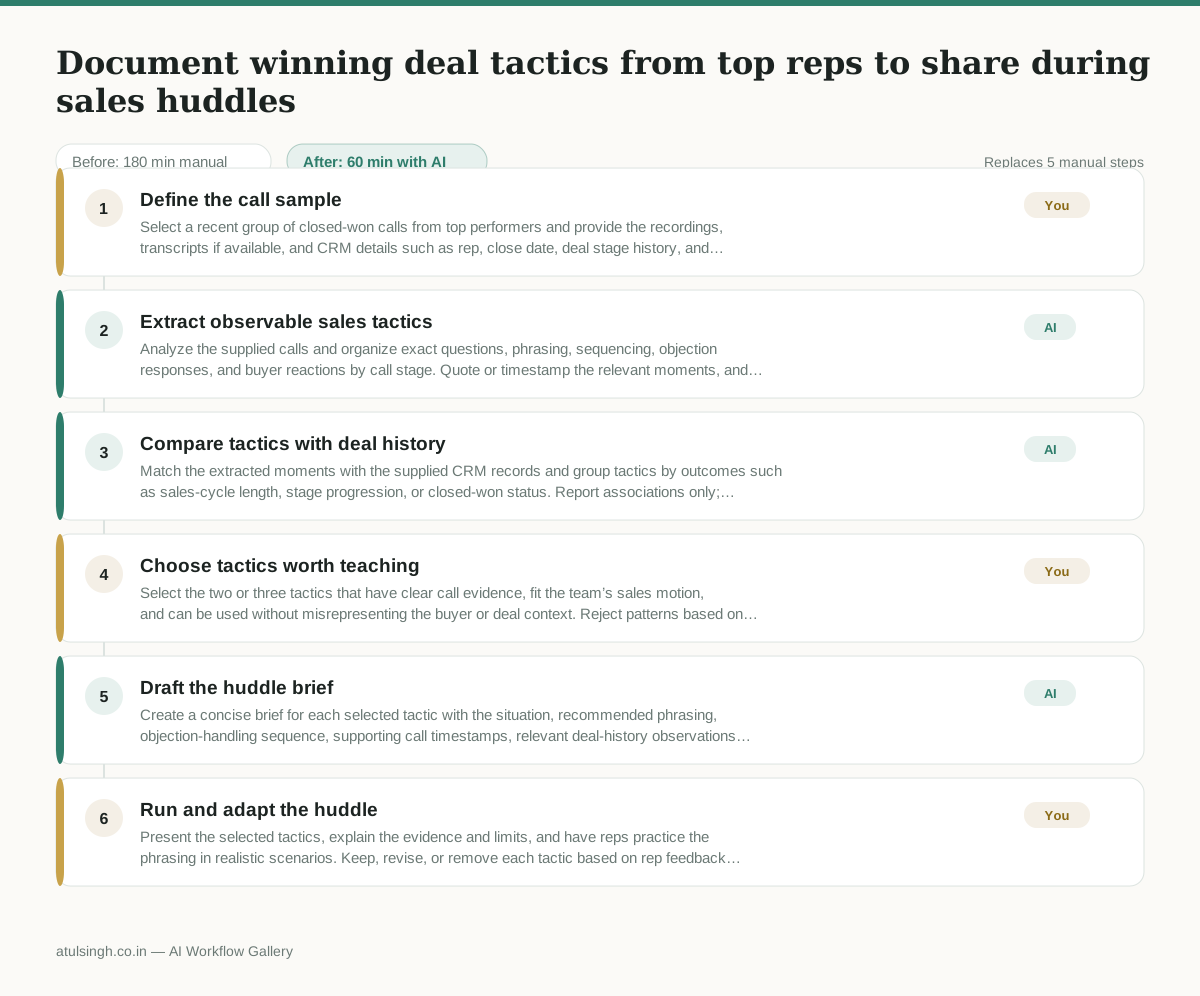
1. Define the call sample
Select a recent group of closed-won calls from top performers and provide the recordings, transcripts if available, and CRM details such as rep, close date, deal stage history, and sales-cycle length. Exclude calls with missing context or poor audio so the analysis is not built on incomplete evidence.
- AI
2. Extract observable sales tactics
Analyze the supplied calls and organize exact questions, phrasing, sequencing, objection responses, and buyer reactions by call stage. Quote or timestamp the relevant moments, and label uncertain interpretations instead of presenting them as facts.
- AI
3. Compare tactics with deal history
Match the extracted moments with the supplied CRM records and group tactics by outcomes such as sales-cycle length, stage progression, or closed-won status. Report associations only; call data cannot reliably prove that a specific phrase caused a faster close.
- You
4. Choose tactics worth teaching
Select the two or three tactics that have clear call evidence, fit the team’s sales motion, and can be used without misrepresenting the buyer or deal context. Reject patterns based on a single unusual call, weak evidence, or phrasing that would not fit the team’s standards; this choice determines what the team practices.
- AI
5. Draft the huddle brief
Create a concise brief for each selected tactic with the situation, recommended phrasing, objection-handling sequence, supporting call timestamps, relevant deal-history observations, and a caveat where the evidence is limited. Include a short practice prompt for the team.
- You
6. Run and adapt the huddle
Present the selected tactics, explain the evidence and limits, and have reps practice the phrasing in realistic scenarios. Keep, revise, or remove each tactic based on rep feedback and observed customer fit before adding it to the team’s playbook.
What you end up with
Where this falls apart
- The source call transcripts contain inaccurate automated speech-to-text output, which causes the model to extract nonexistent phrasing and attribute it to top performers.
- Top performers deviate significantly from standard company messaging in ways that do not scale, which results in the workflow recommending tactics that cause compliance or brand risks for other reps.
More for Sales Manager
- Research an incoming company and its decision makers before a first sales meeting
- Reviewing a new sales rep's practice pitch against the team's call criteria before letting them talk to real prospects
- Review the sales pipeline before the weekly team meeting to find deals that haven't moved stages and figure out why.
- Reviewing stagnant deals in the pipeline before the weekly forecast meeting to figure out what is actually blocking them and decide who to call or email.
Also in sales
- Prep for a B2B demo call by checking recent company news, job postings, and tech stack changes to build relevant questions.
- reaching out to former colleagues and personal contacts to announce a new company or product launch without sounding like a spammy marketer
- Reviving deals that went quiet after sending a proposal by finding matching case studies and writing a follow-up message.
- Turn raw discovery call notes into a structured pilot proposal for a new client