
Document a new sales handoff process and get sign-off from sales and account management managers before rolling it out to the team.
Sales handoff processes get updated haphazardly, leading to missing account context, miscommunication between reps and account managers, and lost deals because nobody agrees on who owns the next step.
- Before
- 90 min
- After
- 55 min
- Saved
- 35 min
How this used to go
- Draft the updated handoff rules and stages in a shared document based on recent team feedback.
- Schedule separate review calls with the sales manager and account management manager to walk through the changes.
- Take notes during the calls and manually update the document with their conflicting feedback and requested edits.
- Email the revised document back to both managers for final email confirmation.
- Copy and paste the final approved text into the internal wiki and notify the broader team on chat.
Chasing managers for feedback and trying to reconcile conflicting requirements between sales and account management into a single agreed document.
The workflow, step by step
- AI
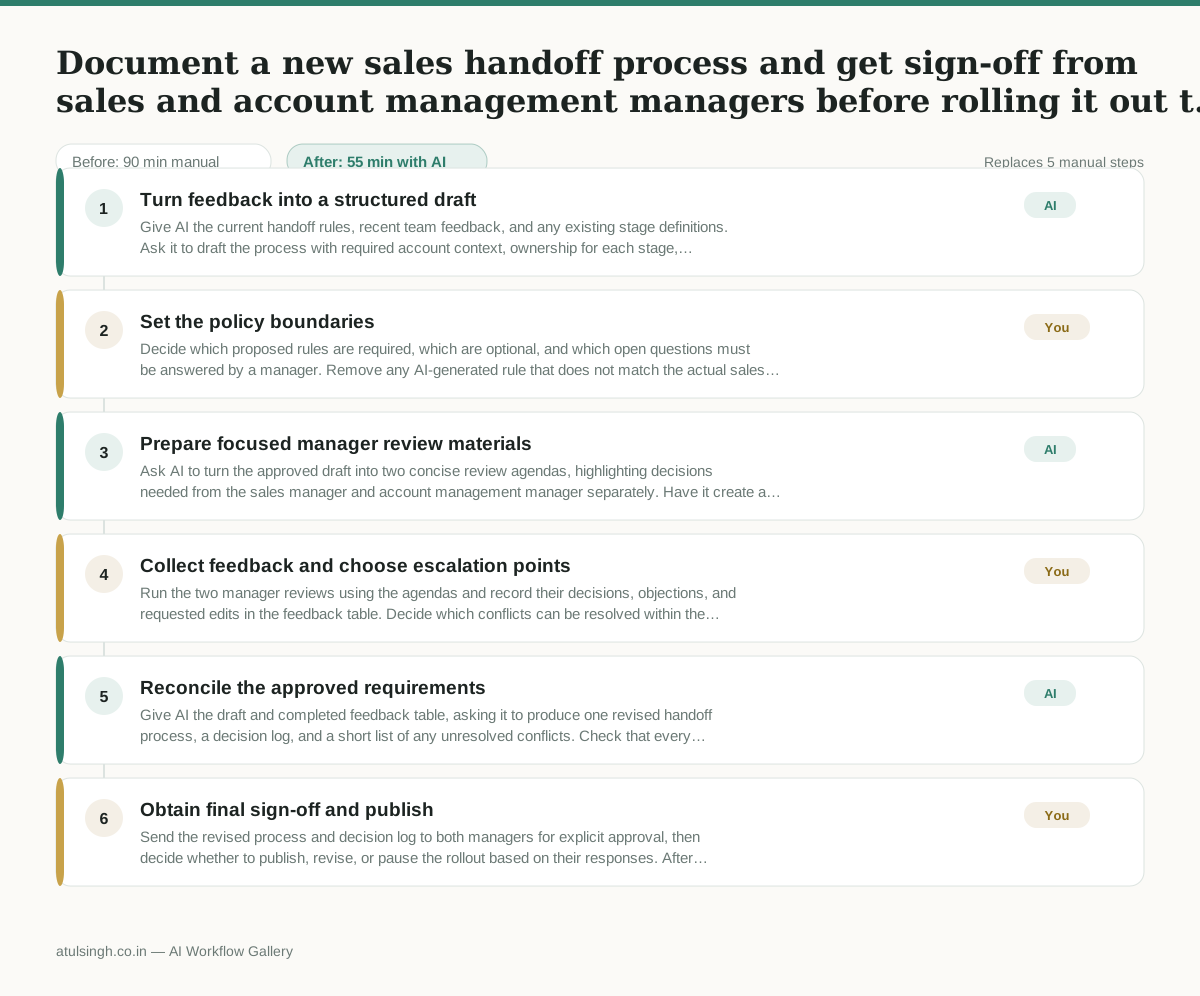
1. Turn feedback into a structured draft
Give AI the current handoff rules, recent team feedback, and any existing stage definitions. Ask it to draft the process with required account context, ownership for each stage, next-step rules, and a list of unresolved questions.
- You
2. Set the policy boundaries
Decide which proposed rules are required, which are optional, and which open questions must be answered by a manager. Remove any AI-generated rule that does not match the actual sales or account management process before requesting review.
- AI
3. Prepare focused manager review materials
Ask AI to turn the approved draft into two concise review agendas, highlighting decisions needed from the sales manager and account management manager separately. Have it create a feedback table with the rule, each manager's position, the conflict, and the decision needed.
- You
4. Collect feedback and choose escalation points
Run the two manager reviews using the agendas and record their decisions, objections, and requested edits in the feedback table. Decide which conflicts can be resolved within the documented process and which require an explicit management decision before rollout.
- AI
5. Reconcile the approved requirements
Give AI the draft and completed feedback table, asking it to produce one revised handoff process, a decision log, and a short list of any unresolved conflicts. Check that every stage has a clear owner, required information, and defined next step.
- You
6. Obtain final sign-off and publish
Send the revised process and decision log to both managers for explicit approval, then decide whether to publish, revise, or pause the rollout based on their responses. After approval, place the final text in the internal wiki and notify the team of the effective process and ownership rules.
What you end up with
Where this falls apart
- The input feedback contains mutually exclusive requirements that the AI merges into an unworkable compromise rather than flagging as an unresolved conflict, which causes operational friction when the process is rolled out.
- The source notes omit critical internal revenue targets or deal thresholds, which causes the AI to generate stage ownership rules that contradict actual team capacity.
More for RevOps / Sales Ops
- Find and merge duplicate contacts and companies, and flag stale deals before the monthly pipeline review
- clean up a messy CRM export and build a forecast the sales leader will actually trust for the board meeting
- Document the sales process so a new sales rep can follow it without constantly asking questions
- Find and merge duplicate CRM records before the pipeline review
Also in revops
- Turn a recurring cross-team problem into a documented handoff
- mapping messy customer onboarding notes into our CRM and project management board
- finding out which team is dropping the ball on customer handoffs
- Checking monthly expense reports for unusual jumps in supply costs before sending them to finance