
Turn a recurring cross-team problem into a documented handoff
When an operational issue or customer request spans multiple departments, details get lost in direct messages, email threads, and meetings. Without a clear handoff, accountability falls through the cracks, teams duplicate work to figure out what happened, and the initial context is never recorded for future reference.
- Before
- 45 min
- After
- 25 min
- Saved
- 20 min
How this used to go
- Identify that a cross-team issue requires intervention during a daily sync or via an ad-hoc message.
- Chase down the individuals involved across different departments to collect context, notes, and previous correspondence.
- Draft a summary of the problem and the required actions in a shared document or internal ticket.
- Review the draft with the relevant team leads to confirm agreement on ownership and next steps.
- Post the finalized handoff notes into the primary communication channel and update the internal tracker.
Chasing people across different departments to gather the necessary context and get agreement on who actually owns the next step.
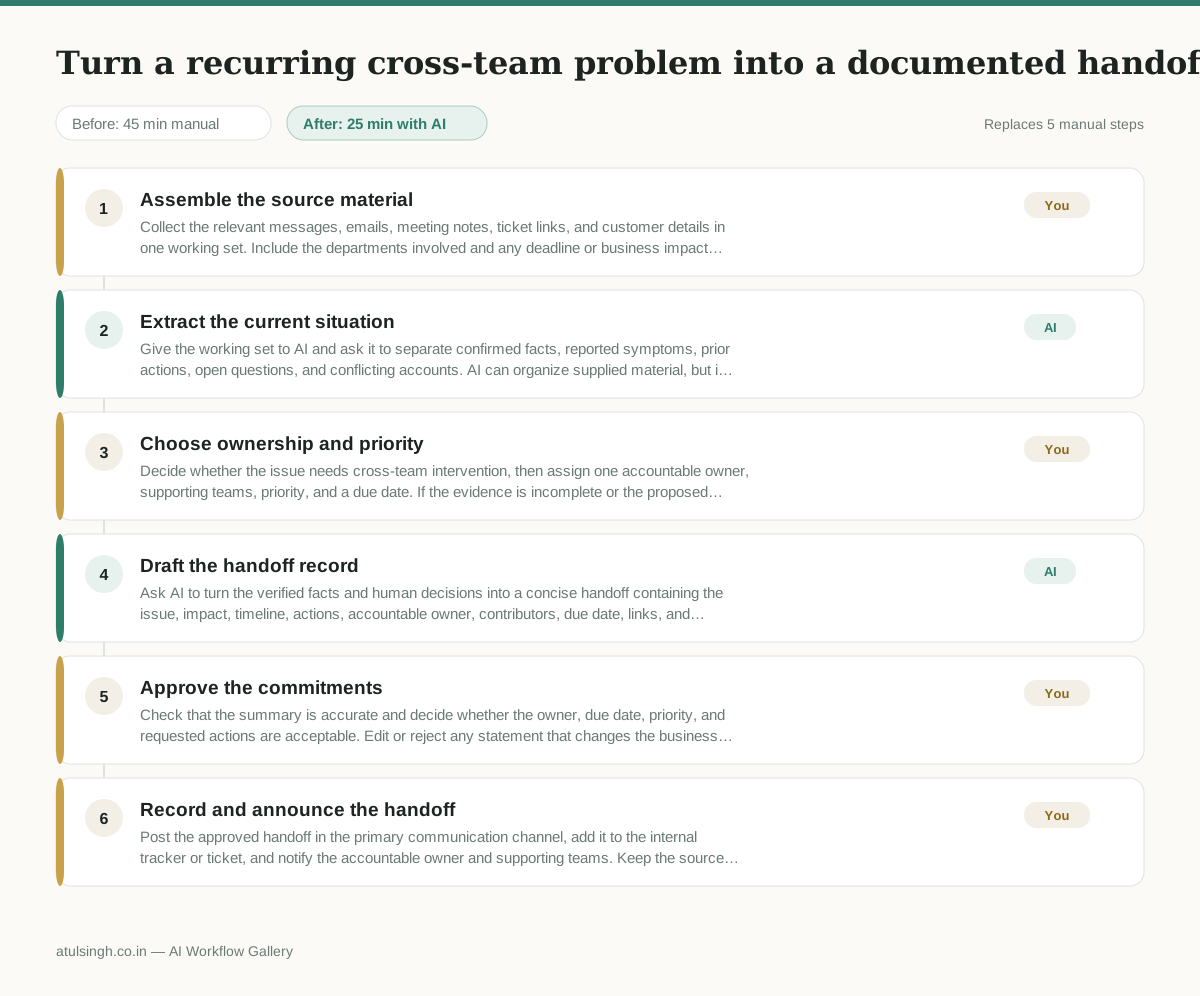
The workflow, step by step
- You
1. Assemble the source material
Collect the relevant messages, emails, meeting notes, ticket links, and customer details in one working set. Include the departments involved and any deadline or business impact already known.
- AI
2. Extract the current situation
Give the working set to AI and ask it to separate confirmed facts, reported symptoms, prior actions, open questions, and conflicting accounts. AI can organize supplied material, but it cannot reliably recover context that was never recorded or access conversations you do not provide.
- You
3. Choose ownership and priority
Decide whether the issue needs cross-team intervention, then assign one accountable owner, supporting teams, priority, and a due date. If the evidence is incomplete or the proposed owner lacks authority, send the handoff back for clarification instead of assigning it.
- AI
4. Draft the handoff record
Ask AI to turn the verified facts and human decisions into a concise handoff containing the issue, impact, timeline, actions, accountable owner, contributors, due date, links, and unresolved questions. Require it to label assumptions and leave unknown fields blank rather than inventing details.
- You
5. Approve the commitments
Check that the summary is accurate and decide whether the owner, due date, priority, and requested actions are acceptable. Edit or reject any statement that changes the business commitment, then approve the exact version that will be shared.
- You
6. Record and announce the handoff
Post the approved handoff in the primary communication channel, add it to the internal tracker or ticket, and notify the accountable owner and supporting teams. Keep the source links and unresolved questions with the record so later updates have the original context.
What you end up with
Where this falls apart
- Critical context lives in unrecorded phone calls or private chats because the AI summarizes only the provided text and misses unwritten verbal agreements.
- Teams submit contradictory accounts of the same operational issue because the AI presents both versions as equal facts without verifying which one is accurate.
More for Operations Manager
- mapping messy customer onboarding notes into our CRM and project management board
- finding out which team is dropping the ball on customer handoffs
- Checking monthly expense reports for unusual jumps in supply costs before sending them to finance
- documenting a manual operations process and mapping undocumented steps before rolling it out to the team
Also in revops
- Find and merge duplicate contacts and companies, and flag stale deals before the monthly pipeline review
- clean up a messy CRM export and build a forecast the sales leader will actually trust for the board meeting
- Document the sales process so a new sales rep can follow it without constantly asking questions
- Find and merge duplicate CRM records before the pipeline review