
Write and test five ad variants for one campaign from a single landing page
Drafting multiple distinct ad angles and testing variations for a single campaign takes hours of repetitive writing, often resulting in minor phrasing changes rather than truly different hooks.
- Before
- 60 min
- After
- 35 min
- Saved
- 25 min
How this used to go
- Read through the target landing page to identify key value propositions and offers.
- Draft a primary headline and body copy variation based on the main offer.
- Rewrite the copy four more times to create five distinct angles or hooks.
- Format each variant to fit character limits for the chosen advertising platform.
- Copy and paste all five variants into a spreadsheet for review and tracking.
Struggling to invent genuinely different angles for the fourth and fifth variants after using the best hooks in the first two.
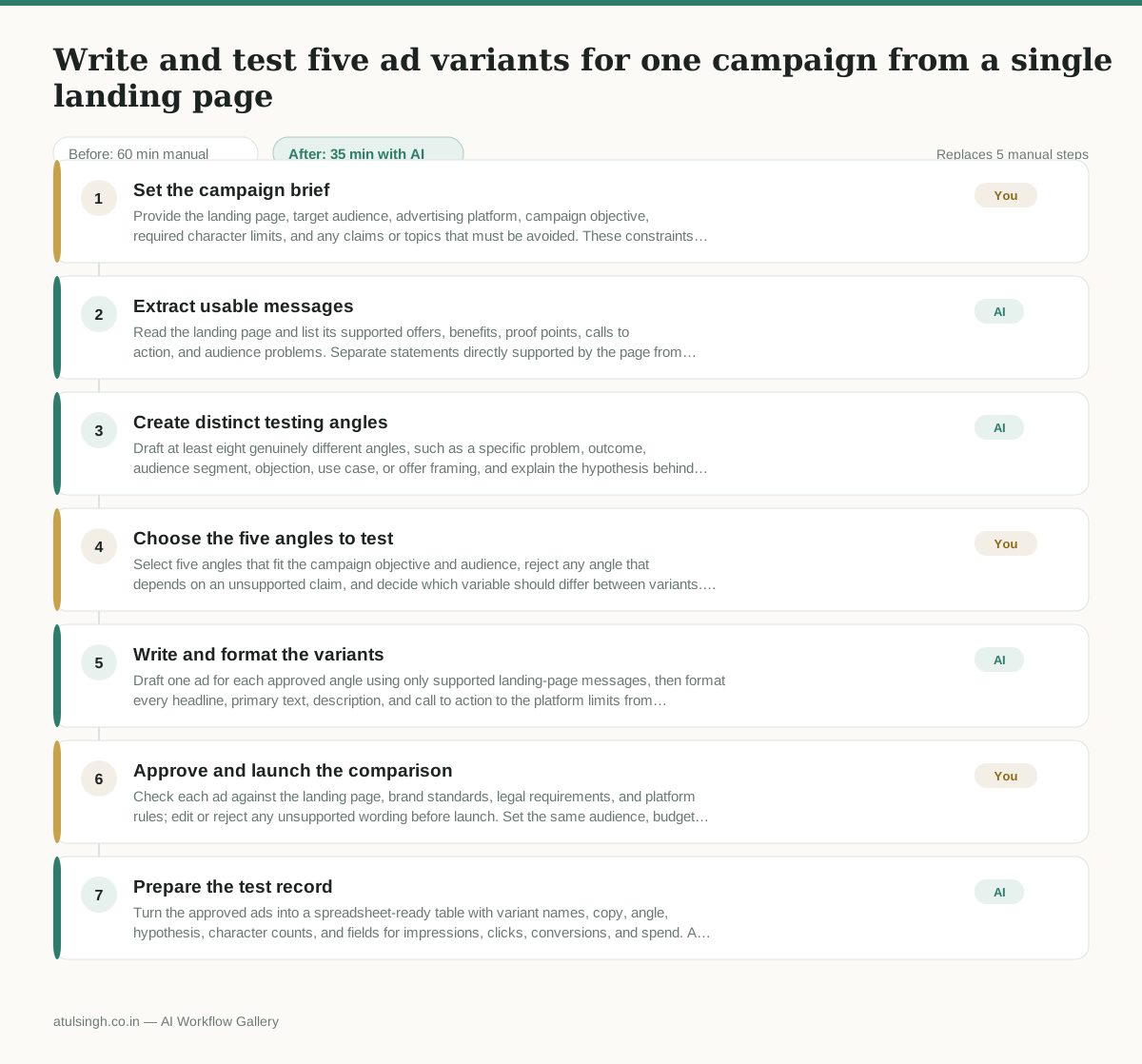
The workflow, step by step
- You
1. Set the campaign brief
Provide the landing page, target audience, advertising platform, campaign objective, required character limits, and any claims or topics that must be avoided. These constraints determine what AI may use and how the variants can be tested.
- AI
2. Extract usable messages
Read the landing page and list its supported offers, benefits, proof points, calls to action, and audience problems. Separate statements directly supported by the page from possible interpretations, because AI cannot reliably verify claims that the page does not substantiate.
- AI
3. Create distinct testing angles
Draft at least eight genuinely different angles, such as a specific problem, outcome, audience segment, objection, use case, or offer framing, and explain the hypothesis behind each. Avoid treating synonyms or minor word changes as separate angles.
- You
4. Choose the five angles to test
Select five angles that fit the campaign objective and audience, reject any angle that depends on an unsupported claim, and decide which variable should differ between variants. This choice determines the validity of the test and cannot be delegated to AI.
- AI
5. Write and format the variants
Draft one ad for each approved angle using only supported landing-page messages, then format every headline, primary text, description, and call to action to the platform limits from the brief. Label each variant with its angle and test hypothesis.
- You
6. Approve and launch the comparison
Check each ad against the landing page, brand standards, legal requirements, and platform rules; edit or reject any unsupported wording before launch. Set the same audience, budget logic, placement rules, and evaluation window where appropriate so the angle comparison is interpretable.
- AI
7. Prepare the test record
Turn the approved ads into a spreadsheet-ready table with variant names, copy, angle, hypothesis, character counts, and fields for impressions, clicks, conversions, and spend. AI can organize results, but it cannot reliably identify a winning angle without valid campaign data and sufficient testing conditions.
What you end up with
Where this falls apart
- The source landing page relies heavily on unstated context, brand familiarity, or vague imagery rather than concrete offers and proof points, which causes the model to hallucinate details or invent unsupported benefits.
- The campaign brief fails to specify strict character limits or platform formatting rules, leading to drafted variants that exceed ad network constraints and require manual rewriting.
More for Performance Marketer
- Pulling the weekly paid channel report and explaining what actually drove the performance changes
- Figure out why ad spend suddenly stopped working and cost per lead doubled over the last week.
- Write and test five ad variants for a campaign, pausing underperformers after launch
- build the weekly paid channel report, flagging anomalous cost spikes before Monday sync
Also in marketing
- Turn a recorded customer interview into a draft blog post
- Sorting incoming customer leads from web forms and assigning them to the right sales reps based on company size and location
- Turn a technical whitepaper into a three-part email nurture sequence before it launches
- Analyze competitor viral posts to draft three trend hooks, discarding off-brand angles