
Verifying cross-team handoffs and accountability before launching a new campaign, product update, or process change
Teams launch initiatives assuming others have completed their prerequisites, leading to missed steps, broken links, unnotified support staff, and finger-pointing when something breaks.
- Before
- 60 min
- After
- 35 min
- Saved
- 25 min
How this used to go
- Draft the launch checklist in a shared spreadsheet and tag the respective team owners.
- Ping individual team leads via chat to confirm if their assigned prerequisites are done.
- Wait for fragmented replies across direct messages and comment threads.
- Manually update the master status sheet based on verbal or chat confirmations.
- Send a final update email to leadership stating the launch is ready to proceed.
Chasing people down across different chat channels and spreadsheets to get clear confirmation that their part of the work is actually finished.
The workflow, step by step
- You
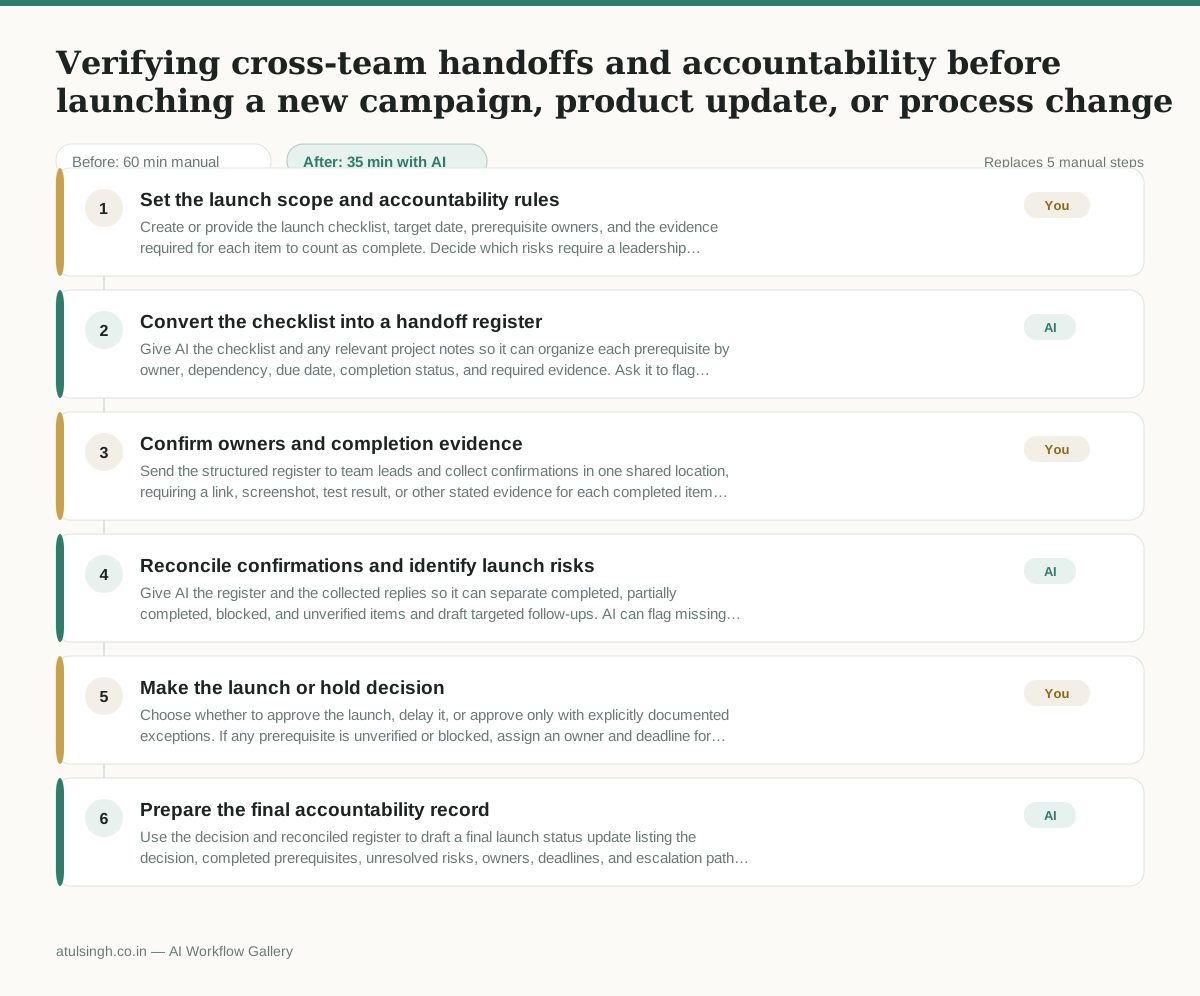
1. Set the launch scope and accountability rules
Create or provide the launch checklist, target date, prerequisite owners, and the evidence required for each item to count as complete. Decide which risks require a leadership decision rather than an owner follow-up.
- AI
2. Convert the checklist into a handoff register
Give AI the checklist and any relevant project notes so it can organize each prerequisite by owner, dependency, due date, completion status, and required evidence. Ask it to flag missing owners, vague completion criteria, and dependencies that are not ordered clearly.
- You
3. Confirm owners and completion evidence
Send the structured register to team leads and collect confirmations in one shared location, requiring a link, screenshot, test result, or other stated evidence for each completed item. Correct ownership or due dates when the assigned team lead says the register is inaccurate.
- AI
4. Reconcile confirmations and identify launch risks
Give AI the register and the collected replies so it can separate completed, partially completed, blocked, and unverified items and draft targeted follow-ups. AI can flag missing evidence, inconsistent answers, and apparent broken links, but it cannot reliably prove that a deployment works in production or that a team will respond.
- You
5. Make the launch or hold decision
Choose whether to approve the launch, delay it, or approve only with explicitly documented exceptions. If any prerequisite is unverified or blocked, assign an owner and deadline for remediation rather than treating a verbal confirmation as completion.
- AI
6. Prepare the final accountability record
Use the decision and reconciled register to draft a final launch status update listing the decision, completed prerequisites, unresolved risks, owners, deadlines, and escalation path. The human sends the update and remains accountable for the decision and any exceptions.
What you end up with
Where this falls apart
- Team leads provide misleading completion evidence that appears valid to the model, which causes unready prerequisites to be marked as finished in the status register.
- The initial launch scope document omits critical cross-departmental dependencies, which causes the AI to miss vital blockers during the reconciliation step.
More for Operations Manager
- Turn a recurring cross-team problem into a documented handoff
- mapping messy customer onboarding notes into our CRM and project management board
- finding out which team is dropping the ball on customer handoffs
- Checking monthly expense reports for unusual jumps in supply costs before sending them to finance
Also in revops
- Find and merge duplicate contacts and companies, and flag stale deals before the monthly pipeline review
- clean up a messy CRM export and build a forecast the sales leader will actually trust for the board meeting
- Document the sales process so a new sales rep can follow it without constantly asking questions
- Find and merge duplicate CRM records before the pipeline review