
documenting a manual operations process and mapping undocumented steps before rolling it out to the team
When writing standard operating procedures manually, critical edge cases and unspoken workarounds used by individual team members are frequently missed. This leads to inconsistent execution, incomplete handoffs, and resistance from the team when the new process is finally enforced.
- Before
- 120 min
- After
- 80 min
- Saved
- 40 min
How this used to go
- Interview individual team members to understand how they currently perform the task.
- Compare conflicting notes and identify where execution methods differ across the team.
- Draft the primary sequence of steps in a shared document based on the most common approach.
- Add discovered edge cases, exceptions, and alternative paths into the draft.
- Send the draft to team leads for review and collect corrections.
- Finalize the document and publish it in the internal knowledge base.
Discovering unwritten workarounds and unspoken preferences late in the review cycle, which forces a complete rewrite of the draft.
The workflow, step by step
- You
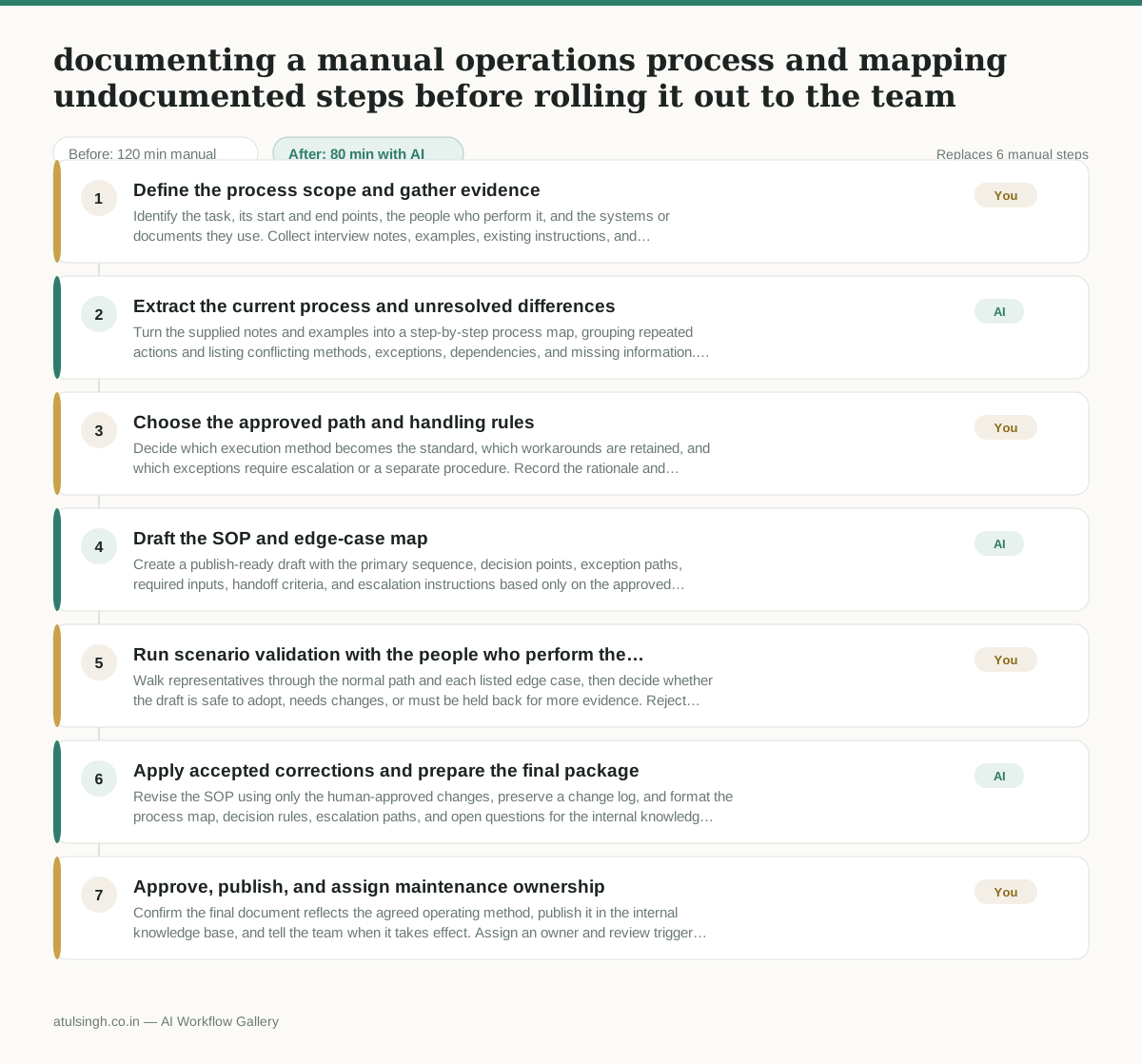
1. Define the process scope and gather evidence
Identify the task, its start and end points, the people who perform it, and the systems or documents they use. Collect interview notes, examples, existing instructions, and representative completed work; AI cannot reliably discover undocumented workarounds without this evidence.
- AI
2. Extract the current process and unresolved differences
Turn the supplied notes and examples into a step-by-step process map, grouping repeated actions and listing conflicting methods, exceptions, dependencies, and missing information. Label each point as directly observed, reported by a team member, or unresolved rather than presenting assumptions as facts.
- You
3. Choose the approved path and handling rules
Decide which execution method becomes the standard, which workarounds are retained, and which exceptions require escalation or a separate procedure. Record the rationale and owners; this decision determines what the team will be expected to follow and prevents AI from turning conflicting practices into policy.
- AI
4. Draft the SOP and edge-case map
Create a publish-ready draft with the primary sequence, decision points, exception paths, required inputs, handoff criteria, and escalation instructions based only on the approved rules and supplied evidence. Keep unresolved questions in a separate list instead of filling gaps with invented steps.
- You
5. Run scenario validation with the people who perform the work
Walk representatives through the normal path and each listed edge case, then decide whether the draft is safe to adopt, needs changes, or must be held back for more evidence. Reject any step that cannot be executed consistently or leaves ownership unclear, and assign corrections before publication.
- AI
6. Apply accepted corrections and prepare the final package
Revise the SOP using only the human-approved changes, preserve a change log, and format the process map, decision rules, escalation paths, and open questions for the internal knowledge base. Flag any unresolved item that still needs human ownership rather than silently removing it.
- You
7. Approve, publish, and assign maintenance ownership
Confirm the final document reflects the agreed operating method, publish it in the internal knowledge base, and tell the team when it takes effect. Assign an owner and review trigger for future process changes so the SOP does not become outdated without notice.
What you end up with
Where this falls apart
- Team members submit incomplete or inaccurate descriptions of their current workarounds during interviews, which causes the AI to build a process map based on false assumptions.
- Reviewers fail to catch missing escalation paths in the draft, which results in an enforced standard that breaks when unhandled edge cases occur.
More for Operations Manager
- Turn a recurring cross-team problem into a documented handoff
- mapping messy customer onboarding notes into our CRM and project management board
- finding out which team is dropping the ball on customer handoffs
- Checking monthly expense reports for unusual jumps in supply costs before sending them to finance
Also in revops
- Find and merge duplicate contacts and companies, and flag stale deals before the monthly pipeline review
- clean up a messy CRM export and build a forecast the sales leader will actually trust for the board meeting
- Document the sales process so a new sales rep can follow it without constantly asking questions
- Find and merge duplicate CRM records before the pipeline review