
Reviewing quarterly marketing spend and shifting budget away from campaigns that aren't generating leads or revenue before meeting with the finance team.
Pulling spend and performance data from multiple ad platforms and analytics tools into a single spreadsheet takes hours, making it difficult to spot underperforming channels clearly before finance asks tough questions.
- Before
- 180 min
- After
- 75 min
- Saved
- 105 min
How this used to go
- Export CSV spend data from Google Ads, Meta, LinkedIn, and email marketing platforms.
- Export lead and pipeline revenue attribution reports from the CRM.
- Combine all channel data into a master quarterly budget spreadsheet using VLOOKUP or manual copy-pasting.
- Calculate cost-per-lead and cost-per-opportunity for every active campaign.
- Flag campaigns exceeding target acquisition costs and draft an internal proposal to cut or reduce their budgets.
- Format the summary into slides or a table for the upcoming finance sync.
Reconciling inconsistent naming conventions and date ranges across different ad platforms and the CRM to get an accurate cost-per-lead figure.
The workflow, step by step
- You
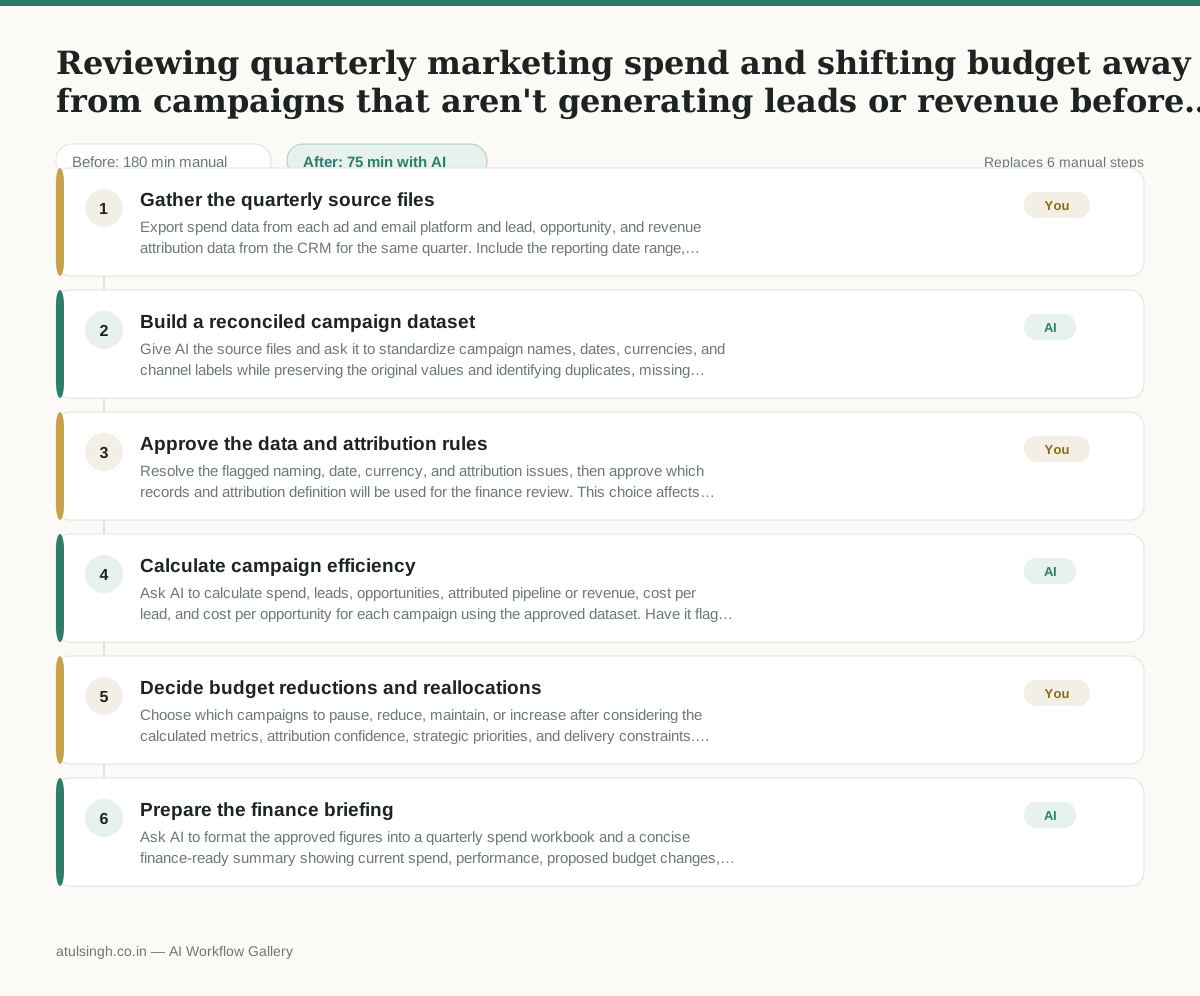
1. Gather the quarterly source files
Export spend data from each ad and email platform and lead, opportunity, and revenue attribution data from the CRM for the same quarter. Include the reporting date range, currency, and any existing campaign naming or attribution definitions.
- AI
2. Build a reconciled campaign dataset
Give AI the source files and ask it to standardize campaign names, dates, currencies, and channel labels while preserving the original values and identifying duplicates, missing records, and mismatched ranges. AI can surface inconsistencies, but it cannot reliably determine the correct attribution when source systems use conflicting rules.
- You
3. Approve the data and attribution rules
Resolve the flagged naming, date, currency, and attribution issues, then approve which records and attribution definition will be used for the finance review. This choice affects reported campaign efficiency and may change which budgets appear eligible for reduction.
- AI
4. Calculate campaign efficiency
Ask AI to calculate spend, leads, opportunities, attributed pipeline or revenue, cost per lead, and cost per opportunity for each campaign using the approved dataset. Have it flag campaigns above the approved targets and clearly label metrics with incomplete or uncertain attribution.
- You
5. Decide budget reductions and reallocations
Choose which campaigns to pause, reduce, maintain, or increase after considering the calculated metrics, attribution confidence, strategic priorities, and delivery constraints. Record the budget change, owner, rationale, and any test period so the decision can be defended in the finance meeting.
- AI
6. Prepare the finance briefing
Ask AI to format the approved figures into a quarterly spend workbook and a concise finance-ready summary showing current spend, performance, proposed budget changes, assumptions, and unresolved data limitations. Check that the summary reflects the human-approved decisions rather than making new allocation choices.
What you end up with
Where this falls apart
- The underlying ad platforms and CRM use conflicting attribution models, which causes the AI to produce distorted cost-per-lead and cost-per-opportunity figures.
- Campaign names contain ambiguous abbreviations or shared keywords across different quarters, which causes the AI to group disparate campaigns together and miscalculate overall spend.
More for Marketing Manager
- Write a campaign brief that the agency and the internal design team can both use without contradictory instructions
- Check every lead capture form on the website to make sure submissions reach the right sales reps before launching a new advertising campaign.
- Checking multiple promotional calendars across email, social, and paid ads to make sure campaigns do not overlap or contradict each other before the holiday sales push.
- Reviewing external market research reports and flagging unverified claims before presenting findings to the board.
Also in marketing
- Turn a recorded customer interview into a draft blog post
- Sorting incoming customer leads from web forms and assigning them to the right sales reps based on company size and location
- Turn a technical whitepaper into a three-part email nurture sequence before it launches
- Analyze competitor viral posts to draft three trend hooks, discarding off-brand angles