
compile a competitive messaging analysis, identifying gaps in our positioning before product launch
Manual competitive analysis often relies on scattered screenshots, outdated pricing pages, and subjective reading of competitor marketing copy, leading to blind spots in positioning right before a launch.
- Before
- 240 min
- After
- 90 min
- Saved
- 150 min
How this used to go
- Open the websites of five to ten key competitors and bookmark their main product, pricing, and feature pages.
- Copy and paste headlines, subheadlines, and value propositions from competitor homepages into a blank spreadsheet.
- Read through recent customer reviews on third-party sites for each competitor to note common complaints and praised features.
- Review competitor blog posts, press releases, or social media updates from the last six months to identify recent messaging shifts.
- Compare the collected competitor claims against our planned product messaging to find overlapping points and missing angles.
- Draft a summary report highlighting where competitor positioning is weak and where our product messaging differentiates.
Manually collecting and organizing unstructured text from multiple websites makes it difficult to spot consistent messaging gaps across the market without missing subtle shifts in competitor positioning.
The workflow, step by step
- You
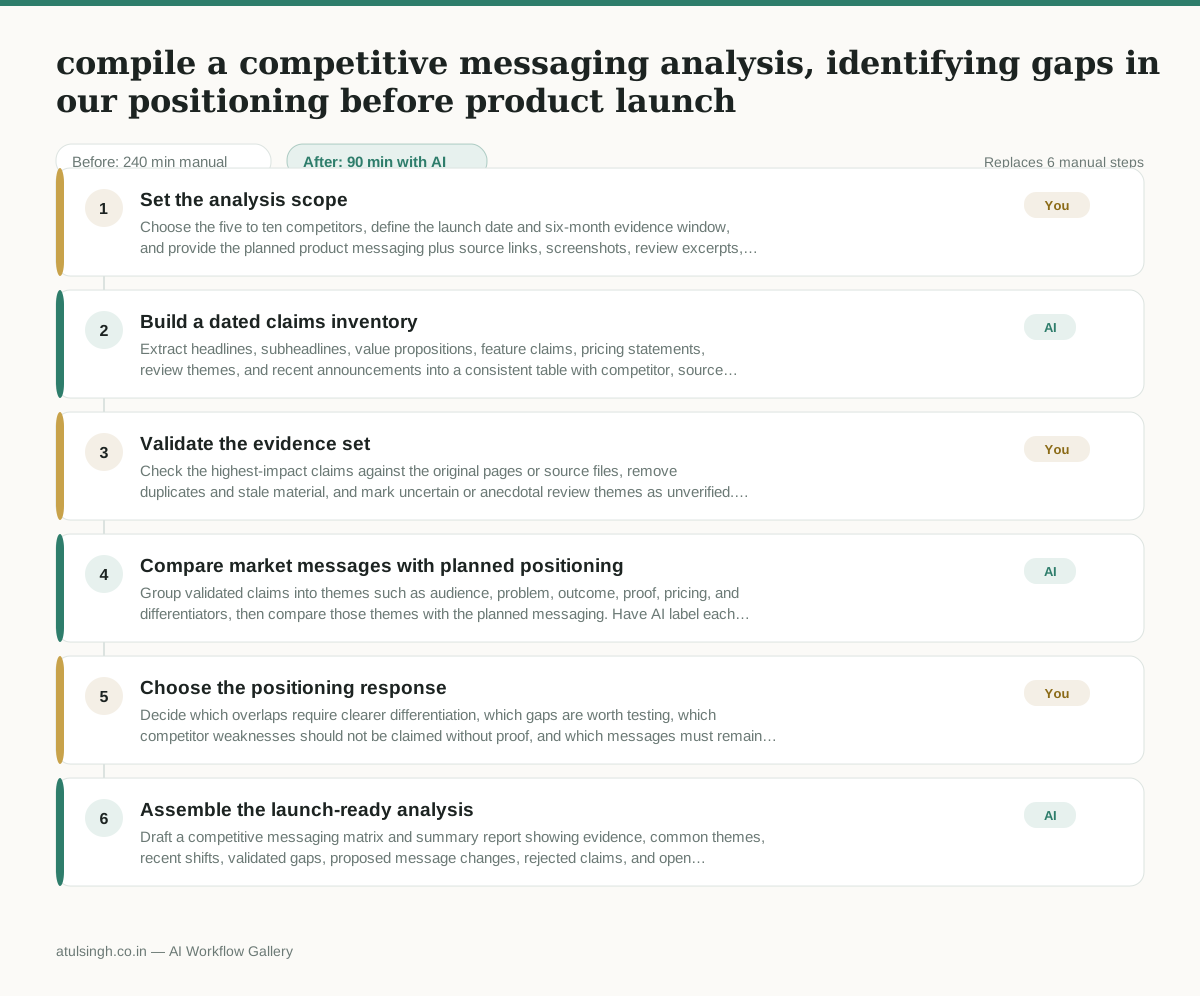
1. Set the analysis scope
Choose the five to ten competitors, define the launch date and six-month evidence window, and provide the planned product messaging plus source links, screenshots, review excerpts, and relevant posts. This decision determines which competitors and claims can influence the launch analysis.
- AI
2. Build a dated claims inventory
Extract headlines, subheadlines, value propositions, feature claims, pricing statements, review themes, and recent announcements into a consistent table with competitor, source type, date, and verbatim evidence. AI can organize supplied material, but it cannot reliably confirm that a page is current, that a review is authentic, or that an implied claim is intentional.
- You
3. Validate the evidence set
Check the highest-impact claims against the original pages or source files, remove duplicates and stale material, and mark uncertain or anecdotal review themes as unverified. Decide which evidence is credible enough to use in launch positioning; this prevents weak or outdated sources from driving the analysis.
- AI
4. Compare market messages with planned positioning
Group validated claims into themes such as audience, problem, outcome, proof, pricing, and differentiators, then compare those themes with the planned messaging. Have AI label each finding as an observed overlap, a missing angle, or an inference, because it cannot reliably determine whether a messaging gap matters to buyers without customer or market evidence.
- You
5. Choose the positioning response
Decide which overlaps require clearer differentiation, which gaps are worth testing, which competitor weaknesses should not be claimed without proof, and which messages must remain unchanged for strategic reasons. Record the priority, owner, and consequence of each decision for the launch plan.
- AI
6. Assemble the launch-ready analysis
Draft a competitive messaging matrix and summary report showing evidence, common themes, recent shifts, validated gaps, proposed message changes, rejected claims, and open questions. Keep source-backed observations separate from recommendations and flag every conclusion that still needs customer validation.
What you end up with
Where this falls apart
- Supplied competitor links or screenshots are outdated or unverified, causing the AI to build the claims inventory on stale positioning that no longer exists in the market.
- Customer reviews or third-party forum posts provided as input are fabricated or unrepresentative, causing the AI to flag positioning gaps based on anomalous complaints rather than genuine market trends.
More for Marketing Manager
- Write a campaign brief that the agency and the internal design team can both use without contradictory instructions
- Check every lead capture form on the website to make sure submissions reach the right sales reps before launching a new advertising campaign.
- Checking multiple promotional calendars across email, social, and paid ads to make sure campaigns do not overlap or contradict each other before the holiday sales push.
- Reviewing external market research reports and flagging unverified claims before presenting findings to the board.
Also in marketing
- Turn a recorded customer interview into a draft blog post
- Sorting incoming customer leads from web forms and assigning them to the right sales reps based on company size and location
- Turn a technical whitepaper into a three-part email nurture sequence before it launches
- Analyze competitor viral posts to draft three trend hooks, discarding off-brand angles