
Pulling together the early sales pipeline numbers and deal notes to write the investor update before the next board meeting.
Pipeline data is scattered across CRM deal stages, personal notes, and recent emails, making it time-consuming to piece together a clear summary of what moved, what stalled, and why.
- Before
- 120 min
- After
- 60 min
- Saved
- 60 min
How this used to go
- Open the CRM and review all active deals in the early pipeline stages.
- Check notes from recent sales calls and emails to find out why deals have stalled or progressed.
- Calculate pipeline totals, win rates, and stage-by-stage movement compared to the last update.
- Draft a narrative explaining the key pipeline shifts, risks, and notable wins for the board deck.
- Review the draft against previous board updates to ensure consistency in metrics and terminology.
Hunting through scattered call notes and CRM histories to reconstruct the narrative behind why pipeline numbers changed since the last update.
The workflow, step by step
- AI
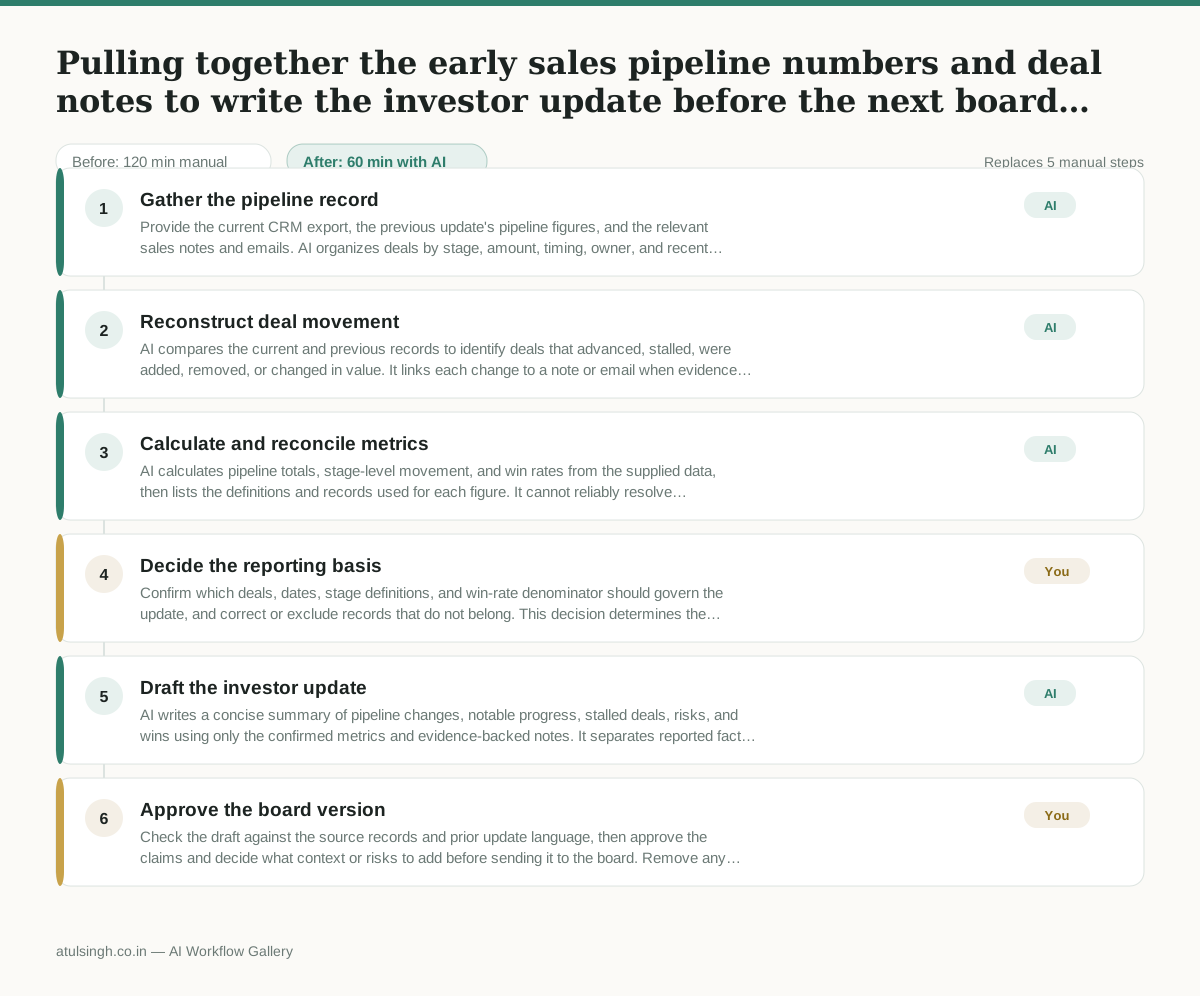
1. Gather the pipeline record
Provide the current CRM export, the previous update's pipeline figures, and the relevant sales notes and emails. AI organizes deals by stage, amount, timing, owner, and recent activity, while marking fields that are missing or inconsistent.
- AI
2. Reconstruct deal movement
AI compares the current and previous records to identify deals that advanced, stalled, were added, removed, or changed in value. It links each change to a note or email when evidence exists and labels unsupported explanations rather than inferring them.
- AI
3. Calculate and reconcile metrics
AI calculates pipeline totals, stage-level movement, and win rates from the supplied data, then lists the definitions and records used for each figure. It cannot reliably resolve duplicate deals, incomplete history, or conflicting stage definitions without human input.
- You
4. Decide the reporting basis
Confirm which deals, dates, stage definitions, and win-rate denominator should govern the update, and correct or exclude records that do not belong. This decision determines the board metrics and prevents unsupported deal explanations from entering the narrative.
- AI
5. Draft the investor update
AI writes a concise summary of pipeline changes, notable progress, stalled deals, risks, and wins using only the confirmed metrics and evidence-backed notes. It separates reported facts from open questions and includes a short list of items needing follow-up.
- You
6. Approve the board version
Check the draft against the source records and prior update language, then approve the claims and decide what context or risks to add before sending it to the board. Remove any statement that cannot be supported by the records.
What you end up with
Where this falls apart
- CRM deal stages and win-rate definitions are inconsistent across sales reps, causing the model to miscalculate stage-by-stage movement and output incorrect totals.
- Sales notes and email histories lack explicit explanations for why deals stalled, resulting in the model generating unsupported assumptions about deal status.
More for Founder-led Sales
- reaching out to former colleagues and personal contacts to announce a new company or product launch without sounding like a spammy marketer
- Turn raw discovery call notes into a structured pilot proposal for a new client
- Reply to inbound beta signups to figure out if they are a real fit before getting on a call
- following up on proposals that went quiet without annoying the prospect
Also in sales
- Research an incoming company and its decision makers before a first sales meeting
- Prep for a B2B demo call by checking recent company news, job postings, and tech stack changes to build relevant questions.
- Reviewing a new sales rep's practice pitch against the team's call criteria before letting them talk to real prospects
- Reviving deals that went quiet after sending a proposal by finding matching case studies and writing a follow-up message.