
Outline a custom proof-of-concept project plan after an enterprise discovery call
Translating messy discovery notes into a structured, tailored evaluation plan takes hours of rewriting, leading to delayed follow-ups and inconsistent scoping across deals.
- Before
- 90 min
- After
- 45 min
- Saved
- 45 min
How this used to go
- Review and transcribe raw meeting notes or recording transcripts from the discovery call.
- Extract key technical requirements, success metrics, and stakeholder concerns.
- Open a blank document or copy a previous project plan template.
- Manually rewrite the scope, timeline, and deliverables to match the prospect's specific use case.
- Check internal resources and pricing constraints to ensure the proposed scope is feasible.
- Proofread the document and format it for the prospect.
Reformatting past proposals to fit a new prospect's unique requirements while trying not to miss any critical technical details mentioned on the call.
The workflow, step by step
- You
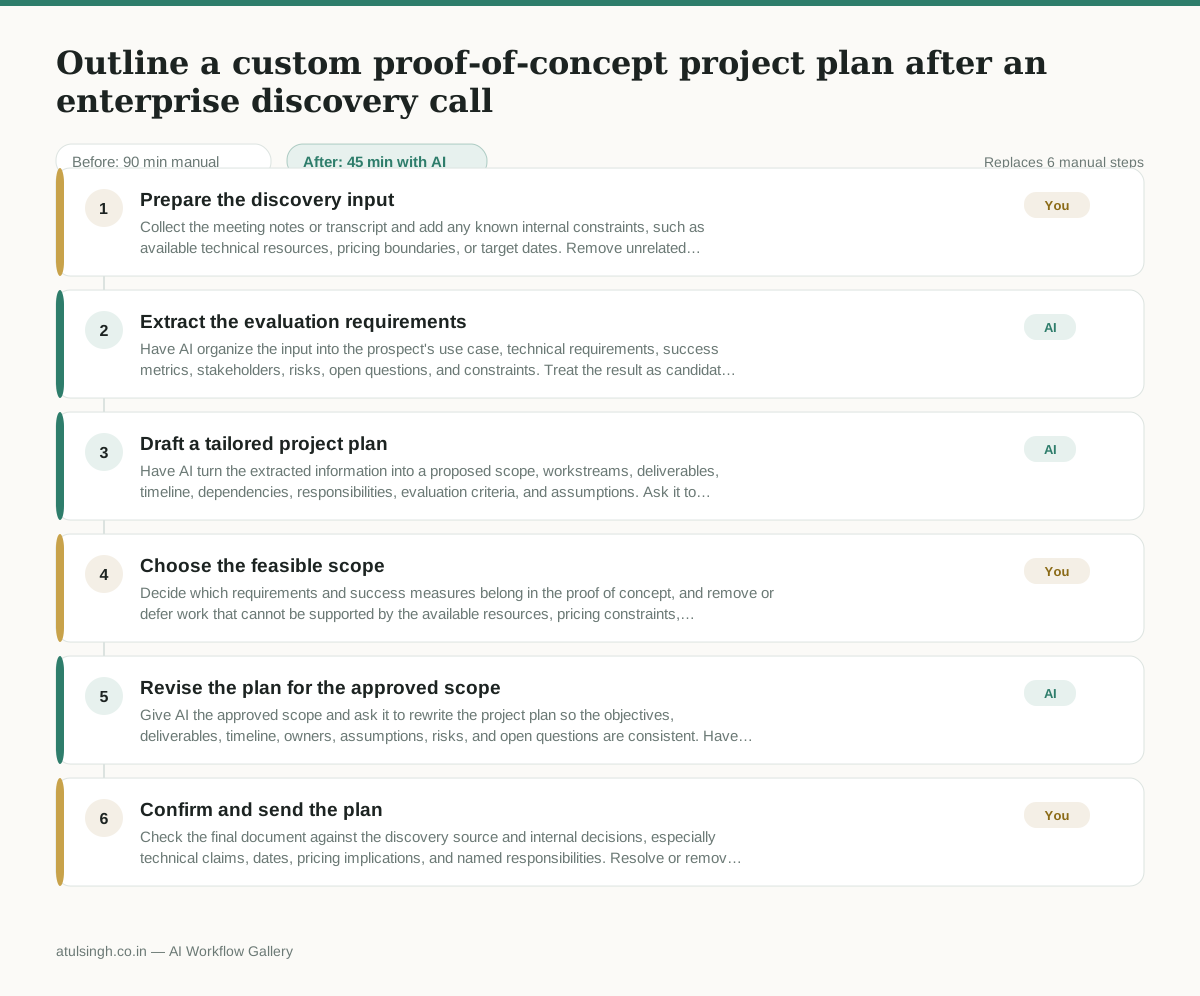
1. Prepare the discovery input
Collect the meeting notes or transcript and add any known internal constraints, such as available technical resources, pricing boundaries, or target dates. Remove unrelated discussion so the working material is focused on the proposed proof of concept.
- AI
2. Extract the evaluation requirements
Have AI organize the input into the prospect's use case, technical requirements, success metrics, stakeholders, risks, open questions, and constraints. Treat the result as candidate information: AI may miss implied requirements, misread ambiguous comments, or assign importance incorrectly.
- AI
3. Draft a tailored project plan
Have AI turn the extracted information into a proposed scope, workstreams, deliverables, timeline, dependencies, responsibilities, evaluation criteria, and assumptions. Ask it to mark unsupported details as open questions rather than filling gaps with invented commitments.
- You
4. Choose the feasible scope
Decide which requirements and success measures belong in the proof of concept, and remove or defer work that cannot be supported by the available resources, pricing constraints, timeline, or product capabilities. This decision determines what will be promised to the prospect and prevents an AI-generated plan from becoming an unapproved commitment.
- AI
5. Revise the plan for the approved scope
Give AI the approved scope and ask it to rewrite the project plan so the objectives, deliverables, timeline, owners, assumptions, risks, and open questions are consistent. Have it format the content for a prospect-facing document while preserving any items that still require confirmation.
- You
6. Confirm and send the plan
Check the final document against the discovery source and internal decisions, especially technical claims, dates, pricing implications, and named responsibilities. Resolve or remove anything unsupported, then send the approved plan to the prospect.
What you end up with
Where this falls apart
- The discovery notes omit critical technical constraints discussed verbally, causing the AI to generate an unfeasible project scope that must be entirely rewritten by hand.
- The source transcript contains conflicting statements from different prospect stakeholders, causing the AI to hallucinate timeline estimates and deliverables that contradict internal resource capacity.
More for Founder-led Sales
- reaching out to former colleagues and personal contacts to announce a new company or product launch without sounding like a spammy marketer
- Turn raw discovery call notes into a structured pilot proposal for a new client
- Reply to inbound beta signups to figure out if they are a real fit before getting on a call
- following up on proposals that went quiet without annoying the prospect
Also in sales
- Research an incoming company and its decision makers before a first sales meeting
- Prep for a B2B demo call by checking recent company news, job postings, and tech stack changes to build relevant questions.
- Reviewing a new sales rep's practice pitch against the team's call criteria before letting them talk to real prospects
- Reviving deals that went quiet after sending a proposal by finding matching case studies and writing a follow-up message.