
Reviewing support agent ticket replies against quality guidelines before 1-on-1 coaching sessions
Manual QA sampling is tedious and inconsistent. Support leads typically review only a tiny fraction of total tickets, missing recurring agent mistakes or catching them too late to prevent poor customer experiences.
- Before
- 60 min
- After
- 25 min
- Saved
- 35 min
How this used to go
- Open the support helpdesk and filter for closed tickets by a specific agent over the past week.
- Randomly select a sample of 10 to 15 conversations across email, chat, and tickets.
- Read through each selected conversation from start to finish, checking against the internal QA scorecard criteria.
- Note down specific policy violations, tone issues, or missed steps in a separate spreadsheet.
- Calculate the final score and compile recurring problem areas to discuss during the upcoming coaching session.
Manually digging through long thread histories to find specific compliance failures, which makes grading inconsistent depending on how tired the reviewer is.
The workflow, step by step
- You
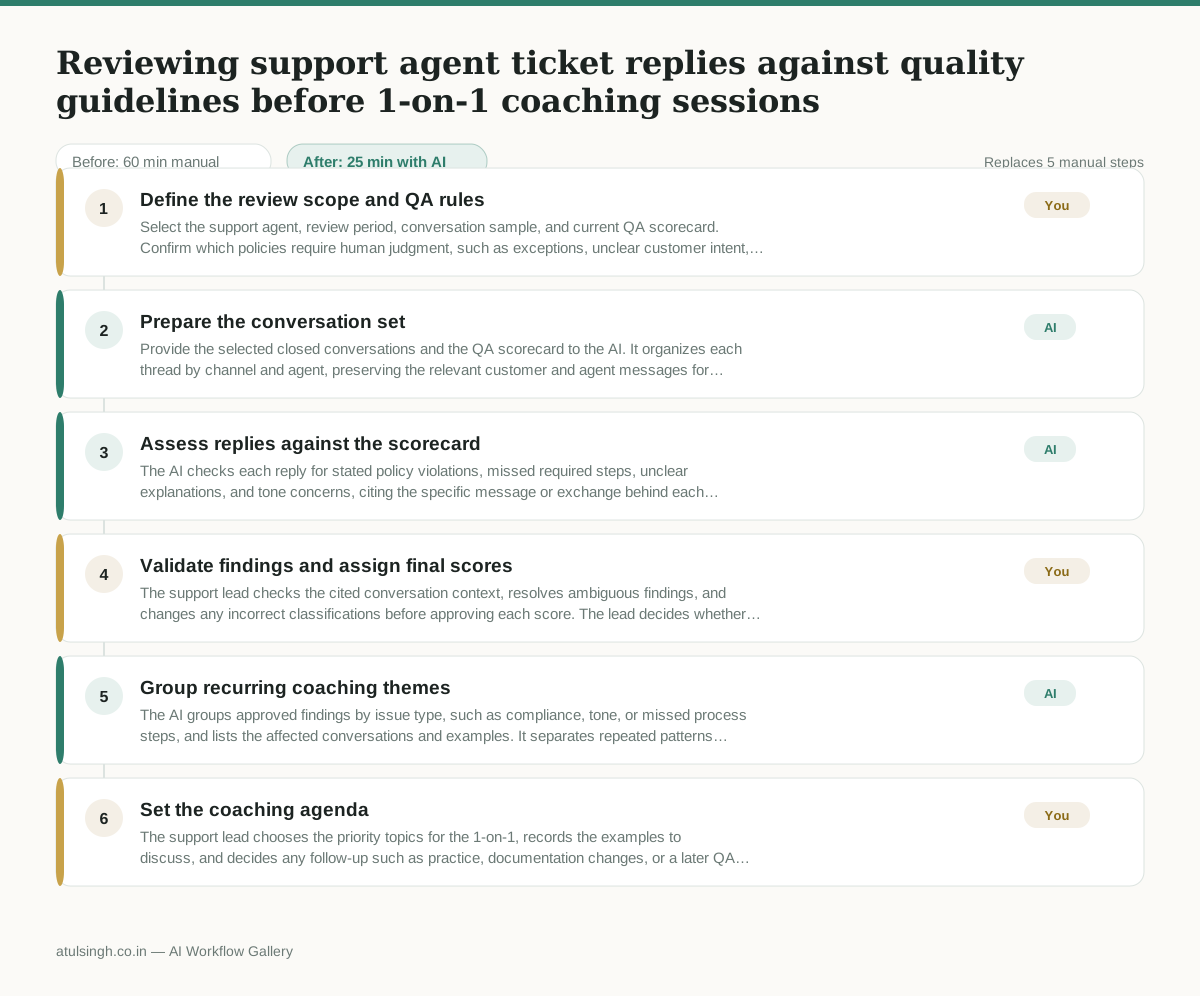
1. Define the review scope and QA rules
Select the support agent, review period, conversation sample, and current QA scorecard. Confirm which policies require human judgment, such as exceptions, unclear customer intent, or sensitive cases.
- AI
2. Prepare the conversation set
Provide the selected closed conversations and the QA scorecard to the AI. It organizes each thread by channel and agent, preserving the relevant customer and agent messages for assessment.
- AI
3. Assess replies against the scorecard
The AI checks each reply for stated policy violations, missed required steps, unclear explanations, and tone concerns, citing the specific message or exchange behind each finding. It should mark ambiguous cases as needing human review rather than treating them as definite failures.
- You
4. Validate findings and assign final scores
The support lead checks the cited conversation context, resolves ambiguous findings, and changes any incorrect classifications before approving each score. The lead decides whether a confirmed issue requires coaching, policy clarification, or no action.
- AI
5. Group recurring coaching themes
The AI groups approved findings by issue type, such as compliance, tone, or missed process steps, and lists the affected conversations and examples. It separates repeated patterns from one-off incidents.
- You
6. Set the coaching agenda
The support lead chooses the priority topics for the 1-on-1, records the examples to discuss, and decides any follow-up such as practice, documentation changes, or a later QA review.
What you end up with
Where this falls apart
- The QA scorecard uses vague criteria instead of explicit rules, which causes the model to hallucinate policy violations on well-handled replies.
- Support agents use heavily customized shorthand or slang in chat threads, which causes the model to misinterpret customer intent and grade the agent incorrectly.
More for Customer Support Lead
- Review last week's support tickets and find the three macros that need rewriting
- score a sample of agent replies against the team's quality checklist
- Reviewing last week's support tickets to update macros and remove outdated responses before sharing them with the team
- Write the escalation summary before handing a stuck ticket to engineering
Also in support
- Checking whether a client account is confidential before publishing a case study or sharing details externally
- Identifying which accounts are ready for an expansion conversation based on their product usage and feature adoption data.
- Prepare a quarterly business review deck for a customer account using product usage data and past support tickets
- spot which accounts are at renewal risk before the renewal call