
Checking whether a client account is confidential before publishing a case study or sharing details externally
Publishing details about a customer account without proper consent or a signed release can breach nondisclosure agreements, damage client trust, and violate internal compliance rules.
- Before
- 45 min
- After
- 20 min
- Saved
- 25 min
How this used to go
- Search the CRM to find the account record, primary contact details, and current contract status.
- Open the document repository or legal folder to locate the original master services agreement and any custom addendums.
- Scan the legal agreement text manually to find clauses related to publicity, marketing consent, or confidentiality.
- Check internal communication channels or email history to see if any account manager previously discussed public references with the client.
- Draft an email to the legal or account management team to request explicit written sign-off for publication.
- Wait for a reply, and if approved, save the written confirmation in the project folder.
Hunting through dense legal documents and old email threads to find a definitive answer on whether marketing consent was ever granted.
The workflow, step by step
- You
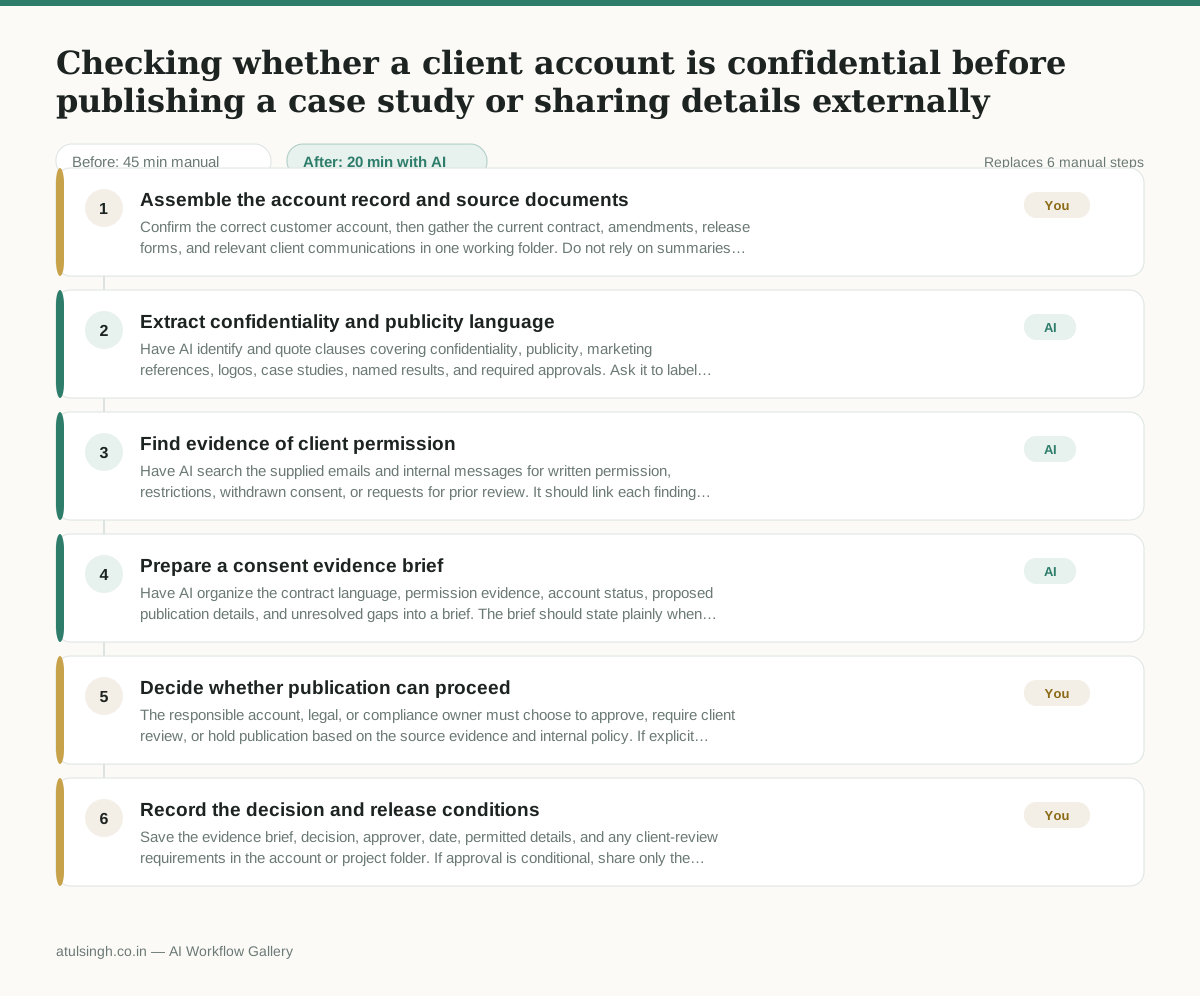
1. Assemble the account record and source documents
Confirm the correct customer account, then gather the current contract, amendments, release forms, and relevant client communications in one working folder. Do not rely on summaries when the signed source document is available.
- AI
2. Extract confidentiality and publicity language
Have AI identify and quote clauses covering confidentiality, publicity, marketing references, logos, case studies, named results, and required approvals. Ask it to label uncertain or missing language rather than infer that consent exists.
- AI
3. Find evidence of client permission
Have AI search the supplied emails and internal messages for written permission, restrictions, withdrawn consent, or requests for prior review. It should link each finding to its source and distinguish client authorization from an internal assumption or informal discussion.
- AI
4. Prepare a consent evidence brief
Have AI organize the contract language, permission evidence, account status, proposed publication details, and unresolved gaps into a brief. The brief should state plainly when the available records do not establish permission; AI cannot make the legal determination itself.
- You
5. Decide whether publication can proceed
The responsible account, legal, or compliance owner must choose to approve, require client review, or hold publication based on the source evidence and internal policy. If explicit authorization is absent or the terms conflict, the consequence is a publication hold until written sign-off or legal guidance is obtained.
- You
6. Record the decision and release conditions
Save the evidence brief, decision, approver, date, permitted details, and any client-review requirements in the account or project folder. If approval is conditional, share only the approved version and retain the written release with the final materials.
What you end up with
Where this falls apart
- The contract uses ambiguous terminology or unindexed definitions that the model misinterprets, which causes it to present an incorrect legal status as verified fact.
- Relevant permission exists only in unprovided historical communication channels, which causes the model to generate a brief that incorrectly states consent is absent.
More for Customer Success Manager
- Identifying which accounts are ready for an expansion conversation based on their product usage and feature adoption data.
- Prepare a quarterly business review deck for a customer account using product usage data and past support tickets
- spot which accounts are at renewal risk before the renewal call
- build a 30-day onboarding plan for a new account after kickoff
Also in support
- Review last week's support tickets and find the three macros that need rewriting
- score a sample of agent replies against the team's quality checklist
- Reviewing last week's support tickets to update macros and remove outdated responses before sharing them with the team
- Write the escalation summary before handing a stuck ticket to engineering