
Turning raw customer reviews into usable marketing copy for landing pages and email campaigns
Sorting through hundreds of customer reviews to find specific, quotable proof is tedious, and vague praise ends up in campaigns because there is no time to properly vet and categorise everything before the launch deadline.
- Before
- 180 min
- After
- 60 min
- Saved
- 120 min
How this used to go
- Export all customer reviews from the review platform, help desk, and CRM into a massive spreadsheet.
- Read through every review line by line to identify which ones contain specific product feedback versus vague statements like 'great service.'
- Copy and paste the usable quotes into different category tabs based on common themes like ease of use, customer support, or speed.
- Rewrite the raw quotes to fix grammar and punctuation without altering the original customer's meaning.
- Draft the marketing copy blocks by pairing each rewritten quote with a relevant campaign angle or product feature.
- Review the compiled copy against the original source text to ensure no context was accidentally distorted during the cleanup.
Spending two hours weeding through unhelpful, one-word reviews just to find three usable quotes that actually mention a specific product benefit.
The workflow, step by step
- You
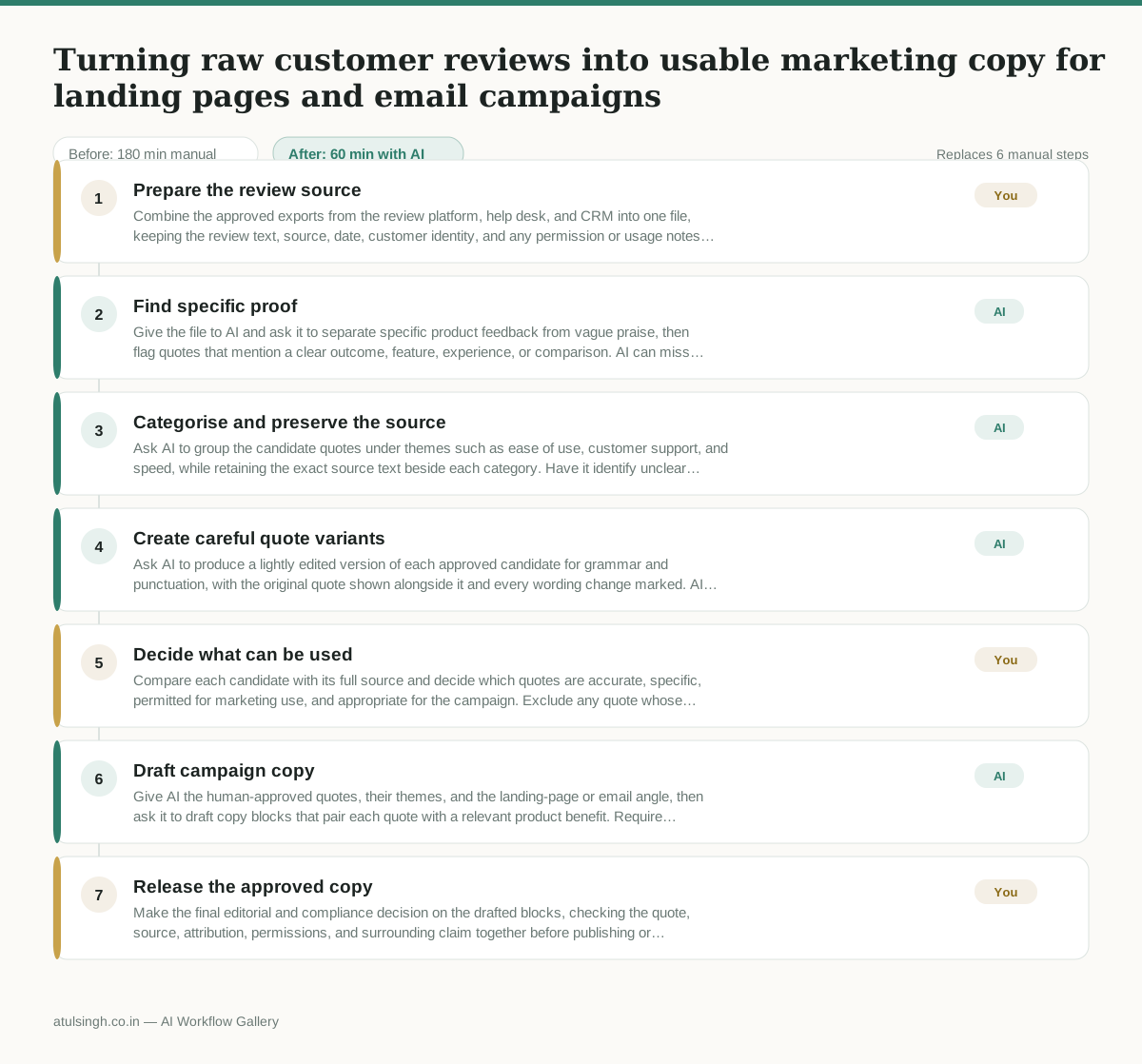
1. Prepare the review source
Combine the approved exports from the review platform, help desk, and CRM into one file, keeping the review text, source, date, customer identity, and any permission or usage notes. Remove duplicate records where you can identify them without changing the original wording.
- AI
2. Find specific proof
Give the file to AI and ask it to separate specific product feedback from vague praise, then flag quotes that mention a clear outcome, feature, experience, or comparison. AI can miss implied meaning or misunderstand context, so treat this as a first pass rather than a final selection.
- AI
3. Categorise and preserve the source
Ask AI to group the candidate quotes under themes such as ease of use, customer support, and speed, while retaining the exact source text beside each category. Have it identify unclear, contradictory, incomplete, or potentially misleading quotes instead of forcing them into a category.
- AI
4. Create careful quote variants
Ask AI to produce a lightly edited version of each approved candidate for grammar and punctuation, with the original quote shown alongside it and every wording change marked. AI must not add claims, remove qualifying context, or turn an opinion into a measurable result.
- You
5. Decide what can be used
Compare each candidate with its full source and decide which quotes are accurate, specific, permitted for marketing use, and appropriate for the campaign. Exclude any quote whose meaning, attribution, consent, timing, or context cannot be verified; this determines which proof reaches the campaign and which claims are dropped.
- AI
6. Draft campaign copy
Give AI the human-approved quotes, their themes, and the landing-page or email angle, then ask it to draft copy blocks that pair each quote with a relevant product benefit. Require the draft to distinguish customer wording from company claims and to leave unsupported details blank rather than inventing them.
- You
7. Release the approved copy
Make the final editorial and compliance decision on the drafted blocks, checking the quote, source, attribution, permissions, and surrounding claim together before publishing or sending. Store the approved copy with its source reference so later campaign edits can be checked against the original review.
What you end up with
Where this falls apart
- The source reviews contain heavily fragmented slang or sarcasm that the model misinterprets as literal praise, resulting in sarcastic remarks being repurposed as positive marketing proof.
- The input dataset includes reviews from customers who have explicitly revoked marketing permission or requested anonymity, causing the model to process and draft copy using restricted identities.
More for Content Marketer
- Turn a recorded customer interview into a draft blog post
- Sorting incoming customer leads from web forms and assigning them to the right sales reps based on company size and location
- Turn a technical whitepaper into a three-part email nurture sequence before it launches
- Reviewing an existing ranking article, checking every claim and figure against current source data, and identifying outdated statements before republication
Also in marketing
- Analyze competitor viral posts to draft three trend hooks, discarding off-brand angles
- pitching influencers and checking their engagement before sending messages
- Write and test five ad variants for one campaign from a single landing page
- Pulling the weekly paid channel report and explaining what actually drove the performance changes