
turn sales call transcripts into a structured case study draft while verifying client claims against the source material
drafting a case study requires re-reading long call transcripts, pulling out proof points, and checking whether the client's stated results match what was actually discussed, which is tedious and prone to missing key details.
- Before
- 120 min
- After
- 55 min
- Saved
- 65 min
How this used to go
- export and read through raw sales call transcripts or meeting notes
- highlight specific metrics, timelines, and client quotes mentioned during the conversation
- cross-reference the client's claims with internal records or CRM notes to verify accuracy
- outline the problem, solution, and results sections based on the notes
- write the first draft of the case study narrative
- send the draft to the sales rep or client for review and corrections
having to sift through hours of transcript text to find specific proof points while verifying whether the client's claims are accurate.
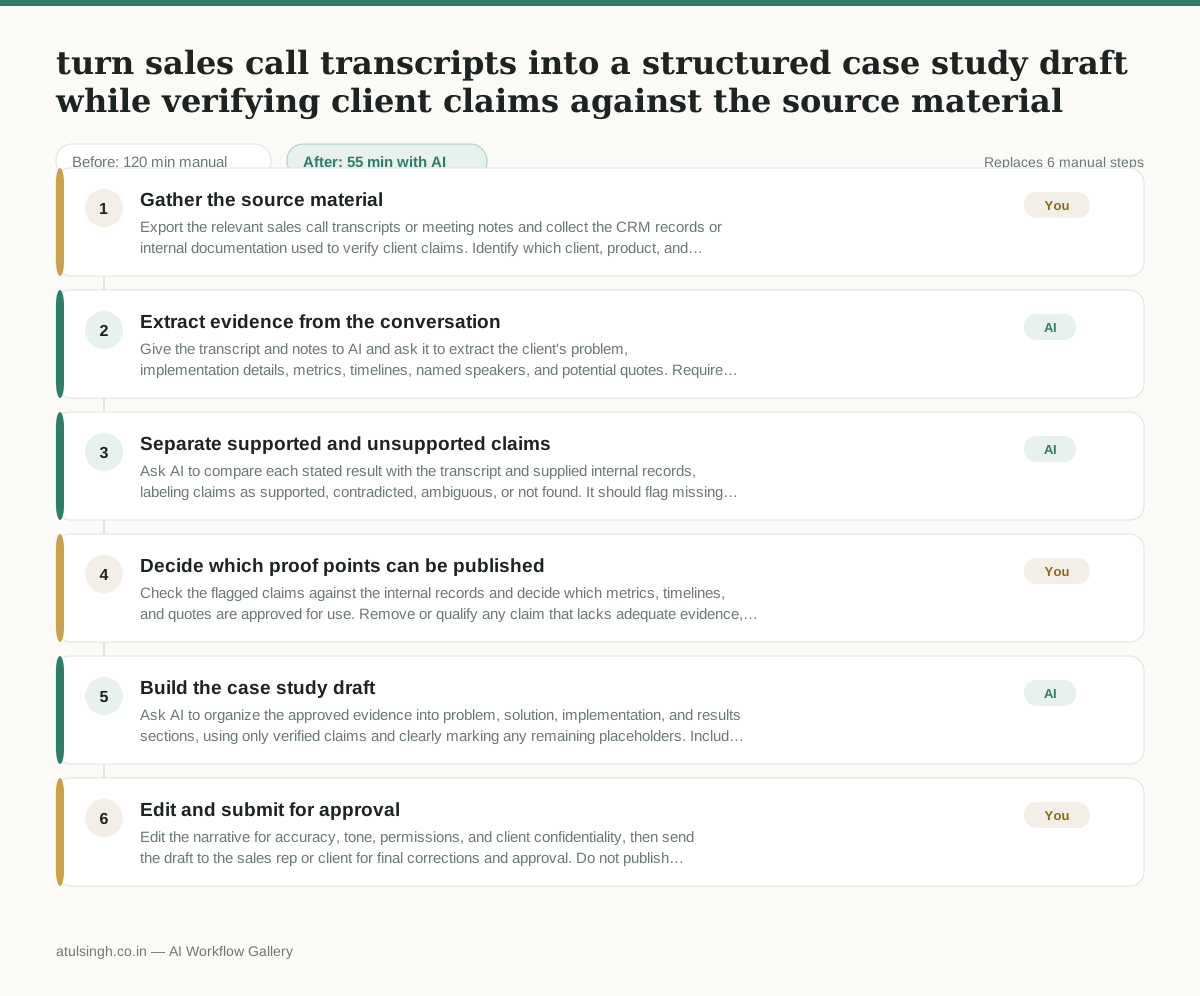
The workflow, step by step
- You
1. Gather the source material
Export the relevant sales call transcripts or meeting notes and collect the CRM records or internal documentation used to verify client claims. Identify which client, product, and business outcome the case study should cover.
- AI
2. Extract evidence from the conversation
Give the transcript and notes to AI and ask it to extract the client's problem, implementation details, metrics, timelines, named speakers, and potential quotes. Require each item to include the exact source passage or a clear location reference.
- AI
3. Separate supported and unsupported claims
Ask AI to compare each stated result with the transcript and supplied internal records, labeling claims as supported, contradicted, ambiguous, or not found. It should flag missing context and avoid treating sales-rep statements as client-confirmed evidence.
- You
4. Decide which proof points can be published
Check the flagged claims against the internal records and decide which metrics, timelines, and quotes are approved for use. Remove or qualify any claim that lacks adequate evidence, and resolve discrepancies with the sales rep or client before drafting.
- AI
5. Build the case study draft
Ask AI to organize the approved evidence into problem, solution, implementation, and results sections, using only verified claims and clearly marking any remaining placeholders. Include source references beside proof points for human checking.
- You
6. Edit and submit for approval
Edit the narrative for accuracy, tone, permissions, and client confidentiality, then send the draft to the sales rep or client for final corrections and approval. Do not publish until disputed claims and quoted language are resolved.
What you end up with
Where this falls apart
- The source call transcripts contain ambiguous phrasing or informal shorthand that the model misinterprets as verified quantitative metrics, resulting in inaccurate proof points in the draft.
- Internal CRM records and meeting notes contradict each other regarding the timeline or results, causing the model to pull conflicting data into the structured sections.
More for Content Marketer
- Turn a recorded customer interview into a draft blog post
- Sorting incoming customer leads from web forms and assigning them to the right sales reps based on company size and location
- Turn a technical whitepaper into a three-part email nurture sequence before it launches
- Reviewing an existing ranking article, checking every claim and figure against current source data, and identifying outdated statements before republication
Also in marketing
- Analyze competitor viral posts to draft three trend hooks, discarding off-brand angles
- pitching influencers and checking their engagement before sending messages
- Write and test five ad variants for one campaign from a single landing page
- Pulling the weekly paid channel report and explaining what actually drove the performance changes