
Plan out the next month of content based on what people are actually asking for and our sales goals
Ideas end up scattered across notebooks, spreadsheets, and chat threads. When it comes time to actually fill the calendar, nobody remembers what the target audience cares about this week, and older posts get recycled just to hit a publishing quota.
- Before
- 180 min
- After
- 75 min
- Saved
- 105 min
How this used to go
- Review current sales targets and active product priorities for the month
- Check past analytics to see which previous topics got the most engagement or questions
- Open a blank spreadsheet or calendar template and map out publishing dates
- Brainstorm headlines and core points for each date based on memory and old notes
- Cross-reference the dates against upcoming company events, holidays, or product launches
- Share the draft with team members for review and wait for feedback
Staring at a blank calendar trying to connect high-level goals to specific topics without repeating last month's ideas.
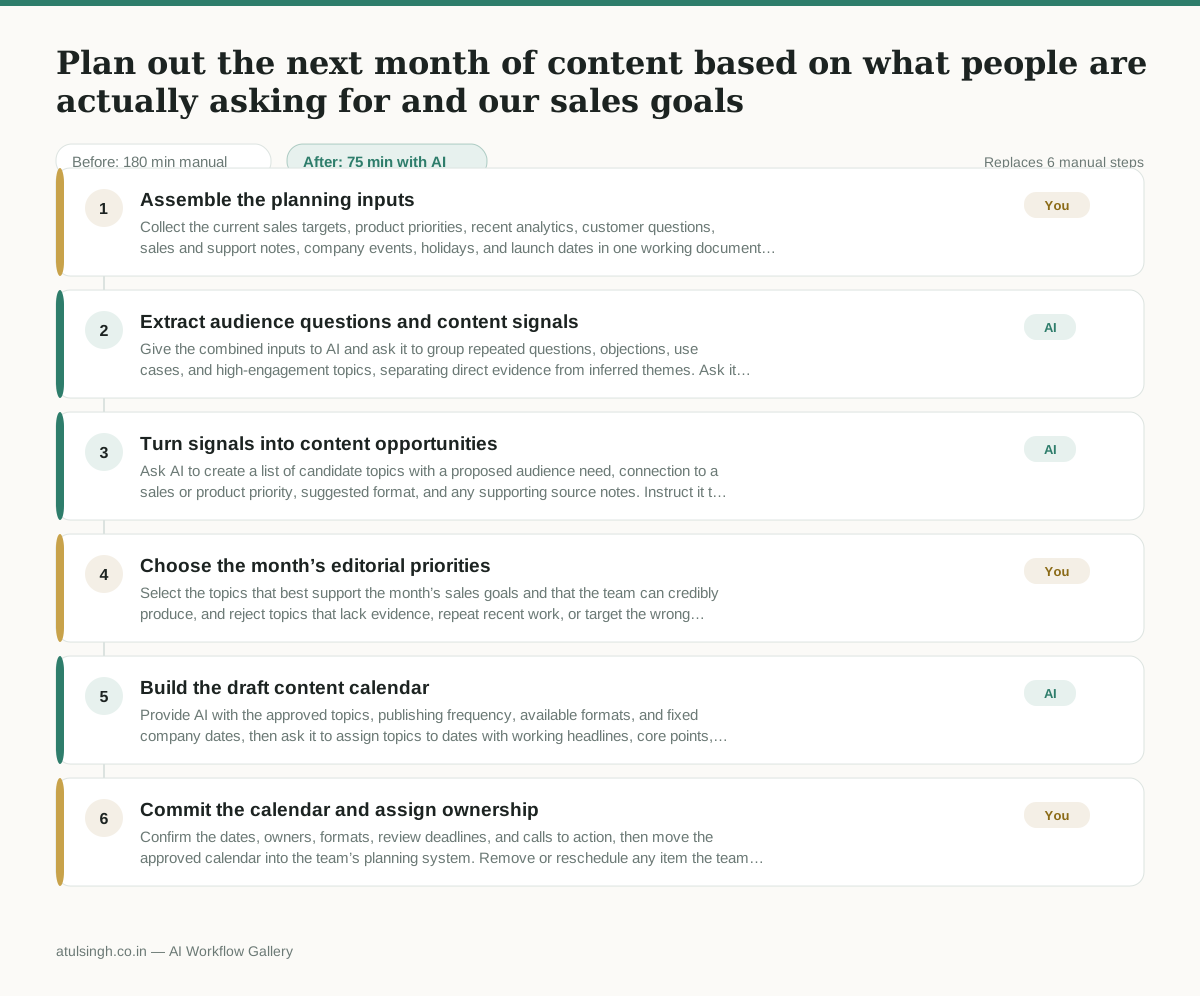
The workflow, step by step
- You
1. Assemble the planning inputs
Collect the current sales targets, product priorities, recent analytics, customer questions, sales and support notes, company events, holidays, and launch dates in one working document. Include dates and source context where available; AI cannot reliably identify audience demand from incomplete or unrepresentative inputs.
- AI
2. Extract audience questions and content signals
Give the combined inputs to AI and ask it to group repeated questions, objections, use cases, and high-engagement topics, separating direct evidence from inferred themes. Ask it to flag weak or conflicting signals rather than presenting them as proven demand.
- AI
3. Turn signals into content opportunities
Ask AI to create a list of candidate topics with a proposed audience need, connection to a sales or product priority, suggested format, and any supporting source notes. Instruct it to identify recently used topics and suggest a distinct angle or mark them for exclusion.
- You
4. Choose the month’s editorial priorities
Select the topics that best support the month’s sales goals and that the team can credibly produce, and reject topics that lack evidence, repeat recent work, or target the wrong buying stage. This decision determines which audience needs receive publishing capacity and which sales priorities are not addressed by content.
- AI
5. Build the draft content calendar
Provide AI with the approved topics, publishing frequency, available formats, and fixed company dates, then ask it to assign topics to dates with working headlines, core points, intended audience, buying stage, and a clear connection to the selected sales priority. Ask it to maintain variety and leave realistic production space rather than filling every date automatically.
- You
6. Commit the calendar and assign ownership
Confirm the dates, owners, formats, review deadlines, and calls to action, then move the approved calendar into the team’s planning system. Remove or reschedule any item the team cannot support with the required expertise, evidence, or production time.
What you end up with
Where this falls apart
- Input data contains unbalanced or unrepresentative customer feedback (such as a vocal minority of support complaints), causing AI to prioritize fringe issues over core buyer needs.
- Sales targets and product priorities change mid-month after the calendar is committed, rendering the generated topics misaligned with current revenue goals.
More for Content Marketer
- Turn a recorded customer interview into a draft blog post
- Sorting incoming customer leads from web forms and assigning them to the right sales reps based on company size and location
- Turn a technical whitepaper into a three-part email nurture sequence before it launches
- Reviewing an existing ranking article, checking every claim and figure against current source data, and identifying outdated statements before republication
Also in marketing
- Analyze competitor viral posts to draft three trend hooks, discarding off-brand angles
- pitching influencers and checking their engagement before sending messages
- Write and test five ad variants for one campaign from a single landing page
- Pulling the weekly paid channel report and explaining what actually drove the performance changes