
Find the missing subtopics and content gaps in top-ranking competitor articles before writing a new piece
Manually reading through five to ten long competitor articles side-by-side takes hours, and it is easy to miss subtle subheadings, missing questions, or weak sections that could be expanded upon.
- Before
- 60 min
- After
- 30 min
- Saved
- 30 min
How this used to go
- Search the target keyword and open the top five ranking articles in browser tabs
- Scan each article's headings and subheadings manually
- Copy and paste headings or notes into a blank document or spreadsheet
- Compare the outlines side-by-side to spot which topics appear across most articles
- Identify subtopics that only one competitor covered or that all competitors missed entirely
Staring at multiple browser tabs and messy notes trying to remember which competitor covered what specific subtopic.
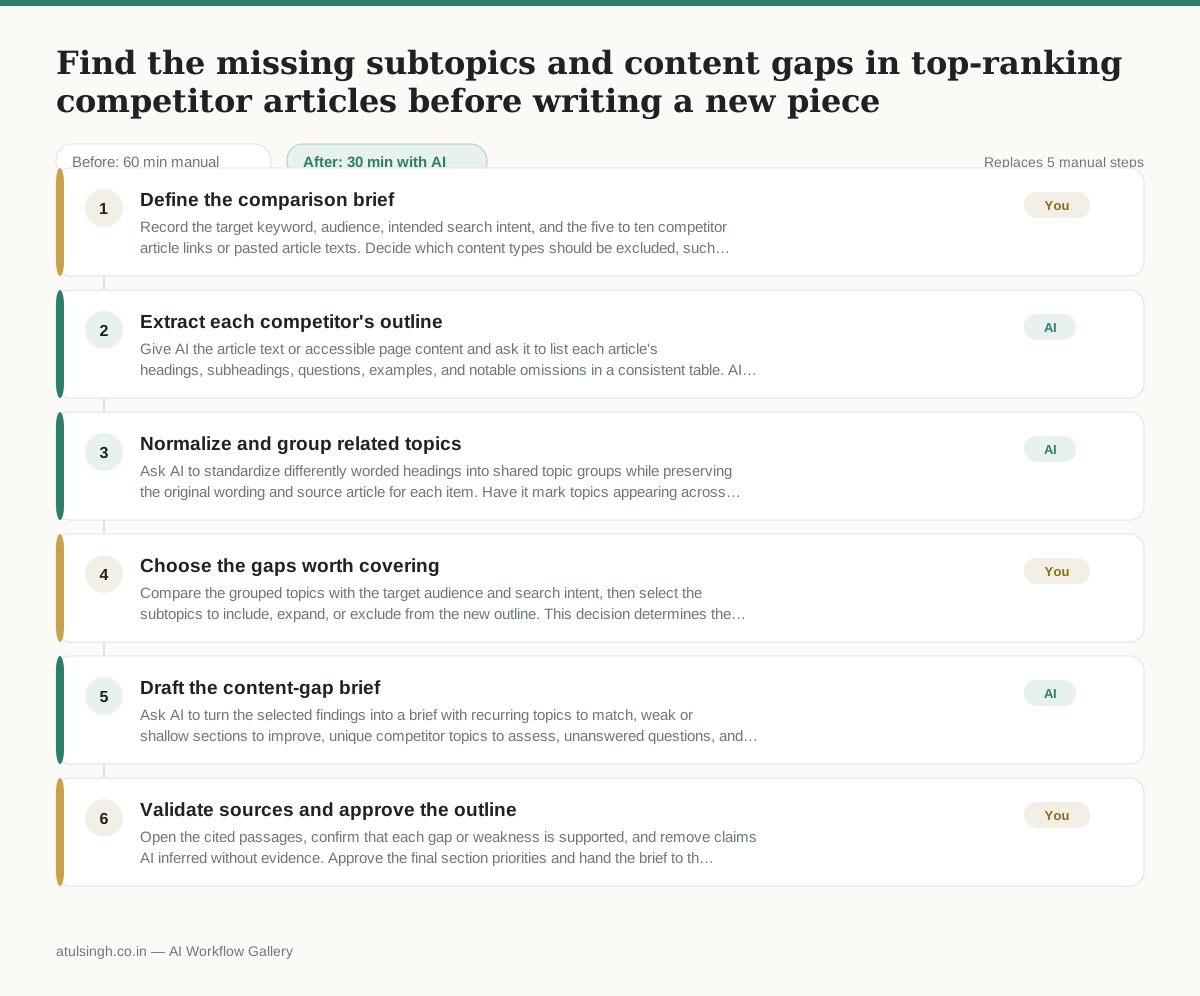
The workflow, step by step
- You
1. Define the comparison brief
Record the target keyword, audience, intended search intent, and the five to ten competitor article links or pasted article texts. Decide which content types should be excluded, such as product pages or unrelated search results.
- AI
2. Extract each competitor's outline
Give AI the article text or accessible page content and ask it to list each article's headings, subheadings, questions, examples, and notable omissions in a consistent table. AI can organize visible content, but it may miss headings hidden behind scripts or incorrectly interpret page structure.
- AI
3. Normalize and group related topics
Ask AI to standardize differently worded headings into shared topic groups while preserving the original wording and source article for each item. Have it mark topics appearing across most articles, topics covered by only one article, and apparent gaps across all articles.
- You
4. Choose the gaps worth covering
Compare the grouped topics with the target audience and search intent, then select the subtopics to include, expand, or exclude from the new outline. This decision determines the article's scope and prevents AI from turning every difference between competitors into a required section.
- AI
5. Draft the content-gap brief
Ask AI to turn the selected findings into a brief with recurring topics to match, weak or shallow sections to improve, unique competitor topics to assess, unanswered questions, and proposed sections for the new article. Require every finding to retain its source article or be labeled as an inference.
- You
6. Validate sources and approve the outline
Open the cited passages, confirm that each gap or weakness is supported, and remove claims AI inferred without evidence. Approve the final section priorities and hand the brief to the writer.
What you end up with
Where this falls apart
- Competitor articles rely heavily on dynamic JavaScript rendering or paywalled content, because the AI will only receive partial text and generate an incomplete outline comparison.
- Competitor headings use ambiguous or highly creative phrasing, because the AI will fail to normalize related topics correctly and produce fragmented grouping results.
More for Content Marketer
- Turn a recorded customer interview into a draft blog post
- Sorting incoming customer leads from web forms and assigning them to the right sales reps based on company size and location
- Turn a technical whitepaper into a three-part email nurture sequence before it launches
- Reviewing an existing ranking article, checking every claim and figure against current source data, and identifying outdated statements before republication
Also in marketing
- Analyze competitor viral posts to draft three trend hooks, discarding off-brand angles
- pitching influencers and checking their engagement before sending messages
- Write and test five ad variants for one campaign from a single landing page
- Pulling the weekly paid channel report and explaining what actually drove the performance changes