
Write an account handoff brief for customer success after a closed-won deal
Important context from discovery calls, pricing negotiations, and email threads gets left out of the CRM or buried in notes, leaving the customer success manager to piece together what was promised.
- Before
- 45 min
- After
- 25 min
- Saved
- 20 min
How this used to go
- Review the closed-won opportunity in the CRM to verify final contract details and product tiers.
- Open previous discovery call notes, call recordings, and email threads to extract customer pain points and specific requirements.
- Draft a handoff summary in a shared document or internal chat message, summarizing what was discussed.
- Schedule a synchronous handoff meeting with the assigned customer success manager to walk through the account context.
- Update CRM fields, tags, and account owner information to reflect the completed handoff.
Digging through old call notes and email chains to remember specific customer requests while trying to write a summary that makes sense to someone else.
The workflow, step by step
- You
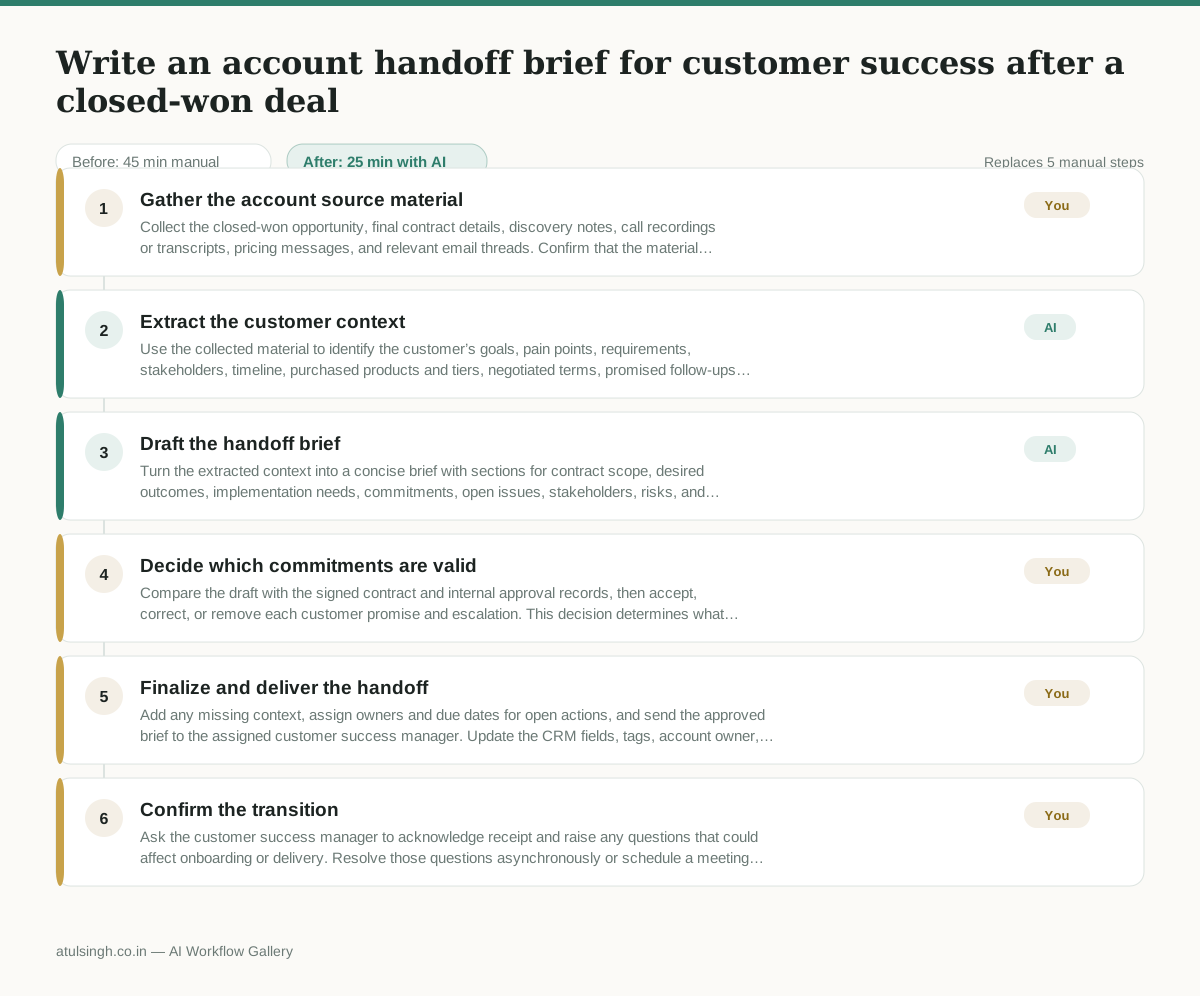
1. Gather the account source material
Collect the closed-won opportunity, final contract details, discovery notes, call recordings or transcripts, pricing messages, and relevant email threads. Confirm that the material covers the final customer commitments before passing it into the workflow.
- AI
2. Extract the customer context
Use the collected material to identify the customer’s goals, pain points, requirements, stakeholders, timeline, purchased products and tiers, negotiated terms, promised follow-ups, risks, and unresolved questions. Mark each item by source and flag statements that are ambiguous or appear to conflict.
- AI
3. Draft the handoff brief
Turn the extracted context into a concise brief with sections for contract scope, desired outcomes, implementation needs, commitments, open issues, stakeholders, risks, and recommended first actions. Keep confirmed facts separate from assumptions and include links or references to the source material when available.
- You
4. Decide which commitments are valid
Compare the draft with the signed contract and internal approval records, then accept, correct, or remove each customer promise and escalation. This decision determines what customer success may act on and prevents an ambiguous sales statement from becoming an unintended commitment.
- You
5. Finalize and deliver the handoff
Add any missing context, assign owners and due dates for open actions, and send the approved brief to the assigned customer success manager. Update the CRM fields, tags, account owner, and handoff status so the brief is connected to the account record.
- You
6. Confirm the transition
Ask the customer success manager to acknowledge receipt and raise any questions that could affect onboarding or delivery. Resolve those questions asynchronously or schedule a meeting only when the remaining uncertainty requires discussion.
What you end up with
Where this falls apart
- The source call recordings and emails contain unverified verbal agreements or off-the-record concessions, causing the AI to list unauthorized promises as valid customer commitments.
- The sales representative uses multiple disconnected channels for negotiation without logging them in the CRM, causing the AI to miss critical pricing constraints and produce an incomplete brief.
More for Account Executive
- Prep for a B2B demo call by checking recent company news, job postings, and tech stack changes to build relevant questions.
- Reviving deals that went quiet after sending a proposal by finding matching case studies and writing a follow-up message.
- Reviewing discovery call notes before booking a software demo to check if the prospect has a real budget, a hard timeline, and actual authority to buy.
- Tailor the demo pitch to different stakeholders based on company research and discovery notes
Also in sales
- Research an incoming company and its decision makers before a first sales meeting
- Reviewing a new sales rep's practice pitch against the team's call criteria before letting them talk to real prospects
- reaching out to former colleagues and personal contacts to announce a new company or product launch without sounding like a spammy marketer
- Turn raw discovery call notes into a structured pilot proposal for a new client