
Reviewing discovery call notes before booking a software demo to check if the prospect has a real budget, a hard timeline, and actual authority to buy.
Account executives often spend time preparing for and running software demos with prospects who turn out to be individual contributors with no purchasing power, or who have not actually quantified their business problem, leading to wasted calendars and stalled deals.
- Before
- 15 min
- After
- 8 min
- Saved
- 7 min
How this used to go
- Open the CRM record after a discovery call to read the raw notes or meeting transcript.
- Scan the notes manually to see if a specific timeline for implementation was mentioned.
- Check whether the prospect named a specific financial cost or quantified pain point.
- Look up the contact's job title and role details to verify if they have decision-making authority.
- Compare the findings against the team's required criteria to decide whether a demo should be scheduled.
- Write a quick summary message or update the CRM fields to log the qualification status.
Realizing halfway through a product demo that the person on the call is an individual contributor who cannot sign a contract or allocate budget.
The workflow, step by step
- AI
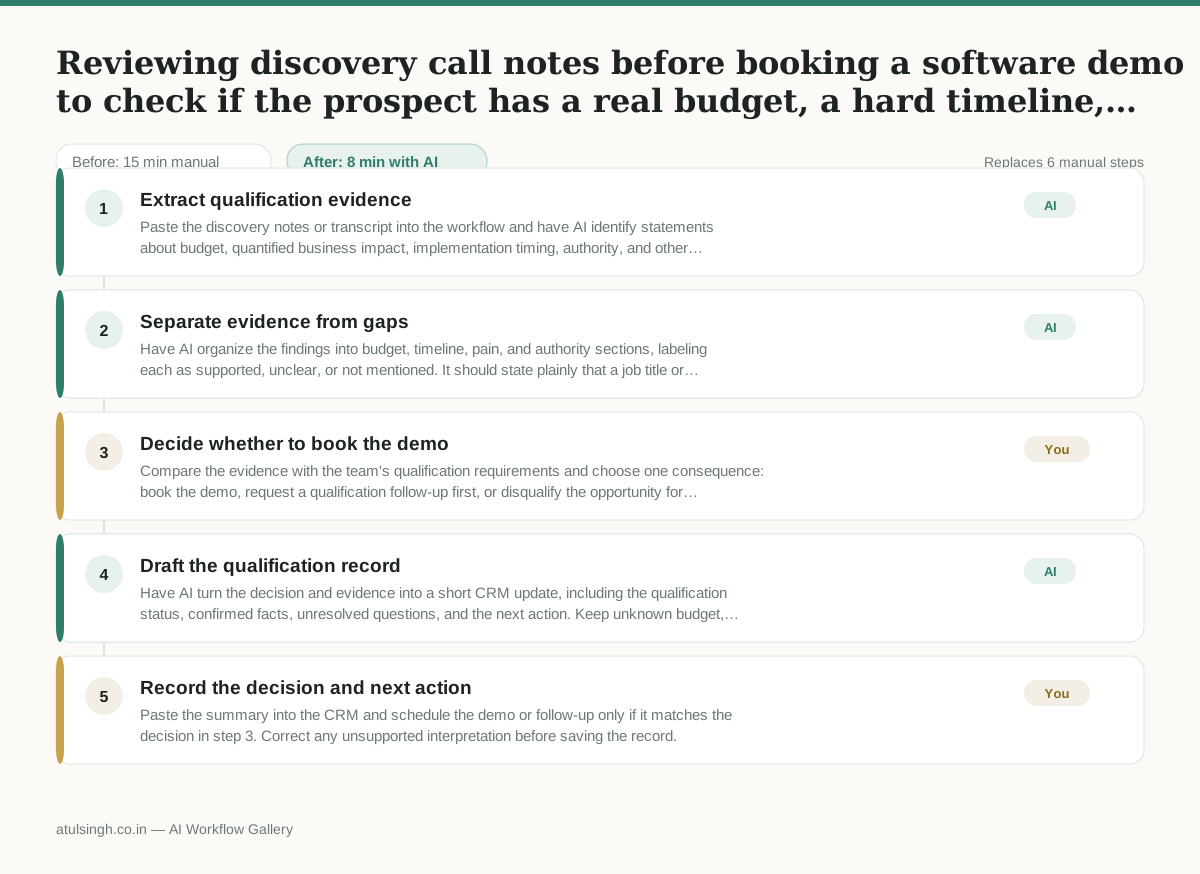
1. Extract qualification evidence
Paste the discovery notes or transcript into the workflow and have AI identify statements about budget, quantified business impact, implementation timing, authority, and other decision participants. It should quote or closely reference the supporting text rather than treating missing information as a negative answer.
- AI
2. Separate evidence from gaps
Have AI organize the findings into budget, timeline, pain, and authority sections, labeling each as supported, unclear, or not mentioned. It should state plainly that a job title or role description alone cannot reliably prove purchasing authority.
- You
3. Decide whether to book the demo
Compare the evidence with the team's qualification requirements and choose one consequence: book the demo, request a qualification follow-up first, or disqualify the opportunity for now. Do not book a demo when a required criterion is missing unless you deliberately accept that risk.
- AI
4. Draft the qualification record
Have AI turn the decision and evidence into a short CRM update, including the qualification status, confirmed facts, unresolved questions, and the next action. Keep unknown budget, timing, or authority clearly marked as unknown.
- You
5. Record the decision and next action
Paste the summary into the CRM and schedule the demo or follow-up only if it matches the decision in step 3. Correct any unsupported interpretation before saving the record.
What you end up with
Where this falls apart
- The discovery conversation took place over phone or video without a transcript, and the account executive took vague or incomplete shorthand notes that lack context about budget or authority.
- The prospect used polite industry jargon or non-committal language that the AI interprets as confirmed budget or timeline when no actual commitment was made.
More for Account Executive
- Prep for a B2B demo call by checking recent company news, job postings, and tech stack changes to build relevant questions.
- Reviving deals that went quiet after sending a proposal by finding matching case studies and writing a follow-up message.
- Tailor the demo pitch to different stakeholders based on company research and discovery notes
- Write an account handoff brief for customer success after a closed-won deal
Also in sales
- Research an incoming company and its decision makers before a first sales meeting
- Reviewing a new sales rep's practice pitch against the team's call criteria before letting them talk to real prospects
- reaching out to former colleagues and personal contacts to announce a new company or product launch without sounding like a spammy marketer
- Turn raw discovery call notes into a structured pilot proposal for a new client