
Tailor the demo pitch to different stakeholders based on company research and discovery notes
When prepping for a demo, Account Executives spend excessive time manually cross-referencing quarterly reports, recent hire announcements, and messy discovery notes to figure out what matters to finance, operations, and executive buyers. If discovery notes are sparse or the target account is an early-stage startup with a flat structure, this prep yields little value, leaving the AE guessing during the call.
- Before
- 45 min
- After
- 20 min
- Saved
- 25 min
How this used to go
- Review recent quarterly earnings releases, shareholder letters, or public company updates for stated strategic initiatives.
- Scan professional network feeds or company news for recent executive and leadership hires to infer shifting departmental priorities.
- Open previous discovery notes or CRM records to extract pain points mentioned by the initial contact.
- Map extracted priorities to three distinct personas: finance (cost, ROI), operations (efficiency, implementation), and leadership (growth, strategy).
- Draft separate value propositions and talking points for each persona to integrate into the demo presentation.
Digging through scattered notes and recent news to build custom value propositions, only to realize the discovery notes lack any detail about the broader buying committee.
The workflow, step by step
- You
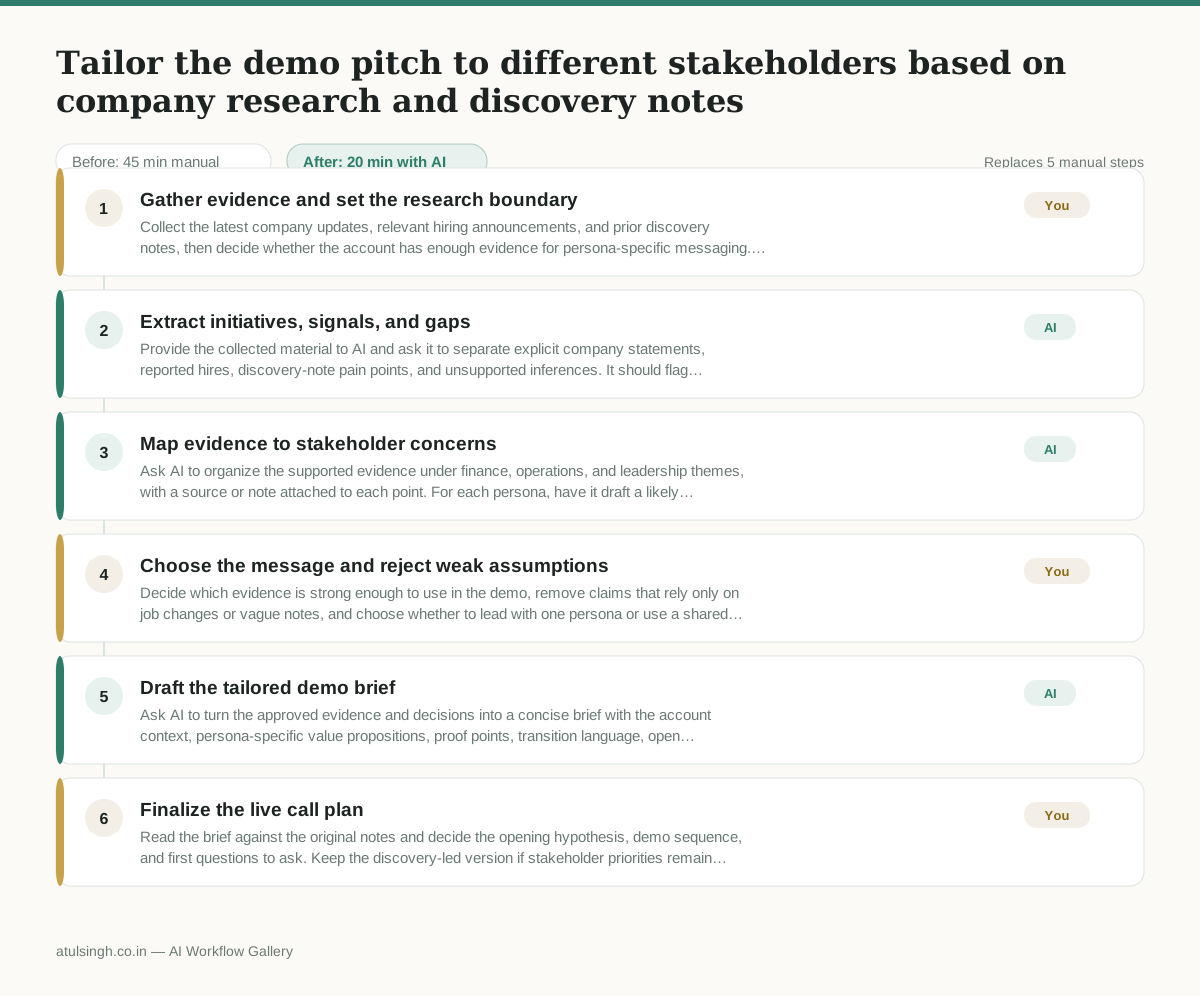
1. Gather evidence and set the research boundary
Collect the latest company updates, relevant hiring announcements, and prior discovery notes, then decide whether the account has enough evidence for persona-specific messaging. If evidence is sparse or the company has a flat structure, choose a discovery-led demo instead of treating finance, operations, and leadership as confirmed buying roles.
- AI
2. Extract initiatives, signals, and gaps
Provide the collected material to AI and ask it to separate explicit company statements, reported hires, discovery-note pain points, and unsupported inferences. It should flag missing information and state plainly that hires or sparse notes cannot reliably establish a stakeholder's priorities.
- AI
3. Map evidence to stakeholder concerns
Ask AI to organize the supported evidence under finance, operations, and leadership themes, with a source or note attached to each point. For each persona, have it draft a likely concern, a relevant demo angle, and a discovery question rather than presenting assumptions as facts.
- You
4. Choose the message and reject weak assumptions
Decide which evidence is strong enough to use in the demo, remove claims that rely only on job changes or vague notes, and choose whether to lead with one persona or use a shared business problem. This determines the talk track and the discovery questions the AE will use when the buying committee is unclear.
- AI
5. Draft the tailored demo brief
Ask AI to turn the approved evidence and decisions into a concise brief with the account context, persona-specific value propositions, proof points, transition language, open questions, and claims to avoid. Require it to label assumptions and include a generic discovery-led path where the evidence is insufficient.
- You
6. Finalize the live call plan
Read the brief against the original notes and decide the opening hypothesis, demo sequence, and first questions to ask. Keep the discovery-led version if stakeholder priorities remain unverified, then use the approved brief during the call.
What you end up with
Where this falls apart
- The input account data consists entirely of generic press releases and high-level job titles, causing the AI to hallucinate or invent specific stakeholder priorities to fill the gaps in the discovery notes.
- The discovery notes contain contradictory statements from different stakeholders at the same company, leading the AI to generate a unified pitch that misrepresents the actual internal alignment.
More for Account Executive
- Prep for a B2B demo call by checking recent company news, job postings, and tech stack changes to build relevant questions.
- Reviving deals that went quiet after sending a proposal by finding matching case studies and writing a follow-up message.
- Reviewing discovery call notes before booking a software demo to check if the prospect has a real budget, a hard timeline, and actual authority to buy.
- Write an account handoff brief for customer success after a closed-won deal
Also in sales
- Research an incoming company and its decision makers before a first sales meeting
- Reviewing a new sales rep's practice pitch against the team's call criteria before letting them talk to real prospects
- reaching out to former colleagues and personal contacts to announce a new company or product launch without sounding like a spammy marketer
- Turn raw discovery call notes into a structured pilot proposal for a new client