
building a mutual action plan after a prospect agrees to move forward
building mutual action plans by hand takes too long, leading to delayed follow-ups and missed alignment on key closing dates with the prospect.
- Before
- 45 min
- After
- 20 min
- Saved
- 25 min
How this used to go
- Review the last call recording or notes to identify agreed-upon milestones and target dates.
- Open a blank spreadsheet or document template for mutual action plans.
- Type out the implementation phases, owner names, and deadlines manually.
- Email the draft to internal team members to check availability and technical requirements.
- Revise the plan based on internal feedback.
- Send the final document to the prospect and wait for their edits.
translating messy call notes into a structured timeline while trying to remember every single detail agreed upon during the sales conversation.
The workflow, step by step
- AI
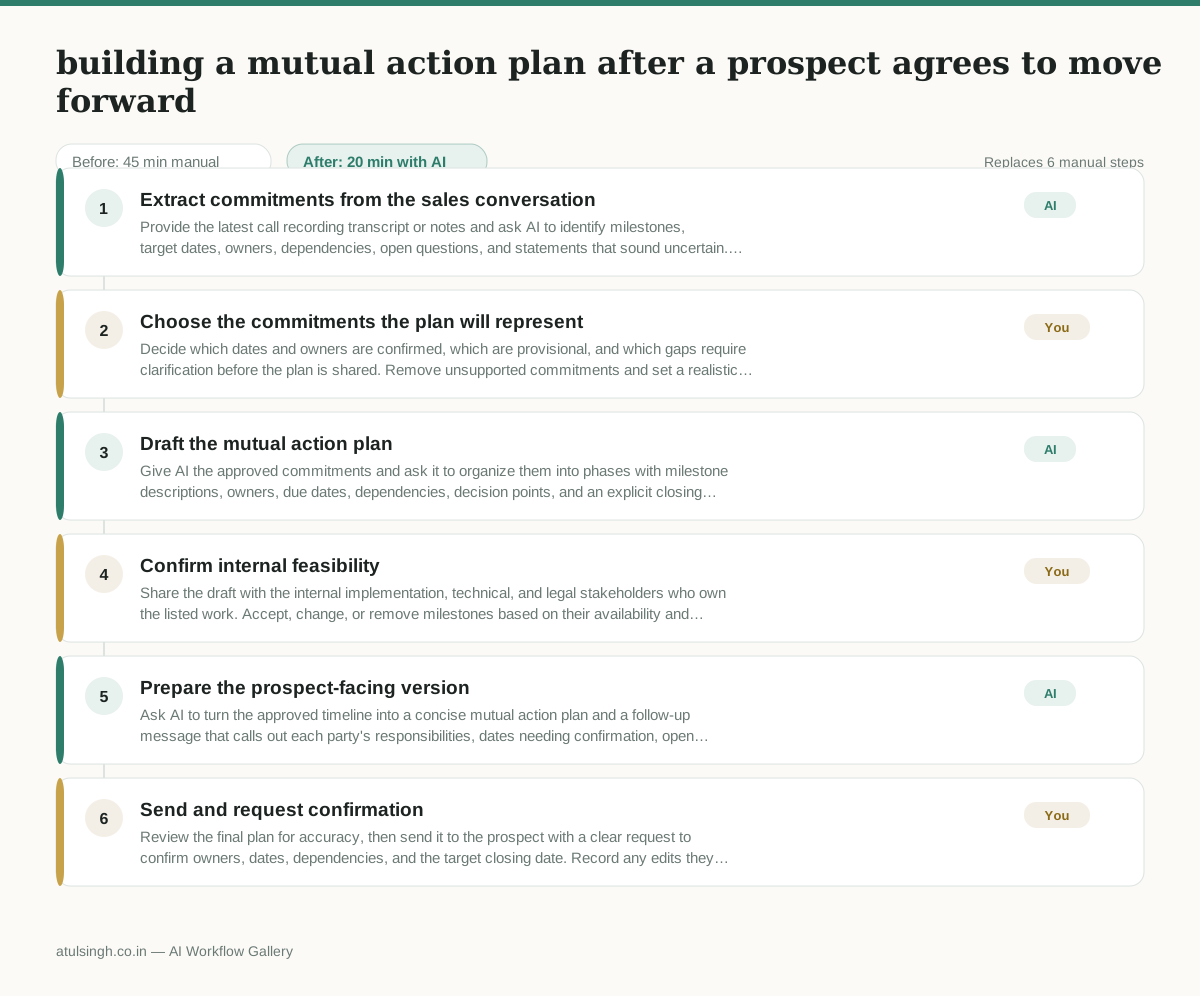
1. Extract commitments from the sales conversation
Provide the latest call recording transcript or notes and ask AI to identify milestones, target dates, owners, dependencies, open questions, and statements that sound uncertain. Treat the result as a draft because AI may misread implied commitments or speaker ownership.
- You
2. Choose the commitments the plan will represent
Decide which dates and owners are confirmed, which are provisional, and which gaps require clarification before the plan is shared. Remove unsupported commitments and set a realistic target for the closing date; this decision determines whether the plan can be sent or must return to the prospect for clarification.
- AI
3. Draft the mutual action plan
Give AI the approved commitments and ask it to organize them into phases with milestone descriptions, owners, due dates, dependencies, decision points, and an explicit closing target. Instruct it to label missing information instead of filling gaps with guesses.
- You
4. Confirm internal feasibility
Share the draft with the internal implementation, technical, and legal stakeholders who own the listed work. Accept, change, or remove milestones based on their availability and requirements, and decide whether the revised dates are firm enough to present to the prospect.
- AI
5. Prepare the prospect-facing version
Ask AI to turn the approved timeline into a concise mutual action plan and a follow-up message that calls out each party's responsibilities, dates needing confirmation, open questions, and the proposed next check-in. Have it preserve the approved wording and avoid adding new promises.
- You
6. Send and request confirmation
Review the final plan for accuracy, then send it to the prospect with a clear request to confirm owners, dates, dependencies, and the target closing date. Record any edits they return and update the plan when both sides agree.
What you end up with
Where this falls apart
- The sales call transcript contains ambiguous speaker attribution, which causes the AI to assign implementation tasks to the wrong internal team or the prospect.
- The conversation includes casual or hypothetical timelines discussed during the call, which leads the AI to present unconfirmed dates as firm commitments in the draft plan.
More for Account Executive
- Prep for a B2B demo call by checking recent company news, job postings, and tech stack changes to build relevant questions.
- Reviving deals that went quiet after sending a proposal by finding matching case studies and writing a follow-up message.
- Reviewing discovery call notes before booking a software demo to check if the prospect has a real budget, a hard timeline, and actual authority to buy.
- Tailor the demo pitch to different stakeholders based on company research and discovery notes
Also in sales
- Research an incoming company and its decision makers before a first sales meeting
- Reviewing a new sales rep's practice pitch against the team's call criteria before letting them talk to real prospects
- reaching out to former colleagues and personal contacts to announce a new company or product launch without sounding like a spammy marketer
- Turn raw discovery call notes into a structured pilot proposal for a new client