Short answer: Lovable is an AI app builder. You describe what you need in plain language, and an AI agent writes, runs and publishes a real web app, including the database, logins, payments and integrations. I have used it for more than a year on my own website and on client projects. It is the fastest route I know from idea to working product for founders building an MVP, a SaaS, a marketplace or a B2B platform, as long as you still bring sound product thinking.
Why I started building on Lovable
I have spent about 15 years building, selling and teaching software, and close to ten of those building web platforms and AI systems. Before Lovable, a new product meant weeks of setup before anyone saw a working screen.
Lovable changed the order of work. I now start with a conversation, see a working preview within minutes, and spend my time on the decisions that matter: what the product does, where the data lives, and what stays with people.
That is what I mean by agentic web development. An agent does not just suggest code. It plans, edits files, runs checks, reads error logs, fixes them and publishes. You stay the product owner and reviewer.
What I have built with Lovable
Over the past year I have built more than ten applications on Lovable across my own accounts and client accounts: SaaS tools, marketplaces, client portals, internal dashboards and websites. Six are currently on my Lovable partner profile. Here are four of them.
| Project | Type | What Lovable handled |
|---|---|---|
| CarbonCredXchange | Carbon credit marketplace | Project verification, buyer and seller matching, an MCP server so ChatGPT and Claude can work with the platform |
| FMCG Deals MatchMaker | B2B marketplace | Role-based profiles for brands, stockists, distributors and retailers, paid lead unlocks, verified memberships, deal rooms |
| Sat Akaal Consultancy | Corporate web app | One platform for the group's business arms |
| atulsingh.co.in | My own business platform | Libraries of 300+ workflows and prompts, course enrolment, lead and booking flows, a blog, webinars and an admin area |
A few of the clients behind these projects have told me the experience was far smoother than their earlier builds with agencies or freelancers. They saw their product working early and could change direction without starting again.
My favourite feature: two-way GitHub sync
The feature I rely on most is Lovable's two-way sync with GitHub. Every change made in Lovable lands in a GitHub repository, and every change pushed to the synced branch comes back into Lovable.
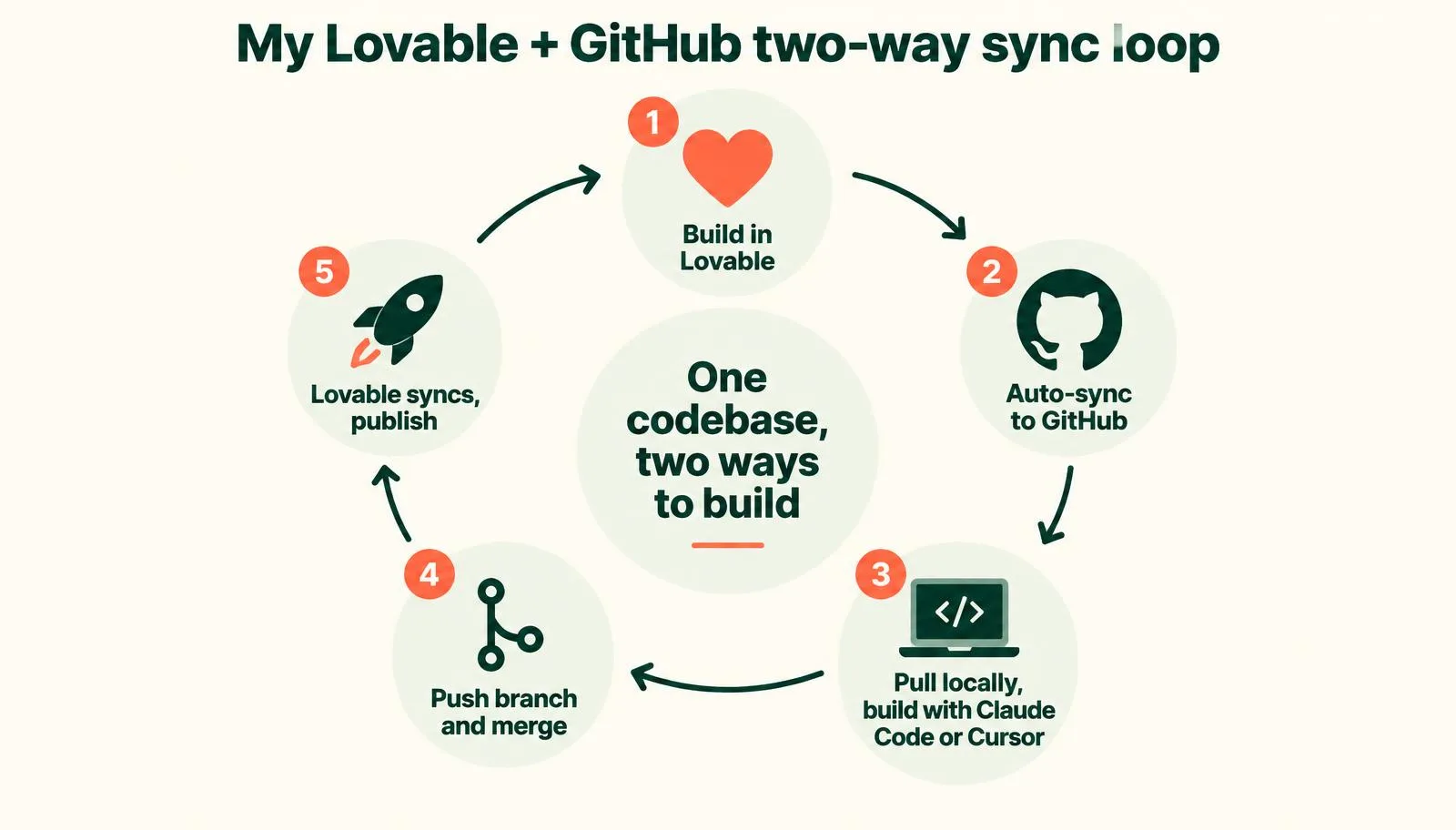
This is how I work on bigger changes:
- Build and shape the product in Lovable.
- Lovable syncs the code to GitHub automatically.
- I pull the project to my laptop and work on a feature branch with Claude Code or Cursor.
- I push the branch, review it and merge it into the synced branch.
- Lovable picks up the merge, and I publish.
A few practical rules keep this smooth:
- Work on a branch, merge into the synced branch. Only the synced branch reaches Lovable.
- Don't force-push or rewrite history on the synced branch. It can replace work done in Lovable.
- Keep secrets out of the code. API keys belong in Lovable's secret storage, not in the repository.
- Database changes go through Lovable. Migration files in the repository are not applied by the sync on their own.
None of this is a hack. It is ordinary software practice, and it means you are never locked in: the code is standard, readable and yours.
My website MCP: letting AI work on my site safely
My website has its own MCP server. MCP (Model Context Protocol) is an open standard that lets AI assistants such as Claude or ChatGPT use a website's tools directly, with permission.
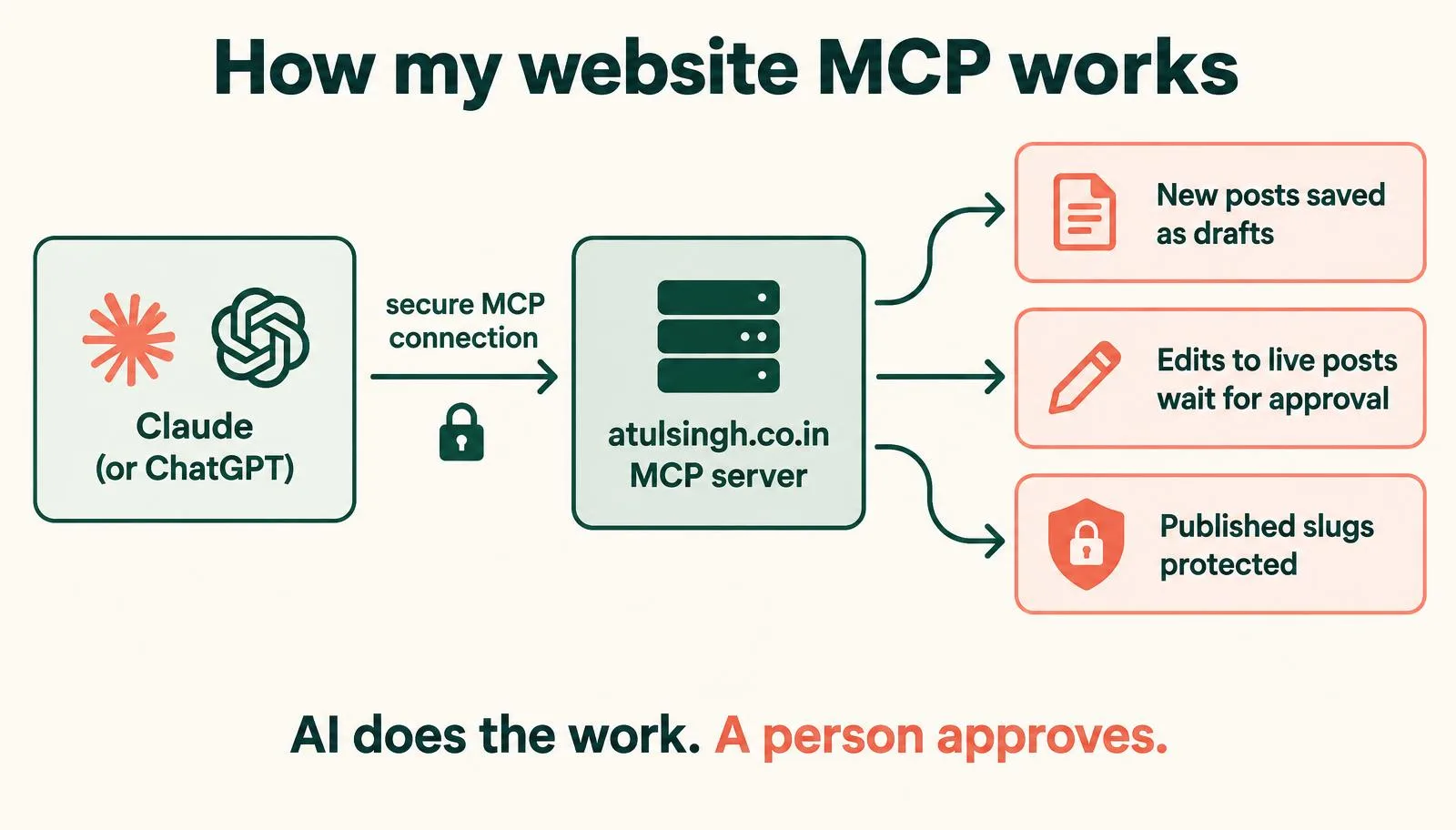
In practice, I can ask Claude to draft a blog post, update an article or check my webinar details, and it does the work through my site's own rules:
- New posts are always saved as drafts.
- Edits to a published post are staged and wait for my approval.
- Published web addresses (slugs) can't be changed, so search rankings are protected.
- Every change keeps a snapshot, so it can be reverted.
The advantage is simple: AI does the repetitive work, and a person stays in charge of what goes live. I built this MCP in Lovable and refined parts of it with Claude Code, using the GitHub loop above.
Beyond vibe coding: what a real product needs
"Vibe coding" gets you a demo. A product people pay for needs more. Lovable handles a lot of the build, but the thinking is still yours.
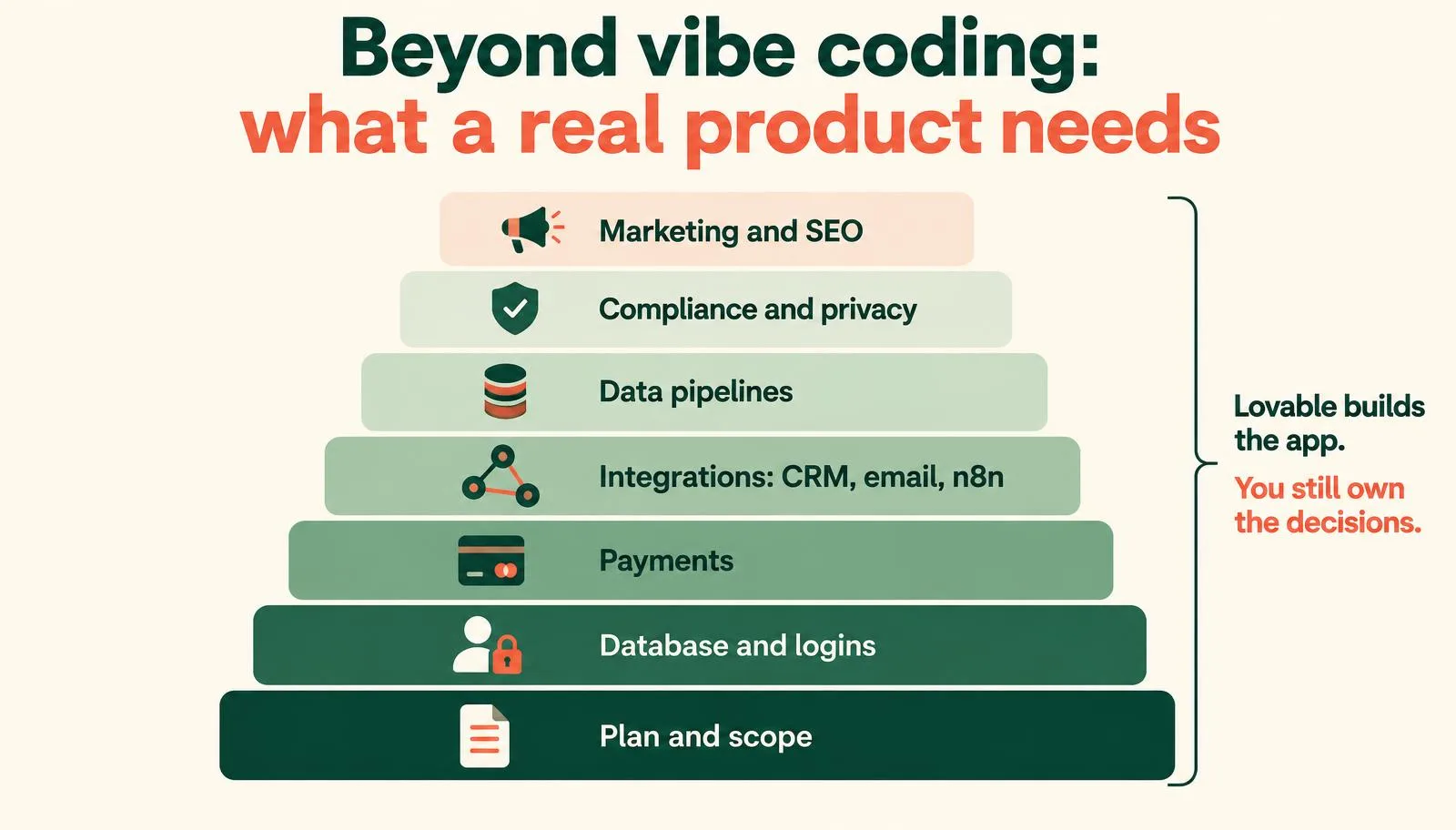
This is the checklist I go through on every project:
- Plan and scope: who the users are, what they must be able to do on day one, and what can wait.
- Database and logins: who can see which data, and roles such as admin, staff and customer.
- Payments: plans, one-off payments and what happens when a payment fails.
- Integrations: CRM, email, WhatsApp and n8n workflows running behind the screens. Lovable connects with a very large range of tools, many of which I hadn't used before.
- Data pipelines: how data moves in and out, and how errors are caught.
- Compliance and privacy: consent, data protection and what you store.
- Marketing and SEO: page titles, structured data, speed, analytics and content.
When Lovable is the right choice, and when it isn't
| Good fit | Think twice |
|---|---|
| MVPs and first versions you want in front of users quickly | Native mobile apps that need app-store features |
| SaaS tools, client portals and internal dashboards | Very heavy real-time systems, such as large multiplayer games |
| Marketplaces and B2B platforms | Projects where nobody owns product decisions |
| Business websites with blogs, forms and bookings | Teams unwilling to review and test what the AI builds |