
Audit monthly affiliate network click and conversion reports against internal order databases to verify commission payouts before finance processes them.
Affiliate networks track conversions differently than internal e-commerce or CRM databases due to tracking blockers, attribution windows, and refund timing, leading to overpaid commissions if discrepancies go unnoticed.
- Before
- 180 min
- After
- 75 min
- Saved
- 105 min
How this used to go
- Download the monthly affiliate network transaction report as a CSV file.
- Export the corresponding internal sales and refund records from the CRM or database for the same date range.
- Combine both datasets into a single spreadsheet and match rows using affiliate ID, order ID, or customer email.
- Filter for rows where conversion amounts, timestamps, or statuses differ between the two sources.
- Investigate unmatched orders manually in the order management system to determine if they are valid returns, tracking errors, or duplicate claims.
- Compile a discrepancy summary list and email affiliate partners or account managers to dispute incorrect charges before the payout deadline.
Cross-referencing hundreds of individual order IDs one by one to find why an affiliate network logged a sale that never materialized in the internal database.
The workflow, step by step
- You
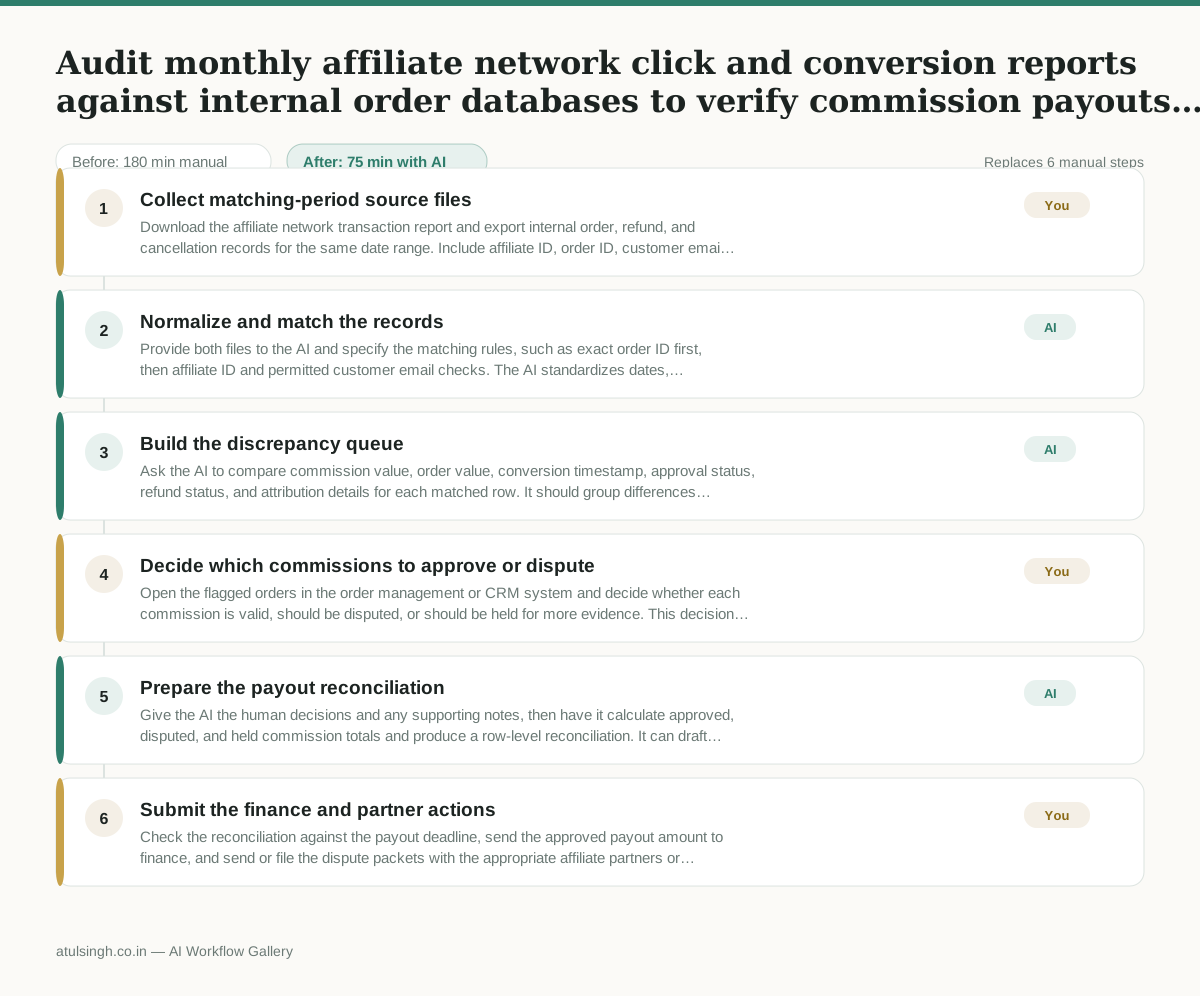
1. Collect matching-period source files
Download the affiliate network transaction report and export internal order, refund, and cancellation records for the same date range. Include affiliate ID, order ID, customer email where permitted, conversion value, timestamps, status, and refund fields.
- AI
2. Normalize and match the records
Provide both files to the AI and specify the matching rules, such as exact order ID first, then affiliate ID and permitted customer email checks. The AI standardizes dates, currencies, statuses, and field names, then produces matched, unmatched, and potentially duplicate rows.
- AI
3. Build the discrepancy queue
Ask the AI to compare commission value, order value, conversion timestamp, approval status, refund status, and attribution details for each matched row. It should group differences into categories such as refunded order, missing internal order, timing mismatch, duplicate claim, amount mismatch, or insufficient evidence, while clearly marking uncertain classifications.
- You
4. Decide which commissions to approve or dispute
Open the flagged orders in the order management or CRM system and decide whether each commission is valid, should be disputed, or should be held for more evidence. This decision determines the amount finance may pay and cannot be delegated to AI because tracking rules, refunds, and contractual attribution terms may require business judgment.
- AI
5. Prepare the payout reconciliation
Give the AI the human decisions and any supporting notes, then have it calculate approved, disputed, and held commission totals and produce a row-level reconciliation. It can draft partner-specific dispute messages, but it cannot confirm that a disputed conversion violates a network agreement without the relevant terms and evidence.
- You
6. Submit the finance and partner actions
Check the reconciliation against the payout deadline, send the approved payout amount to finance, and send or file the dispute packets with the appropriate affiliate partners or account managers. Retain the source files, decisions, and evidence for later adjustments or appeals.
What you end up with
Where this falls apart
- Affiliate networks use hashed or anonymized customer identifiers that prevent exact matching against internal database records, resulting in the model failing to link valid transactions and misclassifying them as unverified claims.
- Refunds or chargebacks are processed in the internal database after the affiliate report cutoff date, causing the AI to match a transaction that was later canceled and improperly approve the commission payout.
More for Performance Marketer
- Write and test five ad variants for one campaign from a single landing page
- Pulling the weekly paid channel report and explaining what actually drove the performance changes
- Figure out why ad spend suddenly stopped working and cost per lead doubled over the last week.
- Write and test five ad variants for a campaign, pausing underperformers after launch
Also in marketing
- Turn a recorded customer interview into a draft blog post
- Sorting incoming customer leads from web forms and assigning them to the right sales reps based on company size and location
- Turn a technical whitepaper into a three-part email nurture sequence before it launches
- Analyze competitor viral posts to draft three trend hooks, discarding off-brand angles