
Evaluating incoming marketing agency pitch decks and shortlisting vendors based on past performance metrics and pricing before final selection
Agency pitch decks use inconsistent reporting formats, vague metrics, and varied terminology, making it difficult to objectively compare performance claims and pricing across vendors by hand.
- Before
- 120 min
- After
- 50 min
- Saved
- 70 min
How this used to go
- Download and open incoming PDF pitch decks and proposals from prospective agencies.
- Scan each deck to locate case studies, reported ROI figures, client retention stats, and pricing structures.
- Manually transfer key metrics, fee structures, and deliverables into a comparison spreadsheet.
- Normalize differing definitions of success metrics (e.g., leads vs. qualified opportunities vs. pipeline revenue) to make them comparable.
- Check agency claims against known industry baselines or ask internal team members for context on the referenced case studies.
- Rank the agencies based on the compiled spreadsheet data to determine the shortlist for final interviews.
Comparing apples to oranges when agencies define metrics differently or hide key pricing assumptions in the fine print.
The workflow, step by step
- You
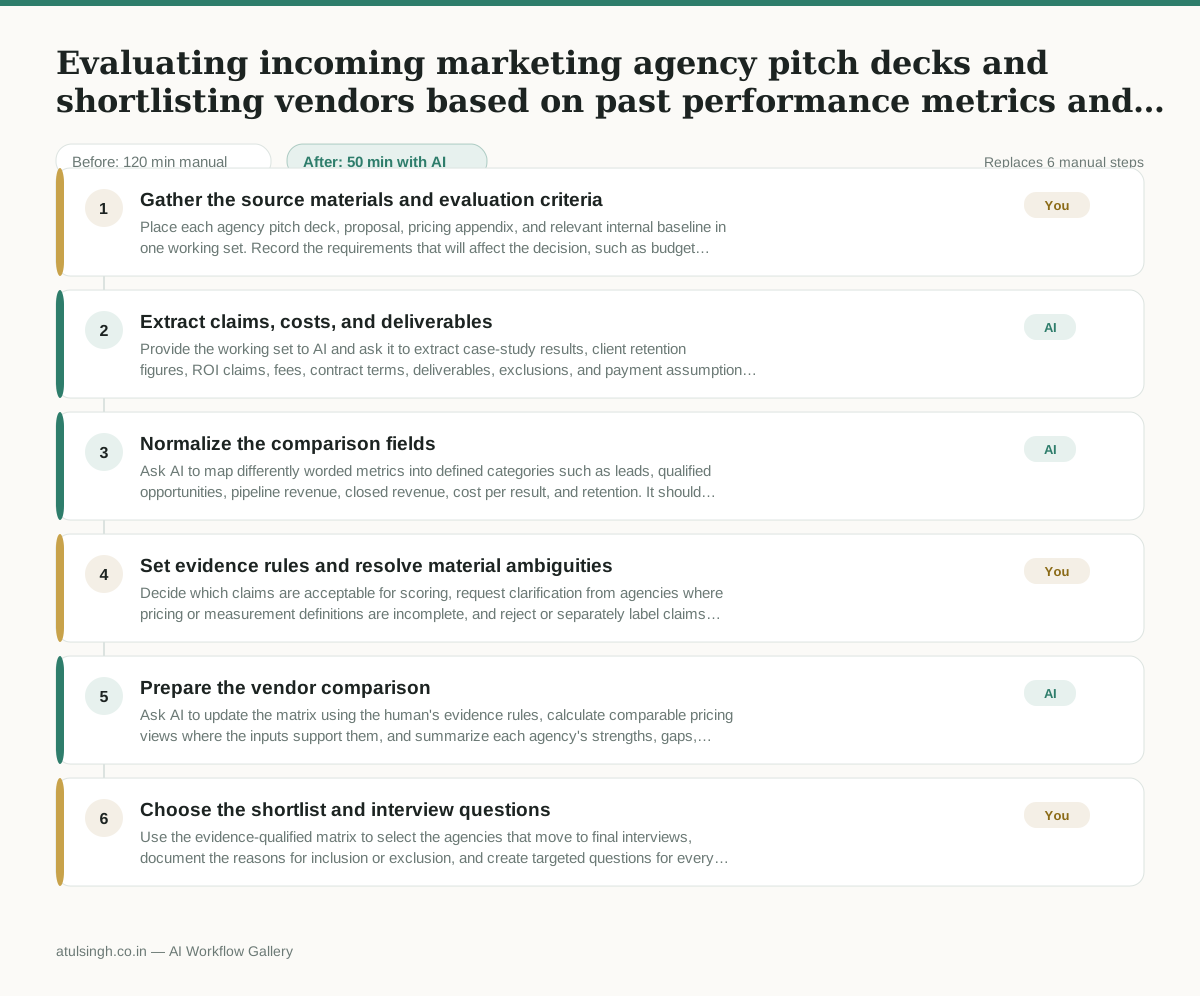
1. Gather the source materials and evaluation criteria
Place each agency pitch deck, proposal, pricing appendix, and relevant internal baseline in one working set. Record the requirements that will affect the decision, such as budget limits, required services, sales-cycle assumptions, and acceptable evidence for performance claims.
- AI
2. Extract claims, costs, and deliverables
Provide the working set to AI and ask it to extract case-study results, client retention figures, ROI claims, fees, contract terms, deliverables, exclusions, and payment assumptions into a consistent table. AI should preserve the agency's original wording, identify the source page for each entry when available, and mark missing or ambiguous information rather than filling gaps.
- AI
3. Normalize the comparison fields
Ask AI to map differently worded metrics into defined categories such as leads, qualified opportunities, pipeline revenue, closed revenue, cost per result, and retention. It should keep the reported value separate from the normalized category and flag metrics that cannot be compared because the denominator, timeframe, attribution method, or qualification standard is missing.
- You
4. Set evidence rules and resolve material ambiguities
Decide which claims are acceptable for scoring, request clarification from agencies where pricing or measurement definitions are incomplete, and reject or separately label claims that lack enough evidence. This decision determines which data can influence the shortlist and prevents unsupported performance claims from receiving the same weight as documented results.
- AI
5. Prepare the vendor comparison
Ask AI to update the matrix using the human's evidence rules, calculate comparable pricing views where the inputs support them, and summarize each agency's strengths, gaps, assumptions, and unresolved questions. AI cannot reliably verify that an agency's case-study results are true, so those claims must remain labeled as agency-reported unless independently confirmed.
- You
6. Choose the shortlist and interview questions
Use the evidence-qualified matrix to select the agencies that move to final interviews, document the reasons for inclusion or exclusion, and create targeted questions for every material gap or unverifiable claim. The human owns the shortlist decision and any tradeoff between price, evidence quality, strategic fit, and delivery risk.
What you end up with
Where this falls apart
- Agencies present pricing using complex conditional tiers or hidden multi-year commitments that fail to fit the structured extraction table, leading to miscalculated cost comparisons.
- Pitch decks rely heavily on graphical infographics rather than text for key metrics, causing the extraction model to miss or misread performance figures.
More for Marketing Manager
- Write a campaign brief that the agency and the internal design team can both use without contradictory instructions
- Check every lead capture form on the website to make sure submissions reach the right sales reps before launching a new advertising campaign.
- Checking multiple promotional calendars across email, social, and paid ads to make sure campaigns do not overlap or contradict each other before the holiday sales push.
- Reviewing external market research reports and flagging unverified claims before presenting findings to the board.
Also in marketing
- Turn a recorded customer interview into a draft blog post
- Sorting incoming customer leads from web forms and assigning them to the right sales reps based on company size and location
- Turn a technical whitepaper into a three-part email nurture sequence before it launches
- Analyze competitor viral posts to draft three trend hooks, discarding off-brand angles