
turning messy closed-won deal notes and call recordings into a repeatable sales playbook before hiring the first salesperson
Founders rely on intuition to close early deals, but these winning patterns stay trapped in messy CRM notes and call recordings. When it is time to write down a sales process for the first hire, the notes are too unstructured to build a reliable playbook.
- Before
- 180 min
- After
- 75 min
- Saved
- 105 min
How this used to go
- Pull a list of closed-won deals and open up the corresponding CRM records and call notes.
- Listen to 3 to 5 recorded sales calls for each won deal to identify recurring questions and objections.
- Review sent proposal emails and pricing discussions to see what specific terms closed the deal.
- Group the findings into rough categories: initial pitch, common objections, pricing, and buying signals.
- Draft a document summarizing the pitch structure and key messaging for the new hire.
- Refine the draft by comparing it against deals that were lost to spot the differences.
Re-listening to dozens of hours of call recordings and trying to synthesize unstructured notes into a coherent process while running the rest of the business.
The workflow, step by step
- You
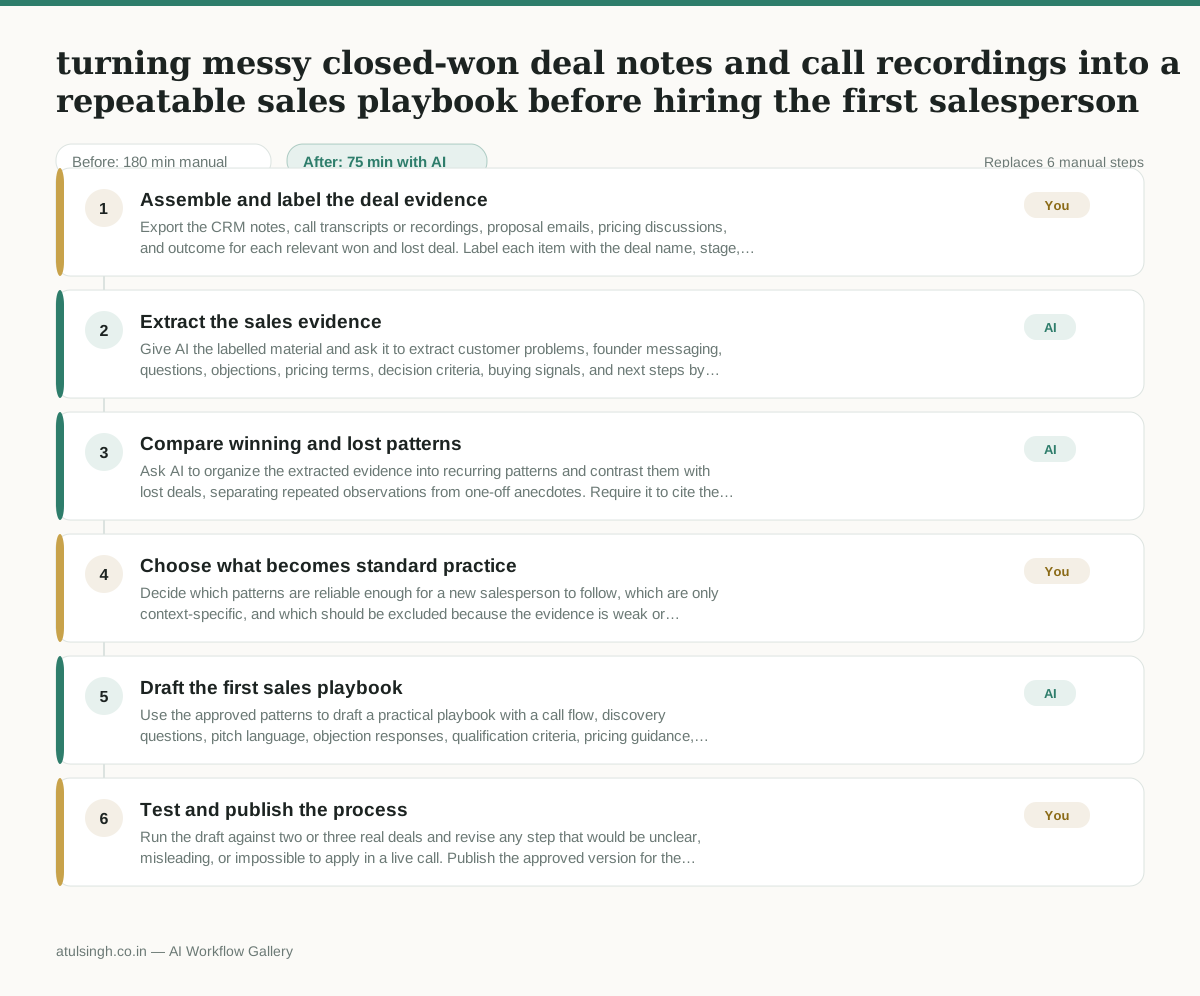
1. Assemble and label the deal evidence
Export the CRM notes, call transcripts or recordings, proposal emails, pricing discussions, and outcome for each relevant won and lost deal. Label each item with the deal name, stage, outcome, and date so AI can compare like with like.
- AI
2. Extract the sales evidence
Give AI the labelled material and ask it to extract customer problems, founder messaging, questions, objections, pricing terms, decision criteria, buying signals, and next steps by deal. Treat its transcript interpretation as a draft because it can miss context, speaker identity, sarcasm, or details that were never recorded.
- AI
3. Compare winning and lost patterns
Ask AI to organize the extracted evidence into recurring patterns and contrast them with lost deals, separating repeated observations from one-off anecdotes. Require it to cite the deal or source for each pattern rather than presenting an inferred cause as proven.
- You
4. Choose what becomes standard practice
Decide which patterns are reliable enough for a new salesperson to follow, which are only context-specific, and which should be excluded because the evidence is weak or contradictory. This decision determines the approved pitch, qualification rules, objection responses, pricing boundaries, and buying signals in the playbook.
- AI
5. Draft the first sales playbook
Use the approved patterns to draft a practical playbook with a call flow, discovery questions, pitch language, objection responses, qualification criteria, pricing guidance, buying signals, and examples from the source deals. Mark uncertain claims and unresolved exceptions instead of filling gaps with invented advice.
- You
6. Test and publish the process
Run the draft against two or three real deals and revise any step that would be unclear, misleading, or impossible to apply in a live call. Publish the approved version for the first hire, with a short list of assumptions to validate as new deals are won or lost.
What you end up with
Where this falls apart
- The underlying CRM notes and call transcripts lack sufficient detail or frequency, which causes the AI to hallucinate patterns or elevate single anecdotes into standard rules.
- Speaker diarization in the source call recordings is inaccurate, which leads the AI to attribute customer objections and buying signals to the founder instead of the prospect.
More for Founder-led Sales
- reaching out to former colleagues and personal contacts to announce a new company or product launch without sounding like a spammy marketer
- Turn raw discovery call notes into a structured pilot proposal for a new client
- Reply to inbound beta signups to figure out if they are a real fit before getting on a call
- following up on proposals that went quiet without annoying the prospect
Also in sales
- Research an incoming company and its decision makers before a first sales meeting
- Prep for a B2B demo call by checking recent company news, job postings, and tech stack changes to build relevant questions.
- Reviewing a new sales rep's practice pitch against the team's call criteria before letting them talk to real prospects
- Reviving deals that went quiet after sending a proposal by finding matching case studies and writing a follow-up message.