
Reviewing prospect legal redlines to flag unusual liability, indemnity, or payment terms for internal leadership before deal approval.
When doing this manually, Account Executives often miss subtle clause changes buried in thirty pages of standard legal markup, leading to delayed deal cycles or inadvertently accepting unfavorable risk.
- Before
- 120 min
- After
- 60 min
- Saved
- 60 min
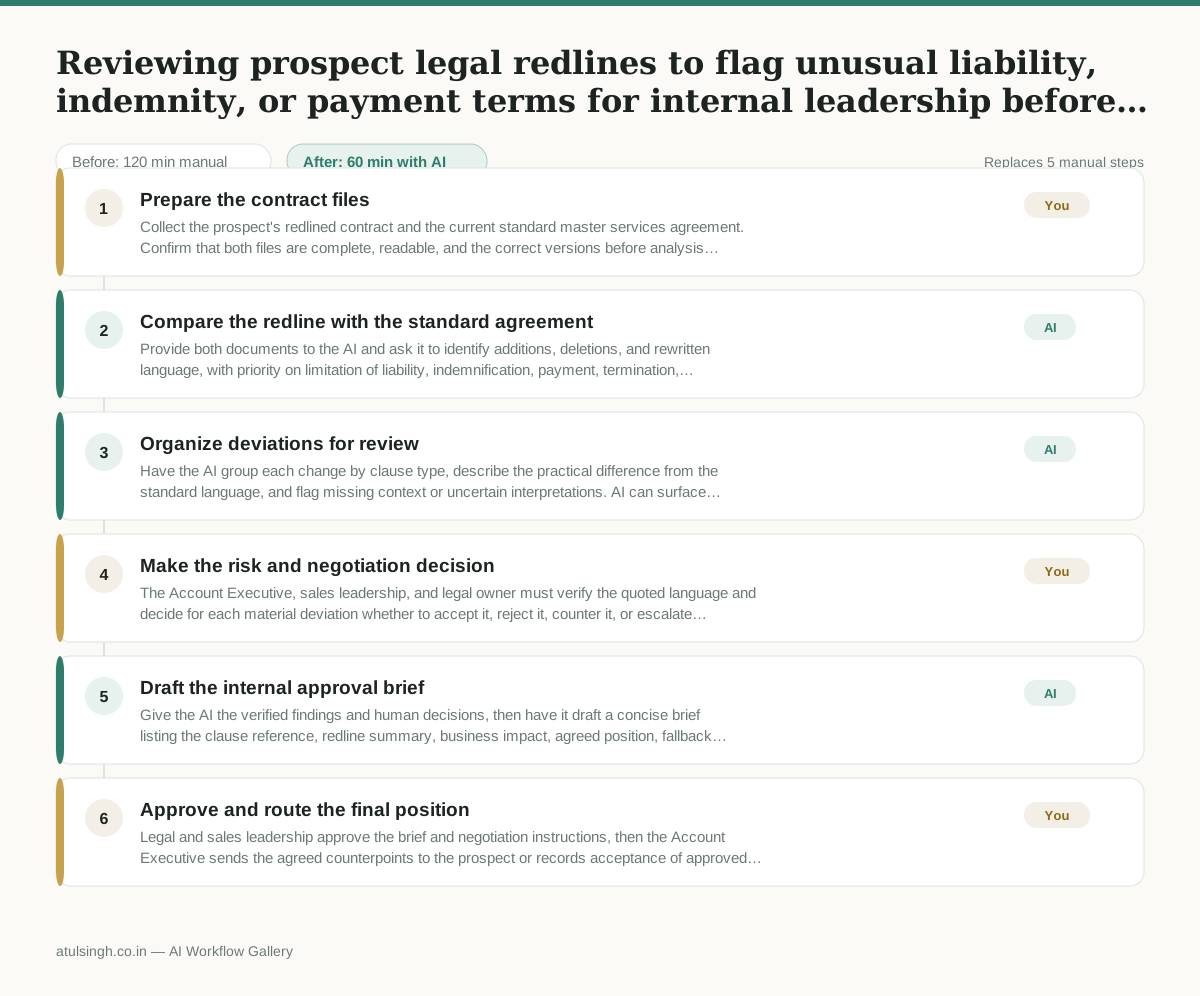
How this used to go
- Download the redlined contract or markup file sent by the prospect's legal counsel.
- Compare the redlined version against the standard master services agreement line-by-line.
- Highlight unfamiliar changes related to limitation of liability, indemnification, and payment terms.
- Draft a summary document or email detailing the specific clauses that deviate from standard company policy.
- Schedule a briefing with sales leadership and legal to discuss the identified risks and decide whether to accept, reject, or counter.
Cross-referencing dense legal language against standard policy to determine whether a modified clause actually poses a real business risk.
The workflow, step by step
- You
1. Prepare the contract files
Collect the prospect's redlined contract and the current standard master services agreement. Confirm that both files are complete, readable, and the correct versions before analysis begins.
- AI
2. Compare the redline with the standard agreement
Provide both documents to the AI and ask it to identify additions, deletions, and rewritten language, with priority on limitation of liability, indemnification, payment, termination, and insurance clauses. Require page, section, and quoted-text references for every finding.
- AI
3. Organize deviations for review
Have the AI group each change by clause type, describe the practical difference from the standard language, and flag missing context or uncertain interpretations. AI can surface unusual wording and summarize differences, but it cannot reliably decide whether a clause creates acceptable legal risk.
- You
4. Make the risk and negotiation decision
The Account Executive, sales leadership, and legal owner must verify the quoted language and decide for each material deviation whether to accept it, reject it, counter it, or escalate it. Record the business consequence of each decision, including any approval limits or required fallback language.
- AI
5. Draft the internal approval brief
Give the AI the verified findings and human decisions, then have it draft a concise brief listing the clause reference, redline summary, business impact, agreed position, fallback language, and open questions. Instruct it not to add legal conclusions or terms that were not supplied.
- You
6. Approve and route the final position
Legal and sales leadership approve the brief and negotiation instructions, then the Account Executive sends the agreed counterpoints to the prospect or records acceptance of approved terms. Retain the final brief with the contract for deal approval and future reference.
What you end up with
Where this falls apart
- The contract files are provided as poor-quality scanned images without machine-readable text, which causes the AI to miss critical clause changes entirely.
- The source markup contains heavily nested cross-references and definitions spread across multiple addenda, which causes the AI to misinterpret the modified legal scope.
More for Account Executive
- Prep for a B2B demo call by checking recent company news, job postings, and tech stack changes to build relevant questions.
- Reviving deals that went quiet after sending a proposal by finding matching case studies and writing a follow-up message.
- Reviewing discovery call notes before booking a software demo to check if the prospect has a real budget, a hard timeline, and actual authority to buy.
- Tailor the demo pitch to different stakeholders based on company research and discovery notes
Also in sales
- Research an incoming company and its decision makers before a first sales meeting
- Reviewing a new sales rep's practice pitch against the team's call criteria before letting them talk to real prospects
- reaching out to former colleagues and personal contacts to announce a new company or product launch without sounding like a spammy marketer
- Turn raw discovery call notes into a structured pilot proposal for a new client