AI Sales Outreach

The Outbound Illusion — You Can't Buy Your Way Out of a Sales Training Problem

AI outreach tools won't fix a team that was only trained to copy and paste. Here's the operational blueprint — and an interactive skill-gap analyser — that L&D leaders need to actually close the gap.

By Atul Singh8 min readMay 23, 2026
The Outbound Illusion — You Can't Buy Your Way Out of a Sales Training Problem

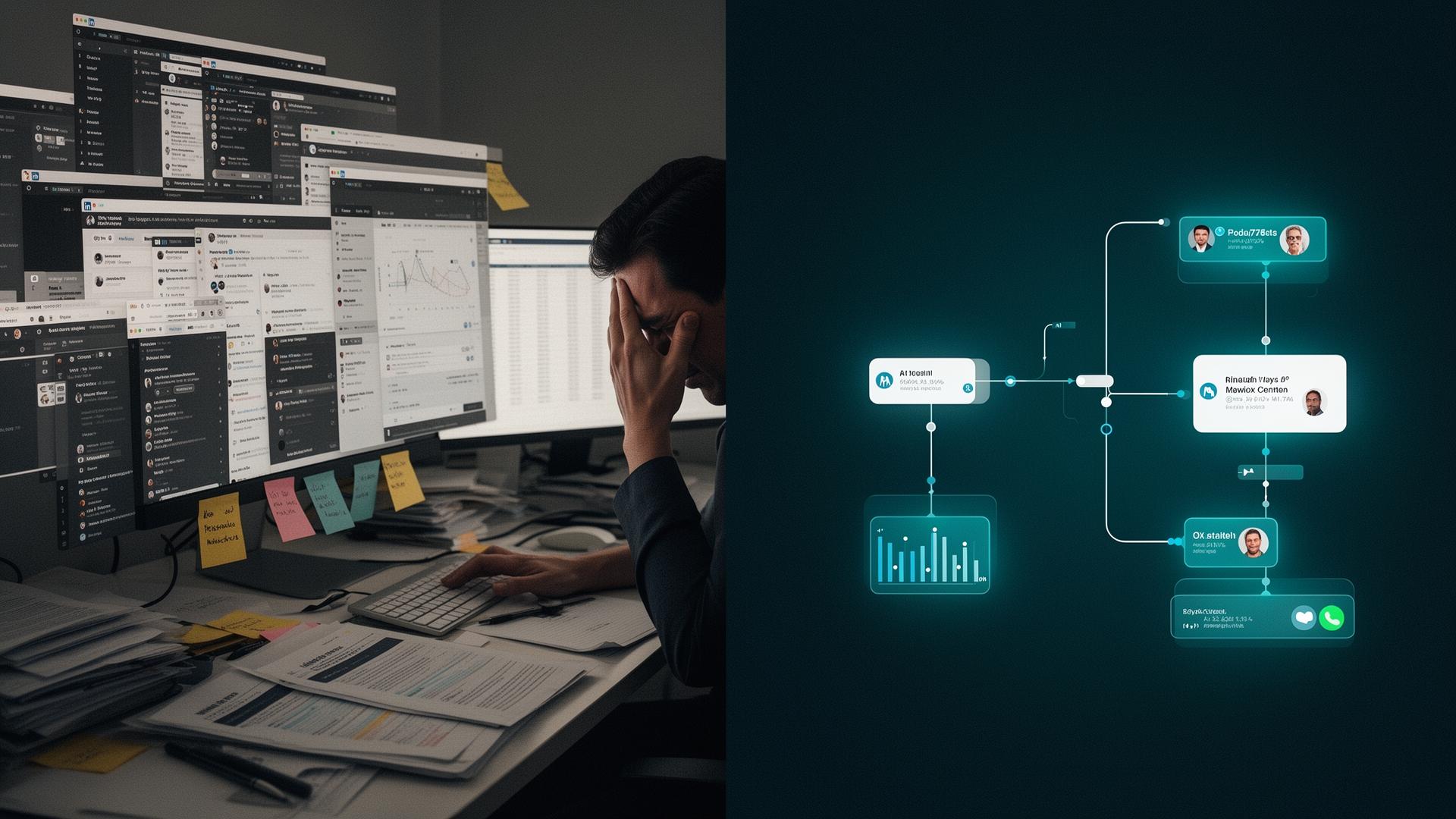
Walk onto almost any small business sales floor today, and you'll witness a quiet crisis. Account executives are spending their prime selling hours acting as amateur data miners. They scroll LinkedIn, cross-reference spreadsheets, and hunt for verified email addresses across multiple tabs. The morning vanishes before a single actual conversation happens.

Founders and sales leaders have tried to fix this by purchasing software. The promise is intoxicating: tools that automatically scan company websites, pull LinkedIn activity, and generate context-rich first lines. Yet, for the average 2–5 person outbound team, the day-to-day reality hasn't changed.

Why? Because you cannot buy your way out of a training problem.

3–4 hrs

of every rep's day lost to manual prospect research before the new stack is rolled out

3–6 wks

typical reskilling ramp to make a small team self-sufficient on Apollo, Clay and AI personalization

< 3 %

the bounce-rate ceiling above which sender reputation starts to collapse — permanently

The modern sales bottleneck is a skills gap, not a software gap

The modern sales bottleneck isn't a software deficit; it's a profound skills gap. We have handed complex orchestration engines to professionals who were only ever trained to manually copy and paste. For Learning and Development (L&D) managers, reskilling the sales floor is no longer a peripheral HR initiative — it is the direct prerequisite to revenue.

"Buying Clay for a team that hasn't been taught prompt engineering is like handing someone a Formula 1 car and a learner's permit. The hardware isn't the problem."

The target state — what we are training for

To understand what needs to be taught, leaders first need to understand how the outbound game has fundamentally changed. Automated prospect research is the act of using AI to handle the manual digging so reps can focus on high-leverage work like live conversations and handling objections.
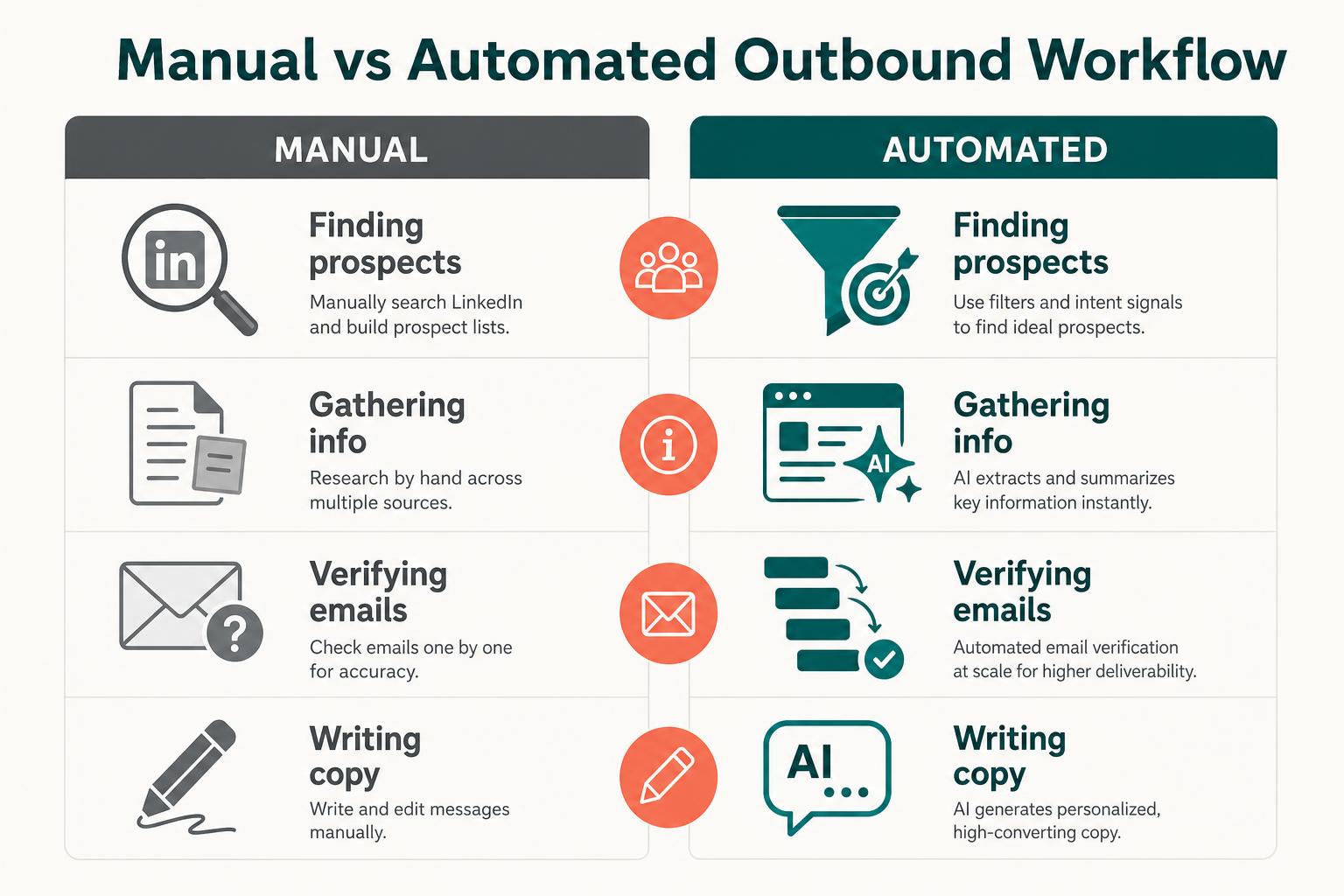
Manual vs Automated outbound workflow comparison

When an L&D program successfully bridges the gap, the workflow transformation looks like this:

Task The Old Way (Manual) The New Way (Automated)
Finding prospectsSearching LinkedIn one by onePulling filtered lists based on exact ICP criteria
Gathering infoReading websites and taking notesAI summarizing company pages automatically
Verifying emailsFree tools and bounce-checkingWaterfall verification across multiple providers
Writing copyTyping each message from scratchAI generating context-rich first lines from data

Getting a team from the left side of that table to the right requires mastering a specific tech stack:

Apollo / Sales Navigator Clay (enrichment waterfalls) ChatGPT / Claude Sequencing platform Deliverability tooling

The operational blueprint — bridging the gap

How do you actually transform a team of manual prospectors into AI workflow orchestrators? It requires a deliberate, step-by-step operational shift that blends tech deployment with rigorous training.

Step 1 — Skills requirement analysis

Before deploying a single new tool, leadership must assess where the team currently stands. You cannot train someone on building API waterfalls in Clay if they are still struggling with basic CRM hygiene or prompt engineering.

Use the interactive analyser below to visualize where your team's current capabilities align with the demands of an automated sales workflow — and identify exactly where your L&D curriculum needs to focus.

Interactive · 60 seconds

Sales Skill Gap Analyser

Rate your team honestly on each capability. The readiness score updates live and tells you whether you should train, pilot, or scale.

40
/ 100
Aware · 2/5

Do reps know exactly who they target — industry, size, triggers?

Aware · 2/5

Comfort with sourcing lists and enrichment waterfalls.

Aware · 2/5

Can reps coax usable details from ChatGPT/Claude, not fluff?

Aware · 2/5

Warm-up, SPF/DKIM, bounce-rate discipline.

Aware · 2/5

Building multi-step flows that don't burn the list.

Aware · 2/5

Clean records, status updates, no orphaned replies.

Recommendation

Foundational training needed

Your team will struggle to operate an AI outreach stack today. Start with ICP clarity, CRM hygiene, and prompt-engineering basics before adding tools.

Weakest links to fix first: ICP definition clarity · Tool fluency (Apollo / Clay)

Step 2 — Executing the transition

Once the skills gap is identified, L&D and Sales Leadership must work together to implement the new system.

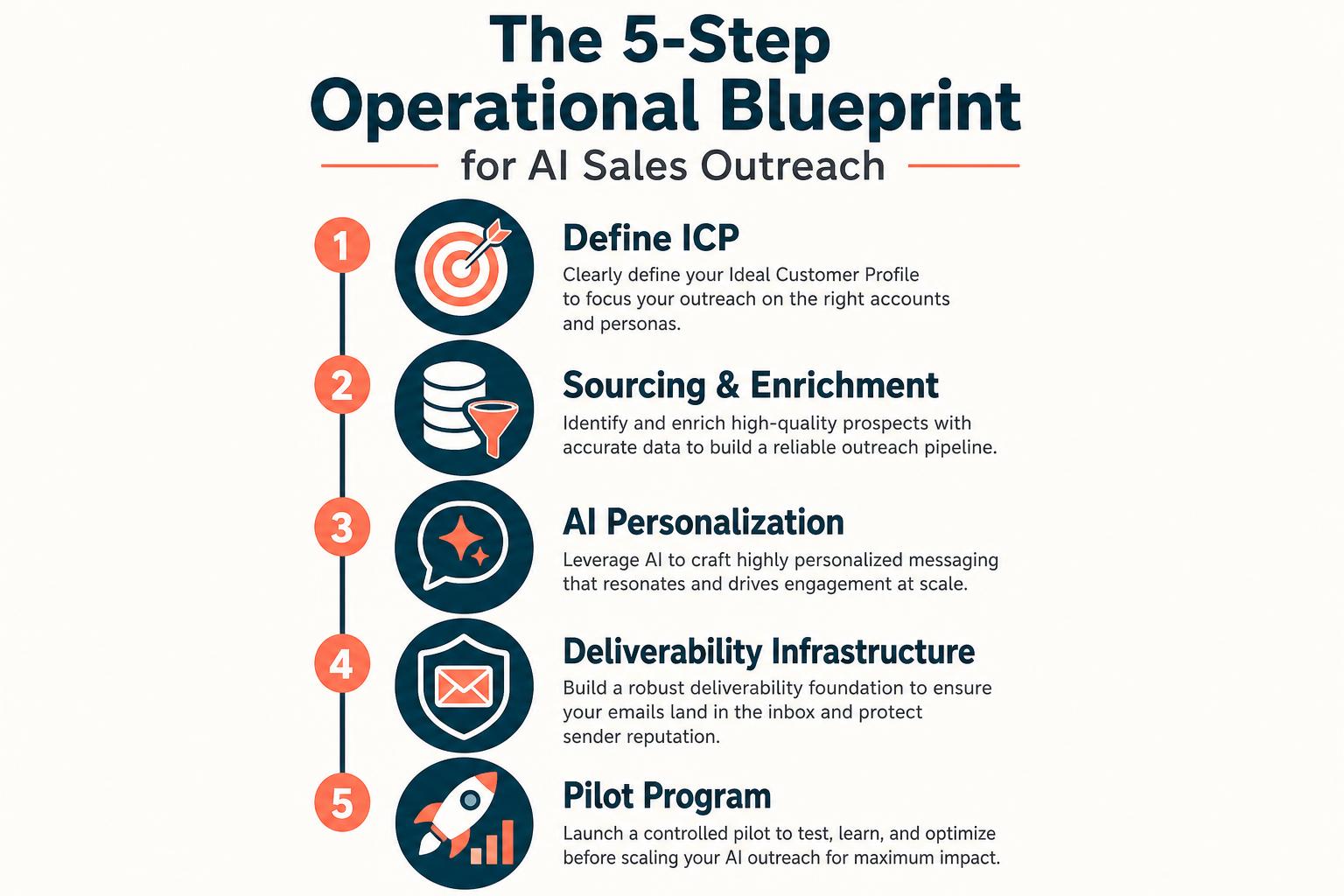
5-step operational blueprint for AI sales outreach
1

Define the Ideal Customer Profile

Everything starts here. Specify industry, company size, and qualifying triggers (e.g., "raised Series A"). If reps don't know exactly who they're targeting, automation just amplifies the wrong prospects faster.

Training focus · ICP workshops

2

Build the sourcing & enrichment layer

Connect a primary data source (like Apollo) to an enrichment tool. Train reps to set strict verification rules — high bounce rates permanently damage your sender reputation.

Training focus · Clay waterfalls

3

Train on AI personalization

The core reskilling phase. Teach reps how to configure AI to scan websites and recent news, and — more importantly — prompt engineering so the AI extracts specific usable details instead of generic, awkward fluff.

Training focus · Prompt engineering

4

Establish deliverability infrastructure

Set up dedicated mailboxes, warm-up routines, and SPF/DKIM authentication. Without proper infrastructure, even perfectly personalized emails will land straight in spam.

Training focus · Inbox placement

5

Run a pilot program

Start with a small batch of 50–100 prospects. Track open rates, reply rates, and bounce rates. Adjust the ICP, messaging, and data sources based on the results before scaling volume.

Training focus · Test, measure, iterate

Risk markers L and D leaders should watch

Automation amplifies whatever discipline (or chaos) already exists in your sales floor. These three failure modes show up first when training lags behind tooling.

Risk · Reputation

Sender reputation collapse

Skipping waterfall verification spikes bounces above 3 %. Once the domain is flagged, even great copy goes to spam for months.

Risk · Quality

Generic AI fluff

Untrained prompts produce "I loved your website" first lines. Personalization that isn't specific is worse than no personalization at all.

Risk · Targeting

Wrong-ICP amplification

A fuzzy ICP plus automation just hits the wrong people faster — burning lists, hurting brand, and producing a pipeline of bad fits.

The executive choice — build or buy

Founders and sales leaders face a decision on how to deploy this.

Option A · Build internally

DIY curriculum & stack

  • • 3–6 weeks ramp for the team
  • • Ongoing maintenance as platforms update
  • • Full control of every decision
  • • Dependent on internal L&D capacity

Option B · Done-for-you

AI Sales Outreach system

  • • Delivered in 10 working days
  • • Fixed pricing — no retainers
  • • Full ownership handover on Day 10
  • • Pricing: Starter $899 · Growth $1,800 · Scale from $3,500

When your system is built correctly and your reps are trained to drive it, you aren't just buying software. You are giving your sales team their selling time back.

FAQs

What is automated prospect research?

It's the use of AI and enrichment tools to handle the manual digging — finding accounts that match your ICP, summarizing their websites, verifying emails, and drafting context-rich first lines — so reps can spend their hours on live conversations instead of tabs and spreadsheets.

How long does it take to retrain a 2–5 person sales team?

Plan on 3–6 weeks for a small team to become self-sufficient on the core stack (Apollo or Sales Nav, Clay, ChatGPT/Claude, and a sequencer) — assuming dedicated coaching time and a clean ICP to work against.

Should we build the system internally or buy a done-for-you build?

Build internally if you have L&D bandwidth and want full control of every iteration. Buy if speed-to-pipeline matters more than the learning curve. Most founders pair a done-for-you build with internal training so the team owns the system after handover.

What bounce rate is safe for cold outbound?

Stay below 3% to protect sender reputation. Above that, mailbox providers start throttling and inboxing collapses. Waterfall verification across multiple providers — not free tools — is the only reliable way to stay under the line.

Which tools should a 2–5 person team start with?

Apollo or Sales Navigator for sourcing, Clay for enrichment waterfalls, ChatGPT or Claude for personalization, and a sequencer like Smartlead or Instantly. Layer dedicated mailboxes with SPF/DKIM warm-up underneath everything.

How is the skill-gap analyser scored?

Each of the six skills is rated 1–5. The readiness score is the percentage of the maximum possible total. Below 45 = foundational training needed, 45–74 = ready to pilot a small batch, 75+ = scale-ready and focused on advanced enrichment and reply playbooks.

AI Sales Outreach

Thinking about AI outreach for your team?

Free 20-minute scoping call. No pitch. No follow-up emails if you say no. Just an honest look at whether AI outreach fits your business right now — and if it does, what the right size of build looks like.

Fixed-price, fixed-scope engagements from $899. Delivered in 10 working days. You own the workflows, the prompts, the data, and the integrations.

Starter $899 · Growth $1,800 · Scale from $3,500 · Delivered in 10 days

A

Atul Singh

14 years across teaching, sales, and building. Trained 2,500+ students. Six years in corporate sales and social media. Six years building web and AI products for SMBs at Qriyas. Based in Noida, working with sales and marketing professionals across the US, UK, Australia, and English-speaking markets globally.